¿Qué son los puertos SFP en un conmutador? Aprenda cómo los puertos SFP admiten conexiones de fibra y Ethernet, cómo se comparan con RJ45 y SFP+, y qué módulo necesita.
Aprenda qué es un enlace SFP, por qué falla y cómo solucionar problemas de compatibilidad, cableado y fluctuación del enlace mediante comprobaciones prácticas y pasos claros.
Qué significa Secuencia de verificación de trama (FCS), cómo CRC-32 detecta tramas Ethernet corruptas y por qué los errores FCS suelen asociarse con fallas en cables, problemas en fibra u otros relacionados con transceptores ópticos.
Descubra el módulo LQ‑SW40‑SR4C 40GBASE‑SR: óptica QSFP+ de alta velocidad y bajo consumo para redes de fibra multimodo. Ideal para centros de datos y actualizaciones de red.
¿Qué son los puertos SFP en un conmutador? Aprenda cómo los puertos SFP admiten conexiones de fibra y Ethernet, cómo se comparan con RJ45 y SFP+, y qué módulo necesita.
Aprenda qué es un enlace SFP, por qué falla y cómo solucionar problemas de compatibilidad, cableado y fluctuación del enlace mediante comprobaciones prácticas y pasos claros.
Los transceptores ópticos en UAV permiten comunicaciones de drones de alta velocidad, seguras y de baja latencia para video en tiempo real, telemetría y datos críticos para la misión.
Comprenda los límites de ciclos de inserción de los módulos ópticos extraíbles en caliente y aprenda consejos de manejo, como el manejo seguro contra descargas electrostáticas (ESD), la prevención del polvo y la gestión térmica.
Comprenda qué es CRC, cómo ocurren los errores de verificación de redundancia cíclica, cómo solucionarlos y por qué CRC es fundamental en redes, almacenamiento y módulos SFP.
Qué significa Secuencia de verificación de trama (FCS), cómo CRC-32 detecta tramas Ethernet corruptas y por qué los errores FCS suelen asociarse con fallas en cables, problemas en fibra u otros relacionados con transceptores ópticos.
Descubra el módulo LQ‑SW40‑SR4C 40GBASE‑SR: óptica QSFP+ de alta velocidad y bajo consumo para redes de fibra multimodo. Ideal para centros de datos y actualizaciones de red.
Descubra cómo el interconector óptico cruzado (OXC) permite el conmutado totalmente óptico en redes DWDM/OTN, con los módulos SFP LINK‑PP garantizando una integración perfecta y un rendimiento superior.
Descubra cómo funciona el láser EML en los módulos ópticos, por qué es fundamental para enlaces de alta velocidad y larga distancia, y cómo LINK‑PP ofrece transceptores ópticos basados en EML.
Optical modules enable high-speed, low-latency links across 5G fronthaul, midhaul, and backhaul. Learn how transceiver types, standards, and deployment needs shape modern telecom networks.
Clear, practical guide to SFF-8431 — the SFP+ 10G electrical interface standard. Learn the key requirements, design considerations, and how LINK-PP 10G SFP modules comply.
Explore how RJ45 Magjack connectivity solutions from LINK-PP enhance telecom infrastructure—improving reliability, PoE support and integration for next-gen networks.
Explore what a telecom network is, how it works, and its role in 5G. Learn opportunities, challenges, and how LINK‑PP solutions support next-gen networks.
Machine Learning (ML) enables computers to learn from data, identify patterns, and make predictions, powering tools like voice assistants and recommendations.
Learn what the SFP28 MSA (Small Form-factor Pluggable 28 Multi-Source Agreement) defines, why it matters for 25G Ethernet, and how it ensures module interoperability.
Discover how optical transceivers power Smart Industry 4.0 networks—enabling high-speed, low-latency, reliable connectivity in modern factories with 1G, 10G and 25G modules certified for industrial use.
OSI vs TCP/IP: OSI is ideal for learning network concepts, while TCP/IP is used for real-world networking. Compare their layers, uses, and main differences.
Learn what an Intrusion Prevention System (IPS) is, how it works, key types, and deployment best practices. Enhance your IPS network with LINK-PP Ethernet components.
FBT splitter offers a cost-effective way to split optical signals in fiber networks, ideal for small setups needing simple, customizable signal distribution.
Learn how LLDP (Link Layer Discovery Protocol) enhances PoE systems through intelligent power negotiation, efficient energy management, and device discovery in modern Ethernet networks.
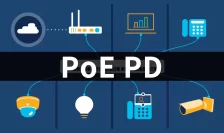
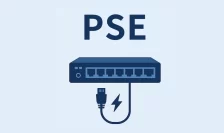
Learn what a Powered Device (PD) is in PoE networks, how it receives power from a PSE, and explore LINK-PP’s PoE-ready components like LPJK6072AONL and LP41223NL.
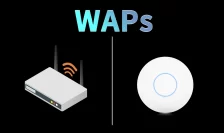
Discover what a Wireless Access Point (WAP) is, how it works, and why it’s essential for robust Wi-Fi networks. Learn about types, use cases, and LINK-PP LPJK6072AONL PoE RJ45 connector integration.
Descubra el módulo LQ‑SW40‑SR4C 40GBASE‑SR: óptica QSFP+ de alta velocidad y bajo consumo para redes de fibra multimodo. Ideal para centros de datos y actualizaciones de red.
Aprenda qué es la infraestructura hiperconvergente (HCI), cómo se compara con la virtualización y la dHCI, y cuándo resultan más adecuados los diseños basados en Nutanix, Sangfor o SFP.
Aprenda la verdadera diferencia entre 1000BASE-LH y 1000BASE-LX, incluyendo longitud de onda, compatibilidad con fibra, nomenclatura de Cisco y cuándo usar cada uno.
Aprenda qué es un transceptor SFP Gigabit, compare las opciones 1000BASE-SX, LX y T, y resuelva con confianza problemas comunes de compatibilidad y configuración.
Aprenda qué es un transceptor SFP 10/100/1000BASE-T, cómo funcionan los módulos SFP de cobre RJ45, problemas de compatibilidad, preocupaciones sobre el calor y los mejores casos de uso en redes.
Compare CFP4 con QSFP28 según tamaño, consumo de energía, densidad y adecuación para la implementación. Aprenda qué módulo de 100 G es mejor para centros de datos, telecomunicaciones y actualizaciones.
Explore la hoja de datos de Netgear AGM731F con especificaciones, conector LC, distancias para OM1/OM3/OM4, compatibilidad, consumo de energía y límites de operación.
Comprenda los módulos SFP+ de 40 km (10GBASE-ER), incluidas sus especificaciones, compatibilidad con fibra monomodo (SMF) y cómo elegir el transceptor óptico de alcance extendido adecuado para su red.