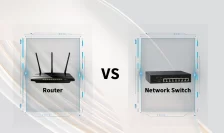
A router ONU combines signal conversion and network routing for fiber-optic internet, letting you connect multiple devices to fast, reliable service at home.
Explore the fundamental differences between GPUs and CPUs, their architectural distinctions, and performance benchmarks to understand which processor suits your computing needs.
Discover how DDMI—the Digital Diagnostic Monitoring Interface—gives real-time insights into optical transceivers. Learn its key metrics, benefits, and how LINK-PP modules support it.
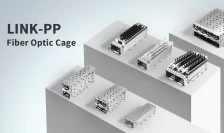
Επιλέξτε το καλύτερο περίβλημα οπτικών ινών λαμβάνοντας υπόψη τη συμβατότητα, την πυκνότητα θυρών, τη διαχείριση θερμότητας (επιλογές απαγωγής θερμότητας), την ενσωμάτωση φωτεινού σωλήνα, την προστασία από ηλεκτρομαγνητικές παρεμβολές (EMI) κ.λπ.
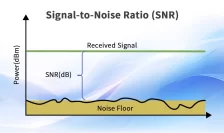
SNR, o relación señal-ruido, mide la intensidad de la señal frente al ruido. Una SNR alta significa audio, imágenes y datos más nítidos, lo que mejora la calidad general de la señal.
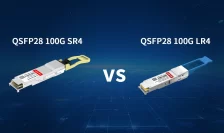
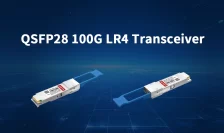
Un transceptor 100G LR4 permite transferencia de datos a 100 Gbps hasta 10 km mediante fibra monomodo, ideal para conexiones de red de alta velocidad y largo alcance.
Understand 100G optical transceiver form factors like QSFP28, CFP, CFP2, CFP4 and CXP. Learn how they optimize network performance and ensure compatibility.
Comprenda qué es CRC, cómo ocurren los errores de verificación de redundancia cíclica, cómo solucionarlos y por qué CRC es fundamental en redes, almacenamiento y módulos SFP.
Aprenda qué es FCoE (Fibre Channel sobre Ethernet), cómo funciona y su relación con los módulos ópticos, DCB y las redes de centros de datos de alto rendimiento.
Learn PROFINET fundamentals, architecture, device classes, and real-time communication requirements. Includes hardware insights and LINK-PP integrated RJ45 solutions.
Learn what a Network Operating System (NOS) is, how it runs switches and routers, and why it is essential for routing, automation, telemetry, and modern data center networks.
Learn what QoS (Quality of Service) means, how it works, and why it is essential for real-time IP networks. Includes practical applications and hardware considerations.
Explore the fundamentals of Point-to-Point (P2P) network architecture, its working principles, and how LINK-PP RJ45 connectors and optical transceivers enable reliable high-speed communication.
Precision Time Protocol synchronizes network device clocks for microsecond accuracy, reducing errors and improving reliability in critical applications.
Discover how DDMI—the Digital Diagnostic Monitoring Interface—gives real-time insights into optical transceivers. Learn its key metrics, benefits, and how LINK-PP modules support it.
Aprenda la verdadera diferencia entre 1000BASE-LH y 1000BASE-LX, incluyendo longitud de onda, compatibilidad con fibra, nomenclatura de Cisco y cuándo usar cada uno.
Compare CFP4 con QSFP28 según tamaño, consumo de energía, densidad y adecuación para la implementación. Aprenda qué módulo de 100 G es mejor para centros de datos, telecomunicaciones y actualizaciones.
Learn how electrical SFP compares with fiber SFP in speed, distance, power consumption, and cost. A practical guide for data centers, network engineers, and enterprise deployments.
Subscribe to LINK-PP
newsletter
Don’t miss anything. Get all the latest posts delivered straight to your inbox.