Explore la arquitectura de red punto a multipunto (P2MP), su principio de funcionamiento, ventajas y aplicaciones. Aprenda cómo los transceptores ópticos de LINK-PP respaldan las implementaciones P2MP.
Explore the fundamentals of Point-to-Point (P2P) network architecture, its working principles, and how LINK-PP RJ45 connectors and optical transceivers enable reliable high-speed communication.
Explore cómo los láseres, los moduladores y los fotodiodos constituyen el núcleo de los transceptores ópticos, permitiendo la transmisión de datos a alta velocidad y baja latencia a través de redes globales.
Explore cómo los conectores RJ45 evolucionan para satisfacer los desafíos de ultra baja latencia y ultra alta velocidad de la comunicación 6G. Descubra las soluciones avanzadas de Ethernet de alta frecuencia de LINK-PP.
Descubra las diferencias entre los moduladores fotónicos de silicio y los moduladores ópticos tradicionales, sus principios de funcionamiento, ventajas y su papel en los transceptores ópticos de próxima generación.
Un sistema de gestión de redes supervisa, controla y protege los dispositivos de red, proporcionando alertas en tiempo real, automatización y una mayor seguridad de la red.
¿Qué es el CMOS? Aprenda los fundamentos de la tecnología de semiconductor de óxido metálico complementario, su principio de funcionamiento, sus ventajas clave y su integración con la fotonica de silicio y los transceptores ópticos.
El Sistema de Posicionamiento Global (GPS) utiliza satélites para ofrecer ubicación, navegación y seguimiento en tiempo real con precisión para necesidades personales, empresariales y de seguridad.
El Protocolo de mensajes de control de Internet (ICMP) ayuda a diagnosticar problemas de red al enviar mensajes de error y de estado entre dispositivos para una comunicación fiable.
Una guía clara y autorizada sobre las redes 6G: qué es la 6G, cronograma IMT-2030, tecnologías fundamentales (THz, ISAC, redes nativas de IA), casos de uso clave e implicaciones para los módulos ópticos.
What are SFP ports on a switch? Learn how SFP ports support fiber and Ethernet connections, how they compare with RJ45 and SFP+, and which module you need.
An SGMII SFP transceiver enables fast Ethernet connections over copper or fiber, supporting flexible speeds and device compatibility in modern networks.
What Frame Check Sequence (FCS) means, how CRC-32 detects corrupted Ethernet frames, and why FCS errors are commonly associated with cable faults, fiber issues, or optical transceiver problems.
Discover how optical cross‑connect (OXC) enables all‑optical switching in DWDM/OTN networks, with LINK‑PP SFP modules ensuring seamless integration and superior performance.
Learn what Dispersion Compensation Fiber (DCF) is, how it reduces chromatic dispersion, where it is used, and why it matters in modern optical networks.
Learn what OEO means in optical communication, how optical-electrical-optical regeneration works, and when it is used in DWDM networks and optical links. Keywords:
La combinación de conector RJ45 y USB de LINK-PP, modelo LPJU3102ABNL, integra Ethernet y USB, ofreciendo durabilidad, blindaje contra interferencias electromagnéticas (EMI) e indicadores LED para redes 10/100 Base-T.
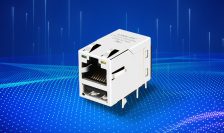
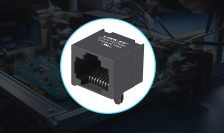
El conector RJ45 8P8C LPJE101NNL ofrece una conectividad Ethernet 10/100 Base-T fiable, con contactos chapados en oro, diseño compacto y conformidad con las normas IEEE 802.3.
Los transceptores LINK-PP de 100 G ofrecen conectividad de alta velocidad, eficiencia energética e integración perfecta, lo que los convierte en la opción ideal para redes modernas y centros de datos.
Descubra las principales especificaciones eléctricas, mecánicas y ambientales de los conectores RJ45 integrados para seleccionar la solución adecuada para sus aplicaciones Ethernet.
Aprenda a elegir los mejores transceptores ópticos de 10 G de LINK-PP para su red evaluando eficazmente la compatibilidad, el rendimiento, el costo y la escalabilidad.
Revisión del conector RJ45 Magjack LPJK0071AINL de LINK-PP para 100/1000 Base-T, destacando sus magnéticos integrados, blindaje contra interferencias electromagnéticas (EMI) y rendimiento Ethernet de alta velocidad.
Los módulos SFP de cobre permiten una transferencia de datos de alta velocidad y rentable a cortas distancias mediante cables de cobre existentes, ideales para oficinas y centros de datos.
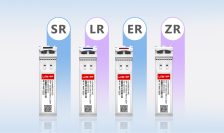
Comprenda la terminología de los transceptores ópticos, como SR, LR, ER y ZR, para elegir el módulo adecuado según las necesidades de velocidad, distancia y compatibilidad de su red.
El transceptor 400G QSFP-DD LR4 LINK-PP LQD-CW400-LR4C ofrece un alcance de 10 km, una velocidad de 400 Gbps y eficiencia energética, ideal para centros de datos y redes empresariales.
El transceptor DWDM LINK-PP LS-DW2810-40I ofrece una velocidad de 10 Gbps, un alcance de 40 km, eficiencia energética y compatibilidad con marcas importantes para una interconexión sin interrupciones.
Subscribe to LINK-PP
newsletter
Don’t miss anything. Get all the latest posts delivered straight to your inbox.