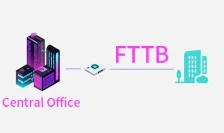
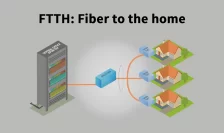
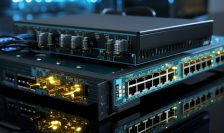
Descubra la FTTB (Fibra hasta el edificio): definición, beneficios e implementación. Compare FTTB frente a FTTH y explore las soluciones de conectividad LINK-PP.
La modulación QAM mejora la transmisión de datos al variar la amplitud y la fase, lo que permite una comunicación más rápida y eficiente en Wi-Fi, televisión por cable y banda ancha.
La dispersión por modo de polarización en fibras ópticas provoca distorsión de la señal y limita la velocidad de transmisión de datos. Comprenda el impacto de la PMD y cómo gestionarla en redes modernas.
Descubra qué es una PCB HDI (interconexión de alta densidad), sus ventajas, técnicas de fabricación y aplicaciones clave en electrónica moderna y dispositivos 5G.
Descubra la función del voltaje de aislamiento en los transformadores LAN, por qué la norma IEEE 802.3 establece 1500 Vrms y cómo los productos de LINK-PP garantizan conexiones Ethernet seguras y fiables.
Los transceptores ópticos QSFP56 permiten Ethernet de 200 G, conexiones de alta densidad y actualizaciones eficientes para redes modernas de centros de datos.
Explicación de qué son los módulos SFF reales, sus ventajas fundamentales en sistemas de configuración fija y por qué siguen siendo un pilar fundamental del diseño de redes modernas.
Explore las funciones del sistema avanzado de asistencia al conductor (ADAS), sus beneficios en materia de seguridad y cómo los magnéticos Ethernet, los conectores RJ45 y los módulos ópticos de LINK-PP respaldan redes vehiculares fiables.
What are SFP ports on a switch? Learn how SFP ports support fiber and Ethernet connections, how they compare with RJ45 and SFP+, and which module you need.
An SGMII SFP transceiver enables fast Ethernet connections over copper or fiber, supporting flexible speeds and device compatibility in modern networks.
What Frame Check Sequence (FCS) means, how CRC-32 detects corrupted Ethernet frames, and why FCS errors are commonly associated with cable faults, fiber issues, or optical transceiver problems.
Discover how optical cross‑connect (OXC) enables all‑optical switching in DWDM/OTN networks, with LINK‑PP SFP modules ensuring seamless integration and superior performance.
Learn what Dispersion Compensation Fiber (DCF) is, how it reduces chromatic dispersion, where it is used, and why it matters in modern optical networks.
Learn what OEO means in optical communication, how optical-electrical-optical regeneration works, and when it is used in DWDM networks and optical links. Keywords:
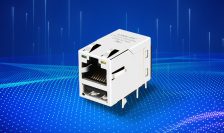
La combinación de conector RJ45 y USB de LINK-PP, modelo LPJU3102ABNL, integra Ethernet y USB, ofreciendo durabilidad, blindaje contra interferencias electromagnéticas (EMI) e indicadores LED para redes 10/100 Base-T.
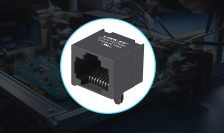
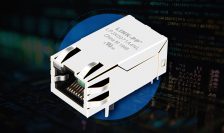
El conector RJ45 8P8C LPJE101NNL ofrece una conectividad Ethernet 10/100 Base-T fiable, con contactos chapados en oro, diseño compacto y conformidad con las normas IEEE 802.3.
Los transceptores LINK-PP de 100 G ofrecen conectividad de alta velocidad, eficiencia energética e integración perfecta, lo que los convierte en la opción ideal para redes modernas y centros de datos.
Aprenda a elegir los mejores transceptores ópticos de 10 G de LINK-PP para su red evaluando eficazmente la compatibilidad, el rendimiento, el costo y la escalabilidad.
Descubra las principales especificaciones eléctricas, mecánicas y ambientales de los conectores RJ45 integrados para seleccionar la solución adecuada para sus aplicaciones Ethernet.
Revisión del conector RJ45 Magjack LPJK0071AINL de LINK-PP para 100/1000 Base-T, destacando sus magnéticos integrados, blindaje contra interferencias electromagnéticas (EMI) y rendimiento Ethernet de alta velocidad.
Los módulos SFP de cobre permiten una transferencia de datos de alta velocidad y rentable a cortas distancias mediante cables de cobre existentes, ideales para oficinas y centros de datos.
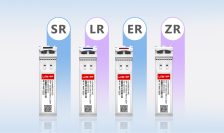
Comprenda la terminología de los transceptores ópticos, como SR, LR, ER y ZR, para elegir el módulo adecuado según las necesidades de velocidad, distancia y compatibilidad de su red.
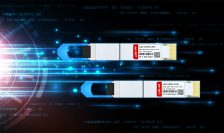
El transceptor 400G QSFP-DD LR4 LINK-PP LQD-CW400-LR4C ofrece un alcance de 10 km, una velocidad de 400 Gbps y eficiencia energética, ideal para centros de datos y redes empresariales.
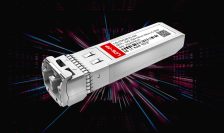
El transceptor DWDM LINK-PP LS-DW2810-40I ofrece una velocidad de 10 Gbps, un alcance de 40 km, eficiencia energética y compatibilidad con marcas importantes para una interconexión sin interrupciones.
Subscribe to LINK-PP
newsletter
Don’t miss anything. Get all the latest posts delivered straight to your inbox.