Troubleshoot optical transceivers efficiently with Digital Diagnostic Monitoring. Monitor real-time data to detect faults early and maintain network reliability.
LS-MM8532-S1C SFP28 Transceivers offer 25G/32G speeds, broad compatibility, low power use, and cost savings—ideal for future-proofing your data center.
QSFP28-100G-ZR4 transceiver enables 100G data transmission up to 80km using single-mode fiber, ideal for long-distance, high-speed network connections.
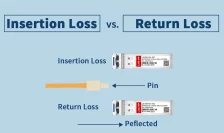
Learn the difference between insertion loss and return loss in optical transceivers, their impact on performance, measurement methods, and LINK-PP product guidance.
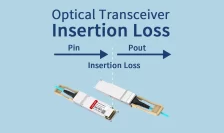
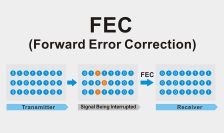
Learn what optical transceiver insertion loss is, how it affects link budgets, BER, and FEC. Includes LC/MPO numbers, control tips, and LINK-PP insights.
Long-haul transmission uses fiber optic cables to send data quickly and securely over long distances, connecting cities and countries for fast communication.
A fiber optic cable uses thin glass or plastic fibers to transmit data as light pulses, enabling fast, clear, and reliable communication over long distances.
What are SFP ports on a switch? Learn how SFP ports support fiber and Ethernet connections, how they compare with RJ45 and SFP+, and which module you need.
An SGMII SFP transceiver enables fast Ethernet connections over copper or fiber, supporting flexible speeds and device compatibility in modern networks.
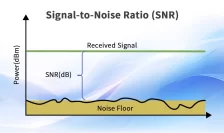
SNR, or signal-to-noise ratio, measures signal strength versus noise. High SNR means clearer audio, images, and data for better overall signal quality.
Learn what an Ethernet PHY is, how it connects MAC to network medium, core functions, signal types, and how it pairs with LINK‑PP Magnetics for Ethernet design.
Turns ratio in LAN transformers defines the winding relationship, typically 1:1, ensuring signal integrity, voltage stability, and Ethernet compliance.
Non-Return-to-Zero (NRZ) is a digital encoding method using two voltage levels for binary data, offering simplicity and efficiency in digital communication.
Discover the LQ‑SW40‑SR4C 40GBASE‑SR module: high-speed, low-power, QSFP+ optics for multimode fibre networks. Perfect for data centres and network upgrades.
Aprenda qué es la infraestructura hiperconvergente (HCI), cómo se compara con la virtualización y la dHCI, y cuándo resultan más adecuados los diseños basados en Nutanix, Sangfor o SFP.
Conozca la verdadera diferencia entre 1000BASE-LH y 1000BASE-LX, incluidas la longitud de onda, la compatibilidad con fibra, la nomenclatura de Cisco y cuándo usar cada uno.
Aprenda qué es un transceptor SFP Gigabit, compare las opciones 1000BASE-SX, LX y T, y resuelva con confianza problemas comunes de compatibilidad y configuración.
Aprenda qué es un SFP 10/100/1000BASE-T, cómo funcionan los módulos SFP de cobre RJ45, los problemas de compatibilidad, las preocupaciones por el calor y los casos de uso ideales en redes.
Compare CFP4 y QSFP28 según tamaño, consumo de energía, densidad y adecuación para implementación. Aprenda qué módulo de 100 G es mejor para centros de datos, telecomunicaciones y actualizaciones.
Explore la hoja de especificaciones del Netgear AGM731F con sus características técnicas, conector LC, distancias para OM1/OM3/OM4, compatibilidad, consumo de energía y límites operativos.
Comprenda los módulos SFP+ de 40 km (10GBASE-ER), incluidas sus especificaciones, compatibilidad con fibra monomodo (SMF) y cómo elegir el transceptor óptico de alcance extendido adecuado para su red.
Subscribe to LINK-PP
newsletter
Don’t miss anything. Get all the latest posts delivered straight to your inbox.