Aprenda qué es la óptica paralela, cómo posibilita la transmisión de datos de alta velocidad y cómo los módulos transceptores QSFP28 SR4 y de 200/400/800 G de LINK-PP respaldan esta tecnología.
InfiniBand es una tecnología de red de alta velocidad que permite la transferencia rápida y de baja latencia de datos en centros de datos y entornos de HPC mediante RDMA.
InfiniBand frente a Ethernet: Compare latencia, rendimiento, costo y escalabilidad para elegir la mejor solución de red según las necesidades de su centro de datos.
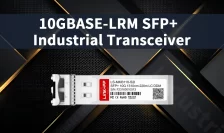
El transceptor industrial 10GBASE-LRM admite 10,3 Gbps, alcance de 220 m sobre fibra multimodo (MMF), temperatura industrial (−40 °C a 85 °C) y compatibilidad total con Cisco, Arista, Dell y H3C.
Una red troncal conecta subredes mediante fibra óptica de alta velocidad, garantizando una transmisión de datos rápida y fiable entre ciudades, regiones y países.
Compare los módulos sfp28-25g-esr y sfp28-25g-sr para redes de 25G. Vea las diferencias clave en distancia, tipo de fibra y casos de uso ideales para centros de datos.
Resumen FAQ de módulos ópticos: respuestas sobre tipos, compatibilidad, diseño, resolución de problemas y glosario para actualizaciones y mantenimiento de redes en 2025.
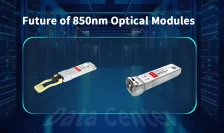
Explore el futuro de los módulos ópticos de 850 nm en centros de datos, incluidos los avances en SR8/SR16, la óptica paralela y el impacto de la adopción de fibra monomodo.
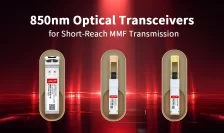
Los módulos ópticos de 850 nm 10GBASE-SR, 40GBASE-SR4, 100GBASE-SR4 y 400GBASE-SR8 son la opción más fiable y rentable para conexiones en fibra multimodo de corto alcance.
What are SFP ports on a switch? Learn how SFP ports support fiber and Ethernet connections, how they compare with RJ45 and SFP+, and which module you need.
An SGMII SFP transceiver enables fast Ethernet connections over copper or fiber, supporting flexible speeds and device compatibility in modern networks.
What Frame Check Sequence (FCS) means, how CRC-32 detects corrupted Ethernet frames, and why FCS errors are commonly associated with cable faults, fiber issues, or optical transceiver problems.
Discover how optical cross‑connect (OXC) enables all‑optical switching in DWDM/OTN networks, with LINK‑PP SFP modules ensuring seamless integration and superior performance.
Learn what Dispersion Compensation Fiber (DCF) is, how it reduces chromatic dispersion, where it is used, and why it matters in modern optical networks.
Learn what OEO means in optical communication, how optical-electrical-optical regeneration works, and when it is used in DWDM networks and optical links. Keywords:
Explore Copper SFP vs. Fiber SFP differences, performance, compatibility, and cost. Learn how to choose the right SFP module for home labs, data centers, and PoE networks.
Learn how multimode SFP+ (10GBASE-SR) transceivers work, including fiber types, transmission distance, specifications, and common data center use cases.
Learn what a 1000BASE-T Copper SFP is, how RJ45 SFP modules work, when to use copper SFP instead of fiber, compatibility issues, and common troubleshooting tips.
Explore the features, applications, and selection guide for optical transceiver SFP+ 10G single-mode 1310nm 10km LC modules for data centers and enterprise networks.
Understand what a third-party SFP is, how compatible optics work with Cisco, Juniper, and Arista switches, and the cost, risks, and buying tips for reliable network deployments.
A complete technical guide to SFP-10GLR-31 transceivers covering 10GBASE-LR specifications, wavelength, fiber compatibility, switch support, and real deployment scenarios.
A technical guide to SFP+ 100km optics, explaining 10GBASE-ZR modules, optical link budgets, DWDM solutions, and real-world deployment tips for long-distance fiber networks.
Explain what a 100km SFP transceiver is, how ER and ZR differ, required wavelength, optical budget calculation, and whether amplification is needed for long-haul fiber links.
Complete guide to long distance transceivers covering 10km to 120km optics, 1310nm vs 1550nm, ER/ZR modules, link budget calculation, and deployment best practices.
Subscribe to LINK-PP
newsletter
Don’t miss anything. Get all the latest posts delivered straight to your inbox.