La cooperación entre LINK-PP y Vietnam Telecom en 2025 impulsa las telecomunicaciones de Vietnam con módulos ópticos avanzados, mejorando la velocidad, la fiabilidad y la escalabilidad.
CWDM frente a DWDM: óptica metropolitana de 8 canales rentable frente a sistemas de largo recorrido de alta densidad con 96+ canales. Elija los transceptores ópticos de LINK-PP para ambas soluciones WDM.
Un conmutador es un dispositivo de red que conecta dispositivos en una LAN, enviando datos únicamente al dispositivo destinatario para una comunicación eficiente, segura y rápida.
Compare los conectores de fibra PC, UPC y APC para elegir el tipo más adecuado para su red. Comprenda las diferencias en pérdida de retorno, pérdida de inserción y aplicaciones.
Los módulos ópticos sintonizables DWDM ofrecen flexibilidad, ahorro de costos y escalabilidad al ajustar dinámicamente las longitudes de onda para las redes ópticas modernas.
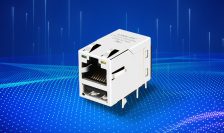
La combinación de conector RJ45 y USB de LINK-PP, modelo LPJU3102ABNL, integra Ethernet y USB, ofreciendo durabilidad, blindaje contra interferencias electromagnéticas (EMI) e indicadores LED para redes 10/100 Base-T.
CPRI (Interfaz Pública Común de Radio) conecta las unidades de banda base con las unidades de radio remotas, permitiendo comunicaciones de alta velocidad y baja latencia en redes inalámbricas.
Un amplificador de fibra dopada con erbio (EDFA) refuerza las señales ópticas en redes de fibra, posibilitando comunicaciones a larga distancia con mínima pérdida y alta eficiencia.
Comprenda los parámetros clave de los módulos ópticos, incluidas la velocidad de transmisión, la distancia, la longitud de onda y la compatibilidad con la fibra, para un mejor rendimiento de la red.
EMC (Compatibilidad Electromagnética) garantiza que los dispositivos funcionen de forma segura y fiable en entornos compartidos, minimizando las interferencias y cumpliendo con los estándares de conformidad.
What are SFP ports on a switch? Learn how SFP ports support fiber and Ethernet connections, how they compare with RJ45 and SFP+, and which module you need.
An SGMII SFP transceiver enables fast Ethernet connections over copper or fiber, supporting flexible speeds and device compatibility in modern networks.
What Frame Check Sequence (FCS) means, how CRC-32 detects corrupted Ethernet frames, and why FCS errors are commonly associated with cable faults, fiber issues, or optical transceiver problems.
Discover how optical cross‑connect (OXC) enables all‑optical switching in DWDM/OTN networks, with LINK‑PP SFP modules ensuring seamless integration and superior performance.
Learn what Dispersion Compensation Fiber (DCF) is, how it reduces chromatic dispersion, where it is used, and why it matters in modern optical networks.
Learn what OEO means in optical communication, how optical-electrical-optical regeneration works, and when it is used in DWDM networks and optical links. Keywords:
Explore Copper SFP vs. Fiber SFP differences, performance, compatibility, and cost. Learn how to choose the right SFP module for home labs, data centers, and PoE networks.
Explore the features, applications, and selection guide for optical transceiver SFP+ 10G single-mode 1310nm 10km LC modules for data centers and enterprise networks.
Learn how multimode SFP+ (10GBASE-SR) transceivers work, including fiber types, transmission distance, specifications, and common data center use cases.
Learn what a 1000BASE-T Copper SFP is, how RJ45 SFP modules work, when to use copper SFP instead of fiber, compatibility issues, and common troubleshooting tips.
Understand what a third-party SFP is, how compatible optics work with Cisco, Juniper, and Arista switches, and the cost, risks, and buying tips for reliable network deployments.
A complete technical guide to SFP-10GLR-31 transceivers covering 10GBASE-LR specifications, wavelength, fiber compatibility, switch support, and real deployment scenarios.
A technical guide to SFP+ 100km optics, explaining 10GBASE-ZR modules, optical link budgets, DWDM solutions, and real-world deployment tips for long-distance fiber networks.
Explain what a 100km SFP transceiver is, how ER and ZR differ, required wavelength, optical budget calculation, and whether amplification is needed for long-haul fiber links.
Complete guide to long distance transceivers covering 10km to 120km optics, 1310nm vs 1550nm, ER/ZR modules, link budget calculation, and deployment best practices.
Subscribe to LINK-PP
newsletter
Don’t miss anything. Get all the latest posts delivered straight to your inbox.