Bienvenido a la Comunidad LINK-PP

Más publicaciones

What are SFP ports on a switch? Learn how SFP ports support fiber and Ethernet connections, how they compare with RJ45 and SFP+, and which module you need.
Learn what an SFP link is, why it fails, and how to fix compatibility, cabling, and link-flap issues with practical checks and clear steps.
Optical transceivers in UAVs enable high-speed, secure, and low-latency drone communication for real-time video, telemetry, and mission-critical data.
Explore the technology behind 400 G QSFP‑DD transceivers, including form factor, modulation, optical lanes, and thermal design.
Understand hot‑pluggable optical modules insertion cycle limits, and learn care tips—including ESD-safe handling, dust prevention, and heat management.
Understand what CRC is, how cyclic redundancy check errors happen, how to fix them, and why CRC matters in networking, storage, and SFP modules.
What Frame Check Sequence (FCS) means, how CRC-32 detects corrupted Ethernet frames, and why FCS errors are commonly associated with cable faults, fiber issues, or optical transceiver problems.
Discover the LQ‑SW40‑SR4C 40GBASE‑SR module: high-speed, low-power, QSFP+ optics for multimode fibre networks. Perfect for data centres and network upgrades.
Discover how optical cross‑connect (OXC) enables all‑optical switching in DWDM/OTN networks, with LINK‑PP SFP modules ensuring seamless integration and superior performance.
Discover how EML works in optical modules, why it’s vital for high‑speed, long‑distance links, and how LINK‑PP brings EML‑based optical transceivers.
Adéntrate en el estándar IEEE 802.3bs, la base de los actuales estándares Ethernet de 200 G y 400 G. Descubre sus especificaciones, la modulación PAM4 y cómo esta tecnología impulsa los centros de datos hipercalados mediante transceptores ópticos.
Aprenda qué es IEEE 802.3bm y cómo define las interfaces PHY clave para Ethernet de 40 G y 100 G. Explore las tecnologías SR4, LR4 y CR4, y descubra por qué este estándar impulsa los centros de datos modernos.
Aprenda a emparejar módulos SFP con su switch o convertidor de medios verificando la compatibilidad, la velocidad, el tipo de fibra, la longitud de onda y la distancia. Una guía clara y práctica.
Seleccionar módulos SFP industriales requiere verificar la compatibilidad, el presupuesto de enlace, la clasificación de temperatura, la monitorización digital de diagnóstico (DDM, SFF-8472) y el soporte del proveedor. Guía práctica para redes robustas.

La óptica abierta y la desagregación en las redes de centros de datos reducen costos, aumentan la flexibilidad y mejoran el rendimiento, al tiempo que disminuyen la dependencia de un único proveedor y el consumo energético.
Las pruebas de envejecimiento y quemado (burn-in) garantizan la fiabilidad de los transceptores ópticos al detectar fallos tempranos, mejorar el rendimiento y prolongar la vida útil del módulo.
La óptica enchufable ofrece actualizaciones flexibles, mientras que la óptica integrada en la placa proporciona mayor velocidad e integración. Compare ambas opciones según las necesidades de su centro de datos.
Discover how TX Fault and RX LOS affect optical transceivers. This guide explains their functions, common triggers, and practical troubleshooting steps.
On-Board Optics boosts data speed, power efficiency, and channel density for data centers, supercomputers, and advanced network systems.
Pluggable optics enable flexible, cost-effective network upgrades and high-speed connections, with linear pluggable optics boosting AI and data center performance.
Learn what the EtherCAT Slave Controller (ESC) is and how it processes real-time frames, manages FMMU mapping, and enables high-speed industrial automation.
Aprenda qué es FMMU (Unidad de gestión de memoria de campo) y cómo permite la comunicación EtherCAT en tiempo real mediante una asignación eficiente de memoria y un procesamiento dinámico de datos.
Learn what the PCS (Physical Coding Sublayer) is, how it enables reliable Ethernet transmission, and why it matters for high-speed optical transceivers and network design.
Physical Medium Dependent (PMD) defines the optical and electrical rules of a PHY—wavelength, power, reach, and test points. Understand PMD specs and how they guide transceiver selection.
Learn what the PMA (Physical Medium Attachment) is, how it handles serialization and clock recovery, and why it is essential for modern high-speed optical transceivers.
Master Mean Time to Acknowledge (MTTA), the key metric for rapid response. Learn its role in system availability, how to calculate it, and proven steps to reduce MTTA for superior network uptime.
Master Mean Time to Detect (MTTD), the most crucial metric for avoiding silent failures. Learn the calculation, its role in modern observability, and how to reduce MTTD for superior system availability.
Discover MTBF (Mean Time Between Failures), its importance for system reliability, and how LINK‑PP industrial connectors and SFP/SFP+ modules help maximize uptime.
A clear, professional guide to IIoT (Industrial Internet of Things), covering architecture, protocols, security best practices, and suitable networking components for industrial deployments.
Learn what MTTR (Mean Time to Repair) means, why it matters for system reliability, and how LINK‑PP’s hot-swappable SFP/SFP+ transceivers reduce repair time.
El transceptor 40G QSFP+ LQ-M8540-SR4I ofrece datos fiables y de alta velocidad, así como durabilidad para redes industriales, incluso en condiciones extremas.

Descubra hasta qué distancia pueden transmitir los transceptores ópticos de 1550 nm sobre fibra monomodo: hasta 160 km. Consulte los modelos LINK-PP diseñados para uso de largo recorrido.
Conozca las principales aplicaciones de los módulos ópticos de 1550 nm en redes troncales, metropolitanas y empresariales. Descubra los transceptores LINK-PP diseñados para enlaces de fibra de larga distancia.


Los transceptores SFP28 LS-MM8532-S1C ofrecen velocidades de 25 G/32 G, amplia compatibilidad, bajo consumo energético y ahorro de costos: ideales para preparar su centro de datos para el futuro.
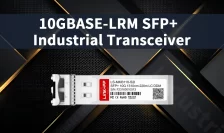
El transceptor industrial 10GBASE-LRM admite 10,3 Gbps, alcance de 220 m sobre fibra multimodo (MMF), temperatura industrial (−40 °C a 85 °C) y compatibilidad total con Cisco, Arista, Dell y H3C.
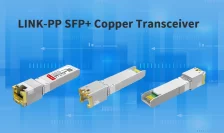
Descubra el transceptor SFP+ de cobre 10GBase-T de LINK-PP. Admite 10 Gbps sobre cables Cat6a/Cat7 hasta 80 m. Compatible con Cisco, Dell, H3C, Juniper y Arista.
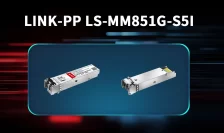
Descubra cómo el transceptor 1000BASE-SX LS-MM851G-S5I de LINK-PP ofrece una solución compatible con 100%, de alto rendimiento y rentable para reemplazar al GLC-SX-MMD.
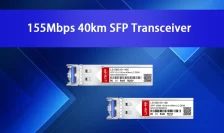
Reseña del módulo transceptor óptico SFP LS-SM3101-40C de LINK-PP, de 155 Mbps y 40 km sobre fibra monomodo (SMF), que abarca características, compatibilidad, diagnósticos y valor para las redes.
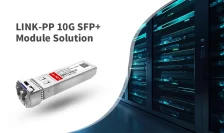
Explore el módulo SFP+ de 10 G y 10 km LS-SM3110-10C de LINK-PP. Descubra sus especificaciones, aplicaciones y por qué es una opción líder para una conectividad fiable y de larga distancia mediante fibra.
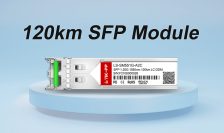
Descubra el LS-SM551G-A2C de LINK-PP: un módulo SFP de 1 G y 120 km, con alta compatibilidad y el mejor valor del mercado para despliegues de fibra a gran escala.

Add Your Heading Text Here