What are SFP ports on a switch? Learn how SFP ports support fiber and Ethernet connections, how they compare with RJ45 and SFP+, and which module you need.
What Frame Check Sequence (FCS) means, how CRC-32 detects corrupted Ethernet frames, and why FCS errors are commonly associated with cable faults, fiber issues, or optical transceiver problems.
Discover the LQ‑SW40‑SR4C 40GBASE‑SR module: high-speed, low-power, QSFP+ optics for multimode fibre networks. Perfect for data centres and network upgrades.
What are SFP ports on a switch? Learn how SFP ports support fiber and Ethernet connections, how they compare with RJ45 and SFP+, and which module you need.
What Frame Check Sequence (FCS) means, how CRC-32 detects corrupted Ethernet frames, and why FCS errors are commonly associated with cable faults, fiber issues, or optical transceiver problems.
Discover the LQ‑SW40‑SR4C 40GBASE‑SR module: high-speed, low-power, QSFP+ optics for multimode fibre networks. Perfect for data centres and network upgrades.
Discover how optical cross‑connect (OXC) enables all‑optical switching in DWDM/OTN networks, with LINK‑PP SFP modules ensuring seamless integration and superior performance.
What are SFP ports on a switch? Learn how SFP ports support fiber and Ethernet connections, how they compare with RJ45 and SFP+, and which module you need.
An SGMII SFP transceiver enables fast Ethernet connections over copper or fiber, supporting flexible speeds and device compatibility in modern networks.
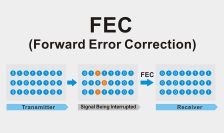
La corrección de errores hacia adelante (FEC, por sus siglas en inglés) en la comunicación óptica agrega redundancia para detectar y corregir errores, garantizando una transmisión de datos fiable y de alta velocidad.
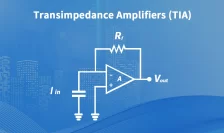
Los amplificadores transimpedancia (TIA) convierten la corriente del sensor en voltaje mediante un amplificador operacional y una resistencia de retroalimentación, lo que permite una medición precisa de la señal.
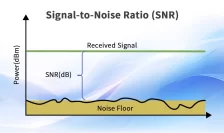
La SNR, o relación señal-ruido, mide la intensidad de la señal frente al ruido. Una SNR alta significa audio, imágenes y datos más nítidos, lo que mejora globalmente la calidad de la señal.
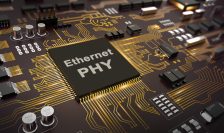
Aprenda qué es un PHY Ethernet, cómo conecta la MAC con el medio de red, sus funciones principales, los tipos de señales y cómo se combina con los magnéticos LINK‑PP para el diseño Ethernet.
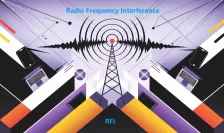
La RFI (Interferencia de Radiofrecuencia) son señales de radio no deseadas que interrumpen los dispositivos electrónicos, causando problemas de rendimiento y de comunicación.
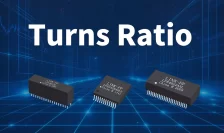
La relación de vueltas en los transformadores LAN define la relación entre los devanados, normalmente 1:1, lo que garantiza la integridad de la señal, la estabilidad de tensión y el cumplimiento de los estándares Ethernet.
Qué significa la certificación RoHS, qué sustancias están restringidas y por qué el cumplimiento es fundamental para los fabricantes e importadores de equipos electrónicos.
El código sin retorno a cero (NRZ) es un método de codificación digital que utiliza dos niveles de voltaje para los datos binarios, ofreciendo simplicidad y eficiencia en la comunicación digital.
La inductancia de circuito abierto (OCL, por sus siglas en inglés) en los transformadores Ethernet afecta la integridad de la señal y la supresión de interferencias electromagnéticas (EMI); una OCL más alta evita la pérdida de datos.
PAM4 es un método de modulación por amplitud de pulsos de cuatro niveles que transmite dos bits por símbolo, duplicando las velocidades de datos para redes de alta velocidad.
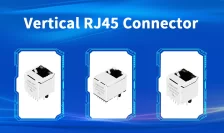
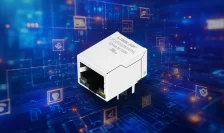
Descubra los conectores RJ45 verticales de LINK-PP. Ahorre espacio en la placa con diseños de entrada superior que ofrecen magnéticos integrados, blindaje y un rendimiento Ethernet fiable.
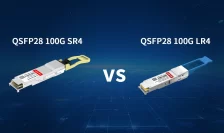
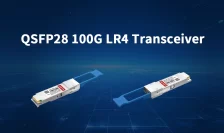
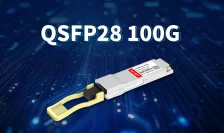
Compare los transceptores QSFP28 100G SR4 y LR4 para elegir el transceptor 100G adecuado para su red según la distancia, el tipo de fibra, los conectores y el presupuesto.
Un transceptor 100G LR4 permite la transferencia de datos a 100 Gbps a distancias de hasta 10 km mediante fibra monomodo, ideal para conexiones de red de alta velocidad y larga distancia.
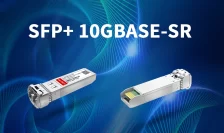
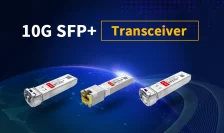
Explore el transceptor óptico SFP+ LINK-PP LS-MM8510-S3C de 850 nm y 10GBASE-SR. Alcance de hasta 300 m en fibra multimodo (MMF), bajo consumo de energía y compatibilidad total.
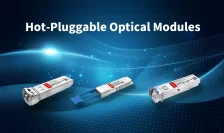
Explore los módulos ópticos de inserción y extracción en caliente: cómo funciona la sustitución en caliente, su valor ingenieril, las normas aplicables y las consideraciones para su implementación.
Descubra el transceptor QSFP28 100G SR4 LINK-PP LQ-M85100-SR4C, ideal para Ethernet 100G de corto alcance sobre fibra multimodo (MMF). Compatible con Cisco, Arista, FS, Dell, entre otros.
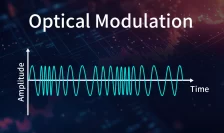
La modulación óptica cambia las propiedades de la luz para codificar datos, permitiendo una transmisión de alta velocidad y fiable en sistemas de comunicación por fibra óptica.
Descubra qué significa el ancho de banda de datos, cómo afecta a los dispositivos y por qué es importante en la comunicación digital. Aprenda cómo LINK-PP respalda la transferencia de datos de alta velocidad.
El conector RJ45 LPJG0926HENL con magnéticos integrados ofrece soporte PoE+, eficiencia espacial y cumplimiento normativo para aplicaciones Ethernet de alto rendimiento.
Subscribe to LINK-PP
newsletter
Don’t miss anything. Get all the latest posts delivered straight to your inbox.