What are SFP ports on a switch? Learn how SFP ports support fiber and Ethernet connections, how they compare with RJ45 and SFP+, and which module you need.
What Frame Check Sequence (FCS) means, how CRC-32 detects corrupted Ethernet frames, and why FCS errors are commonly associated with cable faults, fiber issues, or optical transceiver problems.
Discover the LQ‑SW40‑SR4C 40GBASE‑SR module: high-speed, low-power, QSFP+ optics for multimode fibre networks. Perfect for data centres and network upgrades.
What are SFP ports on a switch? Learn how SFP ports support fiber and Ethernet connections, how they compare with RJ45 and SFP+, and which module you need.
What Frame Check Sequence (FCS) means, how CRC-32 detects corrupted Ethernet frames, and why FCS errors are commonly associated with cable faults, fiber issues, or optical transceiver problems.
Discover the LQ‑SW40‑SR4C 40GBASE‑SR module: high-speed, low-power, QSFP+ optics for multimode fibre networks. Perfect for data centres and network upgrades.
Discover how optical cross‑connect (OXC) enables all‑optical switching in DWDM/OTN networks, with LINK‑PP SFP modules ensuring seamless integration and superior performance.
What are SFP ports on a switch? Learn how SFP ports support fiber and Ethernet connections, how they compare with RJ45 and SFP+, and which module you need.
An SGMII SFP transceiver enables fast Ethernet connections over copper or fiber, supporting flexible speeds and device compatibility in modern networks.
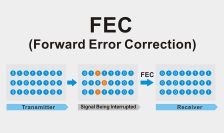
La corrección de errores hacia adelante (FEC, por sus siglas en inglés) en la comunicación óptica agrega redundancia para detectar y corregir errores, garantizando una transmisión de datos fiable y de alta velocidad.
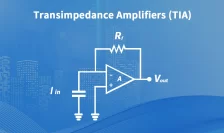
Los amplificadores transimpedancia (TIA) convierten la corriente del sensor en voltaje mediante un amplificador operacional y una resistencia de retroalimentación, lo que permite una medición precisa de la señal.
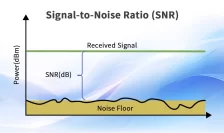
La SNR, o relación señal-ruido, mide la intensidad de la señal frente al ruido. Una SNR alta significa audio, imágenes y datos más nítidos, lo que mejora globalmente la calidad de la señal.
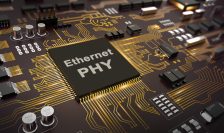
Aprenda qué es un PHY Ethernet, cómo conecta la MAC con el medio de red, sus funciones principales, los tipos de señales y cómo se combina con los magnéticos LINK‑PP para el diseño Ethernet.
La RFI (Interferencia de Radiofrecuencia) son señales de radio no deseadas que interrumpen los dispositivos electrónicos, causando problemas de rendimiento y de comunicación.
La relación de vueltas en los transformadores LAN define la relación entre los devanados, normalmente 1:1, lo que garantiza la integridad de la señal, la estabilidad de tensión y el cumplimiento de los estándares Ethernet.
Qué significa la certificación RoHS, qué sustancias están restringidas y por qué el cumplimiento es fundamental para los fabricantes e importadores de equipos electrónicos.
PAM4 es un método de modulación por amplitud de pulsos de cuatro niveles que transmite dos bits por símbolo, duplicando las velocidades de datos para redes de alta velocidad.
El código sin retorno a cero (NRZ) es un método de codificación digital que utiliza dos niveles de voltaje para los datos binarios, ofreciendo simplicidad y eficiencia en la comunicación digital.
La inductancia de circuito abierto (OCL, por sus siglas en inglés) en los transformadores Ethernet afecta la integridad de la señal y la supresión de interferencias electromagnéticas (EMI); una OCL más alta evita la pérdida de datos.
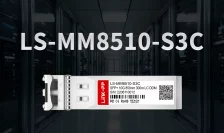
El transceptor óptico LINK-PP LS-MM8510-S3C iguala al Aruba J9150D en velocidad, compatibilidad y fiabilidad, ofreciendo un reemplazo sin interrupciones y rentable.
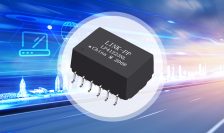
Descubra el transformador magnético LP41223NL PoE+ LINK-PP para Ethernet 10/100 Base-T. Alta aislamiento, baja pérdida e ideal para dispositivos de red PoE/PoE+.
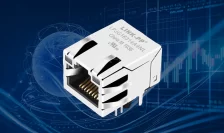
El conector RJ45 de puerto sencillo LPJG16314A4NL ofrece magnéticos integrados, blindaje contra interferencias electromagnéticas (EMI) e indicadores LED para una conexión Ethernet 10/100/1000 Base-T fiable.
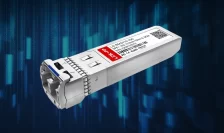
Descubra cómo los transceptores SFP/SFP+ de alto rendimiento de LINK-PP permiten una conectividad de baja latencia y escalable para bases de datos modernas y centros de datos. Explore las especificaciones técnicas, casos de uso y consejos de integración.
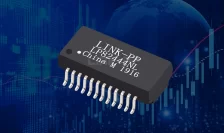
El transformador LAN PoE LP82444NL mejora la fiabilidad de la red, la integridad de la señal y la entrega de energía para aplicaciones Ethernet modernas eficientes, seguras y de alta velocidad.
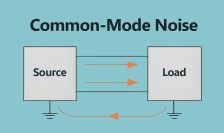
Comprenda el ruido de modo común: qué es, cómo afecta a Ethernet/EMI y cómo suprimirlo mediante componentes magnéticos y filtros. Una guía práctica para ingenieros.
Aprenda cómo los circuitos integrados (CI) funcionan junto con los productos LINK-PP, como conectores RJ45, transformadores LAN y transceptores ópticos. Explore sus aplicaciones en Ethernet, PoE y centros de datos.
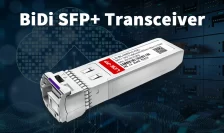
El transceptor SFP+ BiDi LS-BL495510-A0C ofrece un alcance de 100 km, ahorro de fibra y fácil instalación para conexiones de red fiables a larga distancia.
Compara los transceptores 10G SFP+ LR y 25G SFP28 LR a 1310 nm para enlaces de fibra monomodo de 10 km. Aprende las diferencias en rendimiento, potencia, tipo de láser, costo y cuándo actualizar. Explora los modelos de LINK-PP.
Aprenda qué es la especificación SFF-8436, cómo define los transceptores QSFP+ y por qué resulta fundamental para Ethernet 40G, InfiniBand y Fibre Channel.
Subscribe to LINK-PP
newsletter
Don’t miss anything. Get all the latest posts delivered straight to your inbox.