What are SFP ports on a switch? Learn how SFP ports support fiber and Ethernet connections, how they compare with RJ45 and SFP+, and which module you need.
Discover the LQ‑SW40‑SR4C 40GBASE‑SR module: high-speed, low-power, QSFP+ optics for multimode fibre networks. Perfect for data centres and network upgrades.
Discover the role of optical module housings in data centers & 5G. Learn about materials like ceramics & alloys, thermal challenges, and explore Link-PP's optical transceivers.
Explore the critical challenges of optical module housings in the 400G/800G era: heat management, material limits, signal integrity, and how innovation tackles them.
Discover how microcontroller units (MCUs) support optical transceivers by enabling real-time monitoring, diagnostics-enabled modules (DOM), and precise laser control. Explore their essential role in LINK-PP modules for improved reliability.
TDM (Time-Division Multiplexing) lets multiple signals share one channel by assigning time slots, improving efficiency in telecom, broadcasting, and networks.
Frequency-Division Multiplexing enables multiple signals to travel on one channel, ensuring clear, efficient communication for phones, TV, and internet.
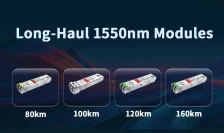
Learn the main applications of 1550nm optical modules in backbone, metro, and enterprise networks. Discover LINK-PP transceivers designed for long-distance fiber links.
What are SFP ports on a switch? Learn how SFP ports support fiber and Ethernet connections, how they compare with RJ45 and SFP+, and which module you need.
An SGMII SFP transceiver enables fast Ethernet connections over copper or fiber, supporting flexible speeds and device compatibility in modern networks.
Power Over Ethernet (PoE) combines power and data delivery via a single cable, simplifying installations for devices like IP cameras, VoIP phones, and IoT systems.
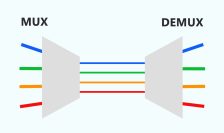
Wavelength Division Multiplexing (WDM) uses optical transceiver modules to send multiple data streams through a single fiber, boosting bandwidth and efficiency.
The Receiver Optical Sub-Assembly (ROSA) is a critical optoelectronic component in Optical Tranceivers, responsible for converting incoming optical signals into
DDM/DOM in optical transceivers provides real-time monitoring of key parameters like temperature and power, ensuring network reliability and early issue detection.
Discover the LQ‑SW40‑SR4C 40GBASE‑SR module: high-speed, low-power, QSFP+ optics for multimode fibre networks. Perfect for data centres and network upgrades.
Aprenda qué es la infraestructura hiperconvergente (HCI), cómo se compara con la virtualización y la dHCI, y cuándo resultan más adecuados los diseños basados en Nutanix, Sangfor o SFP.
Conozca la verdadera diferencia entre 1000BASE-LH y 1000BASE-LX, incluidas la longitud de onda, la compatibilidad con fibra, la nomenclatura de Cisco y cuándo usar cada uno.
Aprenda qué es un transceptor SFP Gigabit, compare las opciones 1000BASE-SX, LX y T, y resuelva con confianza problemas comunes de compatibilidad y configuración.
Aprenda qué es un SFP 10/100/1000BASE-T, cómo funcionan los módulos SFP de cobre RJ45, los problemas de compatibilidad, las preocupaciones por el calor y los casos de uso ideales en redes.
Compare CFP4 y QSFP28 según tamaño, consumo de energía, densidad y adecuación para implementación. Aprenda qué módulo de 100 G es mejor para centros de datos, telecomunicaciones y actualizaciones.
Explore la hoja de especificaciones del Netgear AGM731F con sus características técnicas, conector LC, distancias para OM1/OM3/OM4, compatibilidad, consumo de energía y límites operativos.
Comprenda los módulos SFP+ de 40 km (10GBASE-ER), incluidas sus especificaciones, compatibilidad con fibra monomodo (SMF) y cómo elegir el transceptor óptico de alcance extendido adecuado para su red.
Subscribe to LINK-PP
newsletter
Don’t miss anything. Get all the latest posts delivered straight to your inbox.