La sensibilidad del receptor indica la señal más débil que un dispositivo puede detectar. Aprenda cómo afecta la calidad de la conexión y qué significan los valores para el rendimiento de su dispositivo.
La sobrecarga del receptor ocurre cuando las señales son demasiado fuertes, causando distorsión, apagones o daños al equipo. Aprenda las causas, los síntomas y consejos para prevenirla.
XGS-PON ofrece velocidades simétricas de fibra de 10 Gbps, permitiendo internet rápido y fiable para hogares y empresas, con actualizaciones sencillas y bajo consumo energético.
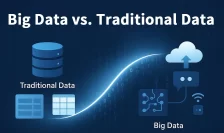
Aprenda las diferencias entre Big Data y Datos Tradicionales, incluyendo escala, velocidad, complejidad y necesidades de infraestructura. Descubra cómo los módulos ópticos habilitan las cargas de trabajo modernas de Big Data.
Descubra qué es el Big Data, sus características 5V, aplicaciones en el mundo real, tecnologías y tendencias futuras. Aprenda cómo los transceptores ópticos respaldan las redes de Big Data.
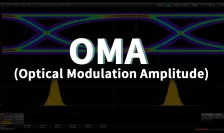
Aprenda qué significa OMA (amplitud de modulación óptica) en las comunicaciones ópticas, cómo calcularla a partir de P₁/P₀ y la relación de extinción, y por qué es fundamental en las especificaciones de transceptores, como los módulos SFP LINK-PP.
La guía exhaustiva sobre bases de datos abarca conceptos clave, tipos, diseño y mejores prácticas para elegir, gestionar y optimizar los sistemas modernos de bases de datos.
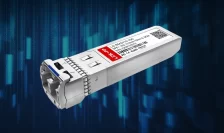
Descubra cómo los transceptores SFP/SFP+ de alto rendimiento de LINK-PP permiten una conectividad de baja latencia y escalable para bases de datos modernas y centros de datos. Explore las especificaciones técnicas, casos de uso y consejos de integración.
El EPON ofrece internet rápido y fiable mediante cables de fibra óptica con un diseño sencillo y rentable, lo que lo convierte en la opción ideal para hogares y empresas que buscan acceso de alta velocidad.
El GPON ofrece internet de alta velocidad, telefonía y televisión mediante cables de fibra óptica, brindando una conexión de banda ancha fiable y rentable para hogares y empresas.
What are SFP ports on a switch? Learn how SFP ports support fiber and Ethernet connections, how they compare with RJ45 and SFP+, and which module you need.
An SGMII SFP transceiver enables fast Ethernet connections over copper or fiber, supporting flexible speeds and device compatibility in modern networks.
Learn what the EtherCAT Slave Controller (ESC) is and how it processes real-time frames, manages FMMU mapping, and enables high-speed industrial automation.
Aprenda qué es FMMU (Unidad de gestión de memoria de campo) y cómo permite la comunicación EtherCAT en tiempo real mediante una asignación eficiente de memoria y un procesamiento dinámico de datos.
Learn what the PCS (Physical Coding Sublayer) is, how it enables reliable Ethernet transmission, and why it matters for high-speed optical transceivers and network design.
Physical Medium Dependent (PMD) defines the optical and electrical rules of a PHY—wavelength, power, reach, and test points. Understand PMD specs and how they guide transceiver selection.
Learn what the PMA (Physical Medium Attachment) is, how it handles serialization and clock recovery, and why it is essential for modern high-speed optical transceivers.
Master Mean Time to Acknowledge (MTTA), the key metric for rapid response. Learn its role in system availability, how to calculate it, and proven steps to reduce MTTA for superior network uptime.
Master Mean Time to Detect (MTTD), the most crucial metric for avoiding silent failures. Learn the calculation, its role in modern observability, and how to reduce MTTD for superior system availability.
Learn what MTTR (Mean Time to Repair) means, why it matters for system reliability, and how LINK‑PP’s hot-swappable SFP/SFP+ transceivers reduce repair time.
Discover MTBF (Mean Time Between Failures), its importance for system reliability, and how LINK‑PP industrial connectors and SFP/SFP+ modules help maximize uptime.
A clear, professional guide to IIoT (Industrial Internet of Things), covering architecture, protocols, security best practices, and suitable networking components for industrial deployments.
Discover the LQ‑SW40‑SR4C 40GBASE‑SR module: high-speed, low-power, QSFP+ optics for multimode fibre networks. Perfect for data centres and network upgrades.
Aprenda qué es la infraestructura hiperconvergente (HCI), cómo se compara con la virtualización y la dHCI, y cuándo resultan más adecuados los diseños basados en Nutanix, Sangfor o SFP.
Conozca la verdadera diferencia entre 1000BASE-LH y 1000BASE-LX, incluidas la longitud de onda, la compatibilidad con fibra, la nomenclatura de Cisco y cuándo usar cada uno.
Aprenda qué es un transceptor SFP Gigabit, compare las opciones 1000BASE-SX, LX y T, y resuelva con confianza problemas comunes de compatibilidad y configuración.
Aprenda qué es un SFP 10/100/1000BASE-T, cómo funcionan los módulos SFP de cobre RJ45, los problemas de compatibilidad, las preocupaciones por el calor y los casos de uso ideales en redes.
Compare CFP4 y QSFP28 según tamaño, consumo de energía, densidad y adecuación para implementación. Aprenda qué módulo de 100 G es mejor para centros de datos, telecomunicaciones y actualizaciones.
Explore la hoja de especificaciones del Netgear AGM731F con sus características técnicas, conector LC, distancias para OM1/OM3/OM4, compatibilidad, consumo de energía y límites operativos.
Comprenda los módulos SFP+ de 40 km (10GBASE-ER), incluidas sus especificaciones, compatibilidad con fibra monomodo (SMF) y cómo elegir el transceptor óptico de alcance extendido adecuado para su red.
Aprenda las especificaciones del QSFP+ 40GBASE-LR4, los límites de distancia, consejos de compatibilidad y recomendaciones de compra. Evite problemas comunes de implementación con esta guía experta.
Subscribe to LINK-PP
newsletter
Don’t miss anything. Get all the latest posts delivered straight to your inbox.