Las redes ópticas pasivas utilizan fibra óptica y divisores sin alimentación para ofrecer Internet rápido y fiable desde los proveedores a múltiples usuarios de forma eficiente.
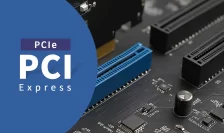
Aprenda qué es PCI Express (PCIe), cómo funciona y por qué es importante. Explore las versiones de PCIe, las velocidades de ancho de banda y su papel en GPU, SSD y centros de datos.
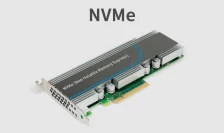
Aprenda qué significa NVMe (Non-Volatile Memory Express), cómo se compara con los SSD SATA y por qué ofrece mayor velocidad, menor latencia y mejor eficiencia.
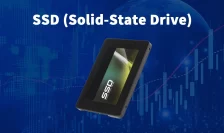
Descubra qué es una unidad de estado sólido (SSD), cómo funciona, sus ventajas frente a los discos duros (HDD) y su papel en la informática moderna y el almacenamiento empresarial.
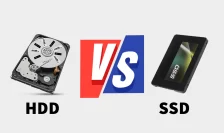
Descubra las diferencias entre los discos duros (HDD) y las unidades de estado sólido (SSD) en términos de velocidad, fiabilidad y costo. Averigüe qué unidad de almacenamiento se adapta mejor a sus necesidades y explore las soluciones de conectividad LINK-PP.
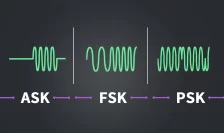
ASK es ideal para proyectos simples y económicos, mientras que FSK se ajusta mejor a entornos ruidosos y PSK ofrece velocidades de datos altas. Compara ASK, FSK y PSK aquí.
El cable óptico activo ofrece alta velocidad, bajo consumo de energía y conexiones fiables. Descubra cómo los cables ópticos activos (AOC) se integran en centros de datos, oficinas y entornos domésticos.
Un ONT conecta su hogar a Internet de fibra óptica al convertir las señales de luz en datos digitales para sus dispositivos, lo que permite un servicio rápido y fiable.
Descubra qué es una CPU (unidad central de procesamiento), cómo funciona y por qué es fundamental en la informática. Aprenda sobre su arquitectura, funciones y aplicaciones industriales.
El retardo diferencial de modo en la fibra óptica multimodo limita la velocidad y las tasas de datos al provocar la dispersión de los pulsos, reduciendo la claridad de la señal y el rendimiento de la red.
What are SFP ports on a switch? Learn how SFP ports support fiber and Ethernet connections, how they compare with RJ45 and SFP+, and which module you need.
An SGMII SFP transceiver enables fast Ethernet connections over copper or fiber, supporting flexible speeds and device compatibility in modern networks.
What Frame Check Sequence (FCS) means, how CRC-32 detects corrupted Ethernet frames, and why FCS errors are commonly associated with cable faults, fiber issues, or optical transceiver problems.
Discover how optical cross‑connect (OXC) enables all‑optical switching in DWDM/OTN networks, with LINK‑PP SFP modules ensuring seamless integration and superior performance.
Learn what Dispersion Compensation Fiber (DCF) is, how it reduces chromatic dispersion, where it is used, and why it matters in modern optical networks.
Learn what OEO means in optical communication, how optical-electrical-optical regeneration works, and when it is used in DWDM networks and optical links. Keywords:
Aprenda qué es una fuente de luz óptica por fibra, cómo funciona, sus tipos y cómo elegir la adecuada para pruebas precisas de fibra y rendimiento de red.
El transceptor 40G QSFP+ LQ-M8540-SR4I ofrece datos fiables y de alta velocidad, así como durabilidad para redes industriales, incluso en condiciones extremas.
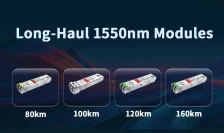
Descubra hasta qué distancia pueden transmitir los transceptores ópticos de 1550 nm sobre fibra monomodo: hasta 160 km. Consulte los modelos LINK-PP diseñados para uso de largo recorrido.
Conozca las principales aplicaciones de los módulos ópticos de 1550 nm en redes troncales, metropolitanas y empresariales. Descubra los transceptores LINK-PP diseñados para enlaces de fibra de larga distancia.
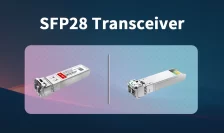
Los transceptores SFP28 LS-MM8532-S1C ofrecen velocidades de 25 G/32 G, amplia compatibilidad, bajo consumo energético y ahorro de costos: ideales para preparar su centro de datos para el futuro.
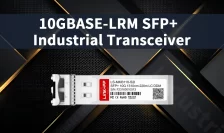
El transceptor industrial 10GBASE-LRM admite 10,3 Gbps, alcance de 220 m sobre fibra multimodo (MMF), temperatura industrial (−40 °C a 85 °C) y compatibilidad total con Cisco, Arista, Dell y H3C.
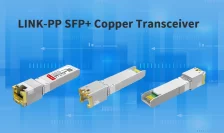
Descubra el transceptor SFP+ de cobre 10GBase-T de LINK-PP. Admite 10 Gbps sobre cables Cat6a/Cat7 hasta 80 m. Compatible con Cisco, Dell, H3C, Juniper y Arista.
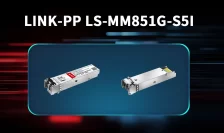
Descubra cómo el transceptor 1000BASE-SX LS-MM851G-S5I de LINK-PP ofrece una solución compatible con 100%, de alto rendimiento y rentable para reemplazar al GLC-SX-MMD.
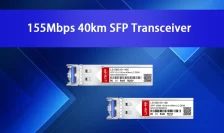
Reseña del módulo transceptor óptico SFP LS-SM3101-40C de LINK-PP, de 155 Mbps y 40 km sobre fibra monomodo (SMF), que abarca características, compatibilidad, diagnósticos y valor para las redes.
Explore el módulo SFP+ de 10 G y 10 km LS-SM3110-10C de LINK-PP. Descubra sus especificaciones, aplicaciones y por qué es una opción líder para una conectividad fiable y de larga distancia mediante fibra.
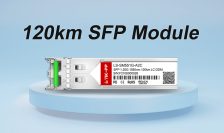
Descubra el LS-SM551G-A2C de LINK-PP: un módulo SFP de 1 G y 120 km, con alta compatibilidad y el mejor valor del mercado para despliegues de fibra a gran escala.
Subscribe to LINK-PP
newsletter
Don’t miss anything. Get all the latest posts delivered straight to your inbox.