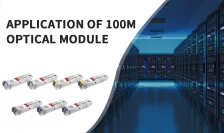
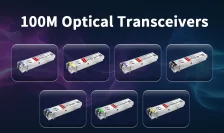
El módulo óptico de 100 M permite conexiones rápidas y fiables para oficinas, fábricas, sistemas de seguridad y redes de telecomunicaciones, apoyando una transferencia eficiente de datos a corta distancia.
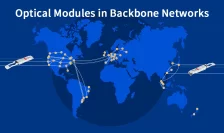
Descubra cómo los módulos ópticos impulsan las redes troncales: transferencia de datos de alta velocidad, fiabilidad, ventajas de LINK-PP y consejos para la adquisición en centros de datos y operadores.
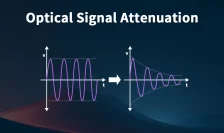
La atenuación en los transceptores ópticos debilita las señales. Gestione las pérdidas verificando los cables, limpiando los conectores y utilizando las herramientas adecuadas para fibra.
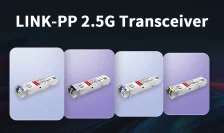
Los módulos ópticos de 2,5 G aumentan la velocidad de la red, simplifican las actualizaciones y reducen costos mediante una instalación sencilla y una amplia compatibilidad con redes modernas.
OTU4 es una capa digital de alta velocidad en redes de transporte óptico, que permite la transmisión fiable de datos a 100GE con una fuerte corrección de errores y escalabilidad.
Un ISP es la empresa que brinda acceso a Internet a particulares y empresas. Descubra cómo los ISP posibilitan la conectividad y cómo los componentes magnéticos de LINK-PP respaldan su infraestructura.
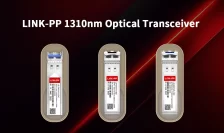
El módulo óptico de 1310 nm ofrece una transmisión de datos fiable y rentable para redes metropolitanas, de campus y empresariales. Compare el rendimiento, el alcance y los casos de uso.
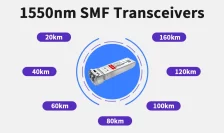
Descubra cómo un transceptor óptico de 1550 nm convierte señales eléctricas en luz para enlaces de fibra de larga distancia. Conozca sus ventajas, especificaciones técnicas y los modelos LINK-PP.
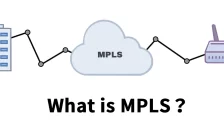
Explore cómo los módulos ópticos LINK-PP mejoran las redes MPLS, apoyando la transmisión de datos de alta velocidad y fiable para redes troncales de operadores, interconexión de centros de datos (DCI) y redes privadas virtuales (VPN) empresariales.
Elija el transceptor óptico de 100 M adecuado verificando la compatibilidad, el tipo de fibra, la longitud de onda, la distancia, la velocidad de datos, el conector y la fiabilidad.
What are SFP ports on a switch? Learn how SFP ports support fiber and Ethernet connections, how they compare with RJ45 and SFP+, and which module you need.
An SGMII SFP transceiver enables fast Ethernet connections over copper or fiber, supporting flexible speeds and device compatibility in modern networks.
What Frame Check Sequence (FCS) means, how CRC-32 detects corrupted Ethernet frames, and why FCS errors are commonly associated with cable faults, fiber issues, or optical transceiver problems.
Discover how optical cross‑connect (OXC) enables all‑optical switching in DWDM/OTN networks, with LINK‑PP SFP modules ensuring seamless integration and superior performance.
Learn what Dispersion Compensation Fiber (DCF) is, how it reduces chromatic dispersion, where it is used, and why it matters in modern optical networks.
Learn what OEO means in optical communication, how optical-electrical-optical regeneration works, and when it is used in DWDM networks and optical links. Keywords:
El conector RJ45 magnético industrial LPJ4014CNL ofrece un blindaje robusto contra interferencias electromagnéticas (EMI), contactos dorados y certificaciones, garantizando una conectividad fiable para dispositivos IoT en cualquier entorno.
Explore how LINK-PP’s LS-DW4010-40I SFP+ DWDM transceiver enhances LTE fronthaul and backhaul with 10G speed, 40 km reach and industrial temperature performance.
Explore cómo los láseres, los moduladores y los fotodiodos constituyen el núcleo de los transceptores ópticos, permitiendo la transmisión de datos a alta velocidad y baja latencia a través de redes globales.
El transceptor SFP28 ofrece velocidad de 25G, bajo consumo energético, amplia compatibilidad y rendimiento confiable para redes eficientes y preparadas para el futuro en centros de datos.
El LQ-BL859140-SRC ofrece mejor relación calidad-precio, mayor compatibilidad y velocidades más rápidas que el QSFP-40G-SR-BD de Cisco para sus necesidades de actualización de red.
Descubra el LINK-PP LS-MM8510-S3C, un transceptor compatible con el estándar MSA 100% y totalmente compatible con el EX-SFP-10GE-SR de Juniper. Ahorre hasta un 60% sin sacrificar rendimiento. Incluye soporte DDM/DOM. Ideal para centros de datos y redes empresariales.
Maximice la eficiencia de su red con LS-Explore consejos prácticos e implementaciones basadas en las mejores prácticas para el SFP+ BiDi de 10 G LINK-PP LS-BL332710-60C (60 km). Aprenda cuándo elegir BiDi, cómo validar enlaces y listas de verificación para la implementación.
Explore el transceptor SFP28 de grado industrial LINK-PP LS-SM3125-10I, que ofrece 25 Gb/s sobre fibra monomodo de 10 km a 1310 nm, con soporte DOM y funcionamiento en amplio rango de temperaturas, ideal para infraestructuras troncales y backhaul frontal 5G.
El transceptor óptico LINK-PP LS-SM311G-10C de 1 G ofrece velocidad de 1,25 Gbps, alcance de 10 km, amplia compatibilidad y rendimiento fiable para redes de fibra.
El conector magnético RJ45 PoE+ 10G ofrece datos rápidos, energía PoE y una integridad de señal superior, lo que lo convierte en ideal para una conectividad de red fiable y de alta velocidad.
Subscribe to LINK-PP
newsletter
Don’t miss anything. Get all the latest posts delivered straight to your inbox.