Learn what Parallel Optics is, how it enables high-speed data transmission and how LINK-PP QSFP28 SR4 and 200/400/800G transceiver modules support this technology.
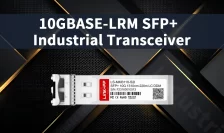
10GBASE-LRM Industrial Transceiver Supports 10.3Gbps, 220m MMF reach, industrial temperature (-40~85°C), and full compatibility with Cisco, Arista, Dell, H3C.
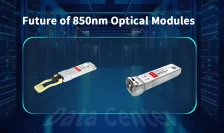
Explore the future of 850nm optical modules in data centers, covering SR8/SR16 advancements, parallel optics, and the impact of single-mode fiber adoption.
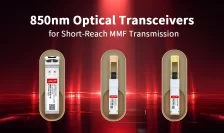
10GBASE-SR, 40GBASE-SR4, 100GBASE-SR4, and 400GBASE-SR8 850nm optical modules are the most reliable and cost-effective choice for short-reach multimode fiber connections.
What are SFP ports on a switch? Learn how SFP ports support fiber and Ethernet connections, how they compare with RJ45 and SFP+, and which module you need.
An SGMII SFP transceiver enables fast Ethernet connections over copper or fiber, supporting flexible speeds and device compatibility in modern networks.
Explore the fundamentals of Point-to-Point (P2P) network architecture, its working principles, and how LINK-PP RJ45 connectors and optical transceivers enable reliable high-speed communication.
Explore point-to-multipoint (P2MP) network architecture, working principle, advantages, and applications. Learn how LINK-PP optical transceivers support P2MP deployments.
What is CMOS? Learn the fundamentals of Complementary Metal-Oxide-Semiconductor technology, its working principle, key advantages, and its integration with silicon photonics and optical transceivers.
Internet Control Message Protocol (ICMP) helps diagnose network issues by sending error and status messages between devices for reliable communication.
Global Positioning System (GPS) uses satellites to provide accurate real-time location, navigation, and tracking for personal, business, and safety needs.
Fibre Channel over Ethernet (FCoE) enables Fibre Channel storage traffic to run on Ethernet networks, streamlining data center connectivity and reducing costs.
Discover the LQ‑SW40‑SR4C 40GBASE‑SR module: high-speed, low-power, QSFP+ optics for multimode fibre networks. Perfect for data centres and network upgrades.
Aprenda qué es la infraestructura hiperconvergente (HCI), cómo se compara con la virtualización y la dHCI, y cuándo resultan más adecuados los diseños basados en Nutanix, Sangfor o SFP.
Conozca la verdadera diferencia entre 1000BASE-LH y 1000BASE-LX, incluidas la longitud de onda, la compatibilidad con fibra, la nomenclatura de Cisco y cuándo usar cada uno.
Aprenda qué es un transceptor SFP Gigabit, compare las opciones 1000BASE-SX, LX y T, y resuelva con confianza problemas comunes de compatibilidad y configuración.
Aprenda qué es un SFP 10/100/1000BASE-T, cómo funcionan los módulos SFP de cobre RJ45, los problemas de compatibilidad, las preocupaciones por el calor y los casos de uso ideales en redes.
Compare CFP4 y QSFP28 según tamaño, consumo de energía, densidad y adecuación para implementación. Aprenda qué módulo de 100 G es mejor para centros de datos, telecomunicaciones y actualizaciones.
Explore la hoja de especificaciones del Netgear AGM731F con sus características técnicas, conector LC, distancias para OM1/OM3/OM4, compatibilidad, consumo de energía y límites operativos.
Comprenda los módulos SFP+ de 40 km (10GBASE-ER), incluidas sus especificaciones, compatibilidad con fibra monomodo (SMF) y cómo elegir el transceptor óptico de alcance extendido adecuado para su red.
Subscribe to LINK-PP
newsletter
Don’t miss anything. Get all the latest posts delivered straight to your inbox.