Descubra las principales especificaciones eléctricas, mecánicas y ambientales de los conectores RJ45 integrados para seleccionar la solución adecuada para sus aplicaciones Ethernet.
Comprenda el papel de los transceptores 1×9 en las redes de fibra óptica, su relación costo-beneficio, su compatibilidad con sistemas heredados y su transmisión fiable de datos.
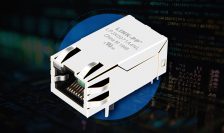
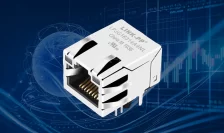
Revisión del conector RJ45 Magjack LPJK0071AINL de LINK-PP para 100/1000 Base-T, destacando sus magnéticos integrados, blindaje contra interferencias electromagnéticas (EMI) y rendimiento Ethernet de alta velocidad.
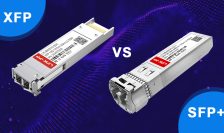
Compare los transceptores XFP y SFP+: XFP ofrece un rendimiento de alta velocidad a larga distancia, mientras que SFP+ es compacto, eficiente energéticamente e ideal para tareas de corto alcance.
Power Over Ethernet (PoE) combines power and data delivery via a single cable, simplifying installations for devices like IP cameras, VoIP phones, and IoT systems.
Las certificaciones de calidad, como ISO 9001:2015, RoHS y FCC, garantizan que los transceptores ópticos cumplan con estrictos estándares de fiabilidad, conformidad y rendimiento.
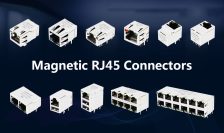
Un conector RJ45 con magnéticos integra transformadores y filtros para mejorar la calidad de la señal, suprimir las interferencias electromagnéticas (EMI) y simplificar los diseños. Ideal para su uso en conectores RJ45 magnéticos.
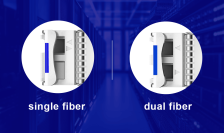
Los transceptores de fibra simple, como el transceptor Bidi, utilizan una sola fibra para la transmisión bidireccional de datos, mientras que los transceptores de fibra dual requieren dos fibras para TX y RX separados.
Los conectores RJ45 integrados LINK-PP ofrecen magnéticos integrados, blindaje contra interferencias electromagnéticas (EMI), soporte para PoE y velocidades rápidas de Ethernet, garantizando redes fiables y eficientes.
El empaquetado COB, BOX y TO-CAN afecta a los dispositivos ópticos al equilibrar tamaño, costo y fiabilidad. Descubra cómo COB destaca en aplicaciones compactas y de alta velocidad.
What are SFP ports on a switch? Learn how SFP ports support fiber and Ethernet connections, how they compare with RJ45 and SFP+, and which module you need.
An SGMII SFP transceiver enables fast Ethernet connections over copper or fiber, supporting flexible speeds and device compatibility in modern networks.
What Frame Check Sequence (FCS) means, how CRC-32 detects corrupted Ethernet frames, and why FCS errors are commonly associated with cable faults, fiber issues, or optical transceiver problems.
Discover how optical cross‑connect (OXC) enables all‑optical switching in DWDM/OTN networks, with LINK‑PP SFP modules ensuring seamless integration and superior performance.
Learn what Dispersion Compensation Fiber (DCF) is, how it reduces chromatic dispersion, where it is used, and why it matters in modern optical networks.
Learn what OEO means in optical communication, how optical-electrical-optical regeneration works, and when it is used in DWDM networks and optical links. Keywords:
Aprenda qué es una fuente de luz óptica por fibra, cómo funciona, sus tipos y cómo elegir la adecuada para pruebas precisas de fibra y rendimiento de red.
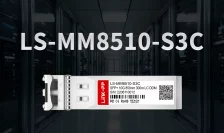
El transceptor óptico LINK-PP LS-MM8510-S3C iguala al Aruba J9150D en velocidad, compatibilidad y fiabilidad, ofreciendo un reemplazo sin interrupciones y rentable.
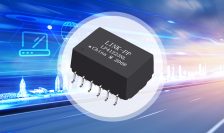
Descubra el transformador magnético LP41223NL PoE+ LINK-PP para Ethernet 10/100 Base-T. Alta aislamiento, baja pérdida e ideal para dispositivos de red PoE/PoE+.
El conector RJ45 de puerto sencillo LPJG16314A4NL ofrece magnéticos integrados, blindaje contra interferencias electromagnéticas (EMI) e indicadores LED para una conexión Ethernet 10/100/1000 Base-T fiable.
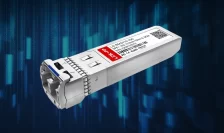
Descubra cómo los transceptores SFP/SFP+ de alto rendimiento de LINK-PP permiten una conectividad de baja latencia y escalable para bases de datos modernas y centros de datos. Explore las especificaciones técnicas, casos de uso y consejos de integración.
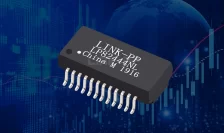
El transformador LAN PoE LP82444NL mejora la fiabilidad de la red, la integridad de la señal y la entrega de energía para aplicaciones Ethernet modernas eficientes, seguras y de alta velocidad.
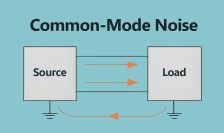
Comprenda el ruido de modo común: qué es, cómo afecta a Ethernet/EMI y cómo suprimirlo mediante componentes magnéticos y filtros. Una guía práctica para ingenieros.
Aprenda cómo los circuitos integrados (CI) funcionan junto con los productos LINK-PP, como conectores RJ45, transformadores LAN y transceptores ópticos. Explore sus aplicaciones en Ethernet, PoE y centros de datos.
El transceptor SFP+ BiDi LS-BL495510-A0C ofrece un alcance de 100 km, ahorro de fibra y fácil instalación para conexiones de red fiables a larga distancia.
Compara los transceptores 10G SFP+ LR y 25G SFP28 LR a 1310 nm para enlaces de fibra monomodo de 10 km. Aprende las diferencias en rendimiento, potencia, tipo de láser, costo y cuándo actualizar. Explora los modelos de LINK-PP.
Aprenda qué es la especificación SFF-8436, cómo define los transceptores QSFP+ y por qué resulta fundamental para Ethernet 40G, InfiniBand y Fibre Channel.
Subscribe to LINK-PP
newsletter
Don’t miss anything. Get all the latest posts delivered straight to your inbox.