What are SFP ports on a switch? Learn how SFP ports support fiber and Ethernet connections, how they compare with RJ45 and SFP+, and which module you need.
What Frame Check Sequence (FCS) means, how CRC-32 detects corrupted Ethernet frames, and why FCS errors are commonly associated with cable faults, fiber issues, or optical transceiver problems.
Discover the LQ‑SW40‑SR4C 40GBASE‑SR module: high-speed, low-power, QSFP+ optics for multimode fibre networks. Perfect for data centres and network upgrades.
Discover how optical cross‑connect (OXC) enables all‑optical switching in DWDM/OTN networks, with LINK‑PP SFP modules ensuring seamless integration and superior performance.
Descubra cómo los módulos ópticos (SFP, QSFP, CWDM) permiten comunicaciones de alta velocidad y larga distancia en clústeres de GPU para entrenamiento de IA y computación de alto rendimiento (HPC). Explore las soluciones LINK-PP para una red de clústeres fiable.
La banda ancha es el servicio de internet en sí, mientras que WiFi es la tecnología inalámbrica que lo distribuye. Aprende sus diferencias y cómo los transceptores ópticos de LINK-PP mejoran el rendimiento de la banda ancha.
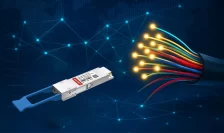
Descubra cómo los transceptores ópticos impulsan las redes de banda ancha al permitir la transmisión de datos a alta velocidad mediante fibra, baja latencia e infraestructura escalable con las soluciones LINK-PP.
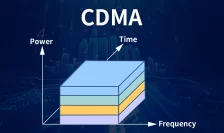
El acceso múltiple por división de código permite que múltiples usuarios compartan la misma banda de frecuencia mediante códigos únicos, asegurando una comunicación inalámbrica segura y clara.
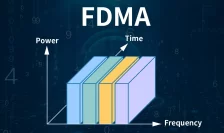
El acceso múltiple por división de frecuencia asigna a cada usuario una banda de frecuencia única, permitiendo una comunicación clara y simultánea en teléfonos, radios y satélites.
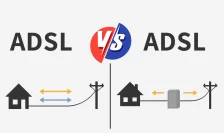
Compare las conexiones de banda ancha ADSL y VDSL. Conozca las diferencias clave en velocidad, rendimiento y aplicaciones para elegir la tecnología DSL adecuada según sus necesidades.
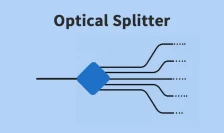
explica cómo los divisores ópticos permiten la FTTH, sus tipos (FBT frente a PLC), las relaciones clave y cómo se integran con los módulos ópticos LINK-PP para una red sin interrupciones.
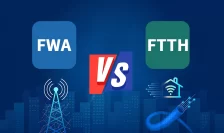
Compare las tecnologías de banda ancha FTTH y FWA. Aprenda sus diferencias en velocidad, costo, despliegue y casos de uso. Descubra cómo los módulos SFP LINK-PP soportan ambas redes.
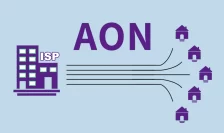
Las redes ópticas pasivas utilizan fibra óptica y divisores sin alimentación para ofrecer Internet rápido y fiable desde los proveedores a múltiples usuarios de forma eficiente.
Learn what the EtherCAT Slave Controller (ESC) is and how it processes real-time frames, manages FMMU mapping, and enables high-speed industrial automation.
Aprenda qué es FMMU (Unidad de gestión de memoria de campo) y cómo permite la comunicación EtherCAT en tiempo real mediante una asignación eficiente de memoria y un procesamiento dinámico de datos.
Physical Medium Dependent (PMD) defines the optical and electrical rules of a PHY—wavelength, power, reach, and test points. Understand PMD specs and how they guide transceiver selection.
Learn what the PMA (Physical Medium Attachment) is, how it handles serialization and clock recovery, and why it is essential for modern high-speed optical transceivers.
Learn what the PCS (Physical Coding Sublayer) is, how it enables reliable Ethernet transmission, and why it matters for high-speed optical transceivers and network design.
Master Mean Time to Acknowledge (MTTA), the key metric for rapid response. Learn its role in system availability, how to calculate it, and proven steps to reduce MTTA for superior network uptime.
Master Mean Time to Detect (MTTD), the most crucial metric for avoiding silent failures. Learn the calculation, its role in modern observability, and how to reduce MTTD for superior system availability.
Discover MTBF (Mean Time Between Failures), its importance for system reliability, and how LINK‑PP industrial connectors and SFP/SFP+ modules help maximize uptime.
A clear, professional guide to IIoT (Industrial Internet of Things), covering architecture, protocols, security best practices, and suitable networking components for industrial deployments.
Learn what MTTR (Mean Time to Repair) means, why it matters for system reliability, and how LINK‑PP’s hot-swappable SFP/SFP+ transceivers reduce repair time.
Explore Copper SFP vs. Fiber SFP differences, performance, compatibility, and cost. Learn how to choose the right SFP module for home labs, data centers, and PoE networks.
Learn how multimode SFP+ (10GBASE-SR) transceivers work, including fiber types, transmission distance, specifications, and common data center use cases.
Learn what a 1000BASE-T Copper SFP is, how RJ45 SFP modules work, when to use copper SFP instead of fiber, compatibility issues, and common troubleshooting tips.
Explore the features, applications, and selection guide for optical transceiver SFP+ 10G single-mode 1310nm 10km LC modules for data centers and enterprise networks.
Understand what a third-party SFP is, how compatible optics work with Cisco, Juniper, and Arista switches, and the cost, risks, and buying tips for reliable network deployments.
A complete technical guide to SFP-10GLR-31 transceivers covering 10GBASE-LR specifications, wavelength, fiber compatibility, switch support, and real deployment scenarios.
A technical guide to SFP+ 100km optics, explaining 10GBASE-ZR modules, optical link budgets, DWDM solutions, and real-world deployment tips for long-distance fiber networks.
Explain what a 100km SFP transceiver is, how ER and ZR differ, required wavelength, optical budget calculation, and whether amplification is needed for long-haul fiber links.
Complete guide to long distance transceivers covering 10km to 120km optics, 1310nm vs 1550nm, ER/ZR modules, link budget calculation, and deployment best practices.
Subscribe to LINK-PP
newsletter
Don’t miss anything. Get all the latest posts delivered straight to your inbox.