What are SFP ports on a switch? Learn how SFP ports support fiber and Ethernet connections, how they compare with RJ45 and SFP+, and which module you need.
What Frame Check Sequence (FCS) means, how CRC-32 detects corrupted Ethernet frames, and why FCS errors are commonly associated with cable faults, fiber issues, or optical transceiver problems.
Discover the LQ‑SW40‑SR4C 40GBASE‑SR module: high-speed, low-power, QSFP+ optics for multimode fibre networks. Perfect for data centres and network upgrades.
Discover how optical cross‑connect (OXC) enables all‑optical switching in DWDM/OTN networks, with LINK‑PP SFP modules ensuring seamless integration and superior performance.
¿Qué es el terminal de línea óptica (OLT)? El OLT es el dispositivo principal en las redes de fibra óptica, encargado de convertir señales y gestionar los datos para conexiones de Internet rápidas y estables.
¿Qué es la unidad de red óptica (ONU)? La ONU convierte las señales de fibra óptica para sus dispositivos, garantizando una conexión a Internet rápida y estable en el hogar o en entornos empresariales.
Explore las diferencias entre discos duros (HDD), unidades de estado sólido (SSD) y unidades NVMe. Aprenda sobre velocidad, coste y los mejores casos de uso, y vea cómo las soluciones de conectividad LINK-PP respaldan los sistemas de almacenamiento.
Descubra qué son los centros de datos, cómo funcionan, sus principales tipos y las tendencias futuras. Aprenda por qué los centros de datos impulsan la nube, la inteligencia artificial y los servicios digitales actuales.
Las redes ópticas pasivas utilizan fibra óptica y divisores sin alimentación para ofrecer Internet rápido y fiable desde los proveedores a múltiples usuarios de forma eficiente.
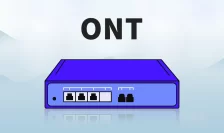
Un ONT conecta su hogar a Internet de fibra óptica al convertir las señales de luz en datos digitales para sus dispositivos, lo que permite un servicio rápido y fiable.
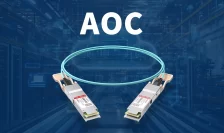
El cable óptico activo ofrece alta velocidad, bajo consumo de energía y conexiones fiables. Descubra cómo los cables ópticos activos (AOC) se integran en centros de datos, oficinas y entornos domésticos.
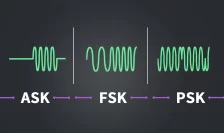
ASK es ideal para proyectos simples y económicos, mientras que FSK se ajusta mejor a entornos ruidosos y PSK ofrece velocidades de datos altas. Compara ASK, FSK y PSK aquí.
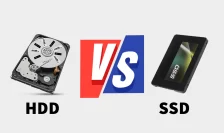
Descubra las diferencias entre los discos duros (HDD) y las unidades de estado sólido (SSD) en términos de velocidad, fiabilidad y costo. Averigüe qué unidad de almacenamiento se adapta mejor a sus necesidades y explore las soluciones de conectividad LINK-PP.
Esta guía aclara las diferencias entre los factores de forma de transceptores SFF soldados y 1×9. Aprenda sus especificaciones, aplicaciones y cómo elegir el adecuado para su red.
Descubra el ecualizador con retroalimentación de decisiones (DFE), la técnica no lineal esencial para minimizar la interferencia entre símbolos (ISI). Aprenda cómo el DFE mejora la tasa de errores de bit (BER) en transceptores ópticos y en enlaces de datos de larga distancia.
Aprenda qué es el FFE (ecualizador de avance), cómo funciona la ecualización de transmisión y por qué el FFE es esencial para módulos ópticos de alta velocidad y para la integridad de la señal SerDes.
Una red de área local inalámbrica (WLAN) conecta dispositivos como computadoras portátiles y teléfonos mediante ondas de radio, permitiendo redes flexibles y sin cables en hogares, escuelas u oficinas.
Aprenda cómo el ecualizador lineal de tiempo continuo (CTLE) mejora drásticamente la integridad de la señal en los módulos SFP, combatiendo eficazmente la pérdida del canal y maximizando el rendimiento del enlace.
SCP (copia segura) permite transferencias de archivos seguras y cifradas entre computadoras mediante SSH. Descubra cómo usar SCP, sus características y las mejores prácticas.
FTP sobre SSL (FTPS) protege las transferencias de archivos cifrando los datos con SSL/TLS, resguardando la información sensible contra accesos no autorizados durante su tránsito.
HTTP sobre SSL cifra sus datos, garantizando comunicaciones seguras y privadas y protegiendo la información sensible contra hackers durante la navegación web.
Comprenda TDECQ, la métrica crítica de calidad del transmisor PAM4 para módulos ópticos modernos. Aprenda cómo tdecq mide el cierre vertical del ojo y afecta el rendimiento y la conformidad de los módulos de 50/100/400 G.
Learn what the EtherCAT Slave Controller (ESC) is and how it processes real-time frames, manages FMMU mapping, and enables high-speed industrial automation.
Aprenda qué es FMMU (Unidad de gestión de memoria de campo) y cómo permite la comunicación EtherCAT en tiempo real mediante una asignación eficiente de memoria y un procesamiento dinámico de datos.
Explore Copper SFP vs. Fiber SFP differences, performance, compatibility, and cost. Learn how to choose the right SFP module for home labs, data centers, and PoE networks.
Learn how multimode SFP+ (10GBASE-SR) transceivers work, including fiber types, transmission distance, specifications, and common data center use cases.
Learn what a 1000BASE-T Copper SFP is, how RJ45 SFP modules work, when to use copper SFP instead of fiber, compatibility issues, and common troubleshooting tips.
Explore the features, applications, and selection guide for optical transceiver SFP+ 10G single-mode 1310nm 10km LC modules for data centers and enterprise networks.
Understand what a third-party SFP is, how compatible optics work with Cisco, Juniper, and Arista switches, and the cost, risks, and buying tips for reliable network deployments.
A complete technical guide to SFP-10GLR-31 transceivers covering 10GBASE-LR specifications, wavelength, fiber compatibility, switch support, and real deployment scenarios.
A technical guide to SFP+ 100km optics, explaining 10GBASE-ZR modules, optical link budgets, DWDM solutions, and real-world deployment tips for long-distance fiber networks.
Explain what a 100km SFP transceiver is, how ER and ZR differ, required wavelength, optical budget calculation, and whether amplification is needed for long-haul fiber links.
Complete guide to long distance transceivers covering 10km to 120km optics, 1310nm vs 1550nm, ER/ZR modules, link budget calculation, and deployment best practices.
Subscribe to LINK-PP
newsletter
Don’t miss anything. Get all the latest posts delivered straight to your inbox.