What are SFP ports on a switch? Learn how SFP ports support fiber and Ethernet connections, how they compare with RJ45 and SFP+, and which module you need.
What Frame Check Sequence (FCS) means, how CRC-32 detects corrupted Ethernet frames, and why FCS errors are commonly associated with cable faults, fiber issues, or optical transceiver problems.
Discover the LQ‑SW40‑SR4C 40GBASE‑SR module: high-speed, low-power, QSFP+ optics for multimode fibre networks. Perfect for data centres and network upgrades.
Discover how optical cross‑connect (OXC) enables all‑optical switching in DWDM/OTN networks, with LINK‑PP SFP modules ensuring seamless integration and superior performance.
What are SFP ports on a switch? Learn how SFP ports support fiber and Ethernet connections, how they compare with RJ45 and SFP+, and which module you need.
An SGMII SFP transceiver enables fast Ethernet connections over copper or fiber, supporting flexible speeds and device compatibility in modern networks.
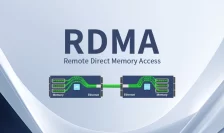
El acceso remoto directo a memoria (RDMA) aumenta la velocidad de transferencia de datos, reduce la latencia y disminuye el uso de la CPU en aplicaciones de computación de alto rendimiento y en la nube.
Una red de área de almacenamiento (SAN) conecta servidores con almacenamiento compartido, ofreciendo acceso rápido, fiable y centralizado a los datos para empresas con grandes necesidades de datos.
La OTN es un estándar digital de transporte definido por la UIT-T para la transmisión óptica de alta capacidad. Aprenda cómo los transceptores ópticos LINK-PP permiten la conectividad basada en OTN.
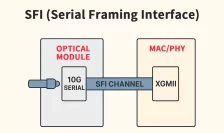
Aprenda cómo la interfaz de trama serial (SFI) permite la transmisión de datos a alta velocidad en los módulos ópticos 10G SFP+ y 40G QSFP+. Explore los canales SFI, la conversión XGMII y la interoperabilidad de módulos para una red fiable.
Descubra cómo la EEPROM garantiza una configuración fiable, una compatibilidad superior y flexibilidad durante toda la vida útil del hardware de red: desde RJ45 hasta módulos ópticos.
Descubra qué significa IEEE para el hardware de red, normas clave como IEEE 802.3 y cómo LINK-PP ofrece soluciones Ethernet certificadas y confiables para la adquisición B2B.
La computación de alto rendimiento utiliza sistemas potentes para resolver problemas complejos y procesar grandes conjuntos de datos rápidamente en ámbitos científicos, empresariales y tecnológicos.
Un circuito integrado específico para una aplicación, o ASIC, es un microchip fabricado para una tarea especial. ¡Adentrémonos en el mundo de los ASIC! Descubra qué es exactamente un ASIC.
Aprenda qué es la diafonía en Ethernet, cómo afecta a la calidad de la señal y cómo los diseños LINK-PP ayudan a reducir la interferencia para una transmisión de datos fiable.
Discover the LQ‑SW40‑SR4C 40GBASE‑SR module: high-speed, low-power, QSFP+ optics for multimode fibre networks. Perfect for data centres and network upgrades.
Aprenda qué es la infraestructura hiperconvergente (HCI), cómo se compara con la virtualización y la dHCI, y cuándo resultan más adecuados los diseños basados en Nutanix, Sangfor o SFP.
Conozca la verdadera diferencia entre 1000BASE-LH y 1000BASE-LX, incluidas la longitud de onda, la compatibilidad con fibra, la nomenclatura de Cisco y cuándo usar cada uno.
Aprenda qué es un transceptor SFP Gigabit, compare las opciones 1000BASE-SX, LX y T, y resuelva con confianza problemas comunes de compatibilidad y configuración.
Aprenda qué es un SFP 10/100/1000BASE-T, cómo funcionan los módulos SFP de cobre RJ45, los problemas de compatibilidad, las preocupaciones por el calor y los casos de uso ideales en redes.
Compare CFP4 y QSFP28 según tamaño, consumo de energía, densidad y adecuación para implementación. Aprenda qué módulo de 100 G es mejor para centros de datos, telecomunicaciones y actualizaciones.
Explore la hoja de especificaciones del Netgear AGM731F con sus características técnicas, conector LC, distancias para OM1/OM3/OM4, compatibilidad, consumo de energía y límites operativos.
Comprenda los módulos SFP+ de 40 km (10GBASE-ER), incluidas sus especificaciones, compatibilidad con fibra monomodo (SMF) y cómo elegir el transceptor óptico de alcance extendido adecuado para su red.
Subscribe to LINK-PP
newsletter
Don’t miss anything. Get all the latest posts delivered straight to your inbox.