What are SFP ports on a switch? Learn how SFP ports support fiber and Ethernet connections, how they compare with RJ45 and SFP+, and which module you need.
What Frame Check Sequence (FCS) means, how CRC-32 detects corrupted Ethernet frames, and why FCS errors are commonly associated with cable faults, fiber issues, or optical transceiver problems.
Discover the LQ‑SW40‑SR4C 40GBASE‑SR module: high-speed, low-power, QSFP+ optics for multimode fibre networks. Perfect for data centres and network upgrades.
SSH vs SSL : SSH sécurise l’accès distant et les transferts de fichiers, tandis que SSL protège les communications web. Choisissez le protocole adapté à vos besoins de sécurité.
Explorez le transcepteur SFP28 industriel LINK-PP LS-SM3125-10I, offrant un débit de 25 Gb/s sur fibre monomode jusqu’à 10 km à 1310 nm, avec prise en charge DOM et fonctionnement dans une plage étendue de températures, adapté aux infrastructures cœur de réseau et aux liaisons front-haul 5G.
Discover how optical transceivers power Smart Industry 4.0 networks—enabling high-speed, low-latency, reliable connectivity in modern factories with 1G, 10G and 25G modules certified for industrial use.
Le protocole de datagramme utilisateur permet un transfert de données rapide et sans connexion pour des applications en temps réel telles que le streaming, le jeu en ligne et le DNS, en privilégiant la vitesse plutôt que la fiabilité.
Le protocole SSL chiffre les données échangées entre votre navigateur et les sites web, garantissant confidentialité et sécurité. Les certificats SSL vérifient l’identité du site et protègent les informations sensibles.
Les obstacles techniques liés aux transceivers optiques 1,6 T comprennent l’intégrité du signal, la consommation électrique et le refroidissement, ce qui entraîne une révolution des connecteurs afin d’assurer la fiabilité des réseaux haute vitesse.
Les circuits intégrés photoniques utilisent la lumière pour transmettre des données, offrant des vitesses plus élevées, une consommation d’énergie réduite et des connexions fiables pour les réseaux modernes.
OSI contre TCP/IP : OSI est idéal pour apprendre les concepts réseau, tandis que TCP/IP est utilisé pour les réseaux du monde réel. Comparez leurs couches, leurs usages et leurs principales différences.
Le transcepteur optique LINK-PP LS-SM311G-10C 1 G fournit un débit de 1,25 Gbps, une portée de 10 km, une large compatibilité et des performances fiables pour les réseaux fibre optique.
Le modèle TCP/IP organise la communication réseau en quatre couches, permettant un échange de données sécurisé entre les dispositifs à travers Internet.
GPON contre EPON : comparez les débits, la capacité d’utilisateurs, les coûts et la compatibilité Ethernet afin de choisir le meilleur réseau en fibre pour vos besoins domestiques ou professionnels.
Le GPON fournit Internet haut débit, la téléphonie et la télévision par câble en fibre optique, offrant un accès large bande fiable et économique aux foyers et aux entreprises.
L’EPON fournit un accès Internet rapide et fiable via des câbles en fibre optique, avec une conception simple et économique, ce qui le rend idéal pour les foyers et les entreprises recherchant un accès haut débit.
Le guide complet sur les bases de données couvre les concepts clés, les types, la conception et les meilleures pratiques pour choisir, gérer et optimiser les systèmes de bases de données modernes.
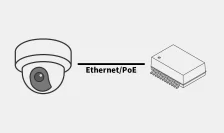
Découvrez comment les transformateurs LAN PoE permettent aux caméras IP de transmettre des données et de recevoir de l’alimentation via Ethernet, assurant des performances stables, une suppression des EMI et une protection des équipements.
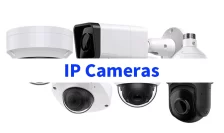
Explore IP cameras, including features, specifications, installation tips, and PoE integration. Learn how to select the right IP camera and optimize performance with LP5009NL.
Découvrez comment les transformateurs LAN et les composants magnétiques intégrés suppriment les EMI dans les systèmes Ethernet. Conseils pratiques de conception, rôle des filtres passe-bas en mode commun et notes produits de LINK-PP.
What Frame Check Sequence (FCS) means, how CRC-32 detects corrupted Ethernet frames, and why FCS errors are commonly associated with cable faults, fiber issues, or optical transceiver problems.
Discover how optical cross‑connect (OXC) enables all‑optical switching in DWDM/OTN networks, with LINK‑PP SFP modules ensuring seamless integration and superior performance.
Learn what Dispersion Compensation Fiber (DCF) is, how it reduces chromatic dispersion, where it is used, and why it matters in modern optical networks.
Learn what OEO means in optical communication, how optical-electrical-optical regeneration works, and when it is used in DWDM networks and optical links. Keywords:
Discover the LQ‑SW40‑SR4C 40GBASE‑SR module: high-speed, low-power, QSFP+ optics for multimode fibre networks. Perfect for data centres and network upgrades.
Learn what hyperconverged infrastructure HCI is, how it compares with virtualization and dHCI, and when Nutanix, Sangfor, or SFP-based designs fit best.
Découvrez ce qu’est le 40GBASE-ER4, sa portée sur fibre monomode duplex, ses fonctionnalités prises en charge et comment choisir l’optique QSFP+ adaptée.
Understand SFP+ 40km (10GBASE-ER) modules, including specs, SMF compatibility, and how to choose the right extended-reach optical transceiver for your network.
Subscribe to LINK-PP
newsletter
Don’t miss anything. Get all the latest posts delivered straight to your inbox.