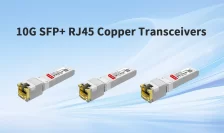
Découvrez les caractéristiques, les avantages et les cas d’utilisation des modules SFP+ RJ45 10G. Apprenez comment le module SFP+ RJ45 de LINK-PP fournit un débit de 10G sur une distance allant jusqu’à 80 m via des câbles Cat6a/7.
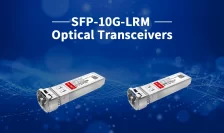
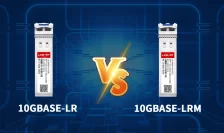
Ce qu’est le SFP-10G-LRM, son fonctionnement et ses avantages. Découvrez pourquoi les modules 10GBASE-LRM de LINK-PP sont idéaux pour la mise à niveau des anciens réseaux en fibre optique avec une portée de 220 m
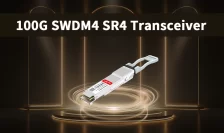
Un transceiver 100G SWDM4 fournit 100 Gbps sur fibre multimode duplex à l’aide de quatre longueurs d’onde, permettant des mises à niveau réseau haute vitesse à moindre coût.
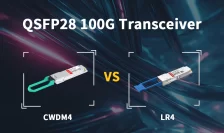
Comparez les modules 100G CWDM4 et LR4 pour fibre monomode : le CWDM4 convient aux liaisons courtes à moyennes, tandis que le LR4 excelle dans les connexions longue distance et haute fiabilité.
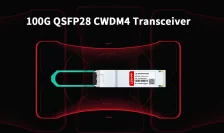
Le transceiver QSFP28 100G CWDM4 est la solution standard du secteur pour des connexions Ethernet Gigabit à haut débit et à faible coût sur des distances allant jusqu’à 2 km
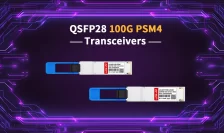
Les transceivers QSFP28 100G PSM4 offrent un Ethernet 100G haute vitesse et rentable sur fibre monomode, idéal pour les centres de données et les réseaux d'entreprise.
LINK-PP propose des connecteurs RJ45 haute performance, des composants magnétiques LAN (LAN Magenetics) et des modules optiques, garantissant des connexions stables, haute vitesse et fiables pour les systèmes IoT.
Découvrez comment les connecteurs RJ45 Magjack améliorent la fiabilité, les performances et l’efficacité de conception dans les appareils électroniques grand public, des téléviseurs intelligents aux consoles de jeu.
LINK-PP fournit des transceivers optiques, des connecteurs RJ45, des transformateurs LAN et des solutions fibre optique pour des réseaux télécom fiables et haut débit.
Les modules optiques permettent des liaisons haute vitesse et à faible latence sur l’ensemble de la chaîne de transport 5G (fronthaul, midhaul et backhaul). Découvrez comment les types de transceivers, les normes et les besoins en déploiement façonnent les réseaux de télécommunications modernes.
Guide clair et pratique sur la norme SFF-8431 — l’interface électrique SFP+ 10G. Découvrez les exigences essentielles, les considérations de conception et la manière dont les modules SFP 10G LINK-PP sont conformes.
Explore how RJ45 Magjack connectivity solutions from LINK-PP enhance telecom infrastructure—improving reliability, PoE support and integration for next-gen networks.
Découvrez ce qu’est un réseau de télécommunications, comment il fonctionne et son rôle dans la 5G. Explorez les opportunités, les défis et la manière dont les solutions LINK‑PP soutiennent les réseaux de nouvelle génération.
VRF contre VLAN explique les principales différences, les cas d’usage et les avantages en matière de sécurité de chaque méthode de segmentation réseau afin de vous aider à choisir la solution adaptée.
L’apprentissage automatique (ML) permet aux ordinateurs d’apprendre à partir de données, d’identifier des motifs et de formuler des prédictions, alimentant des outils tels que les assistants vocaux et les systèmes de recommandation.
Découvrez ce que définit l’accord multiformulaire SFP28 (Small Form-factor Pluggable 28 Multi-Source Agreement), pourquoi il est essentiel pour l’Ethernet 25 G, et comment il garantit l’interopérabilité des modules.
Discover how optical transceivers power Smart Industry 4.0 networks—enabling high-speed, low-latency, reliable connectivity in modern factories with 1G, 10G and 25G modules certified for industrial use.
SSH vs SSL : SSH sécurise l’accès distant et les transferts de fichiers, tandis que SSL protège les communications web. Choisissez le protocole adapté à vos besoins de sécurité.
OSI contre TCP/IP : OSI est idéal pour apprendre les concepts réseau, tandis que TCP/IP est utilisé pour les réseaux du monde réel. Comparez leurs couches, leurs usages et leurs principales différences.
What Frame Check Sequence (FCS) means, how CRC-32 detects corrupted Ethernet frames, and why FCS errors are commonly associated with cable faults, fiber issues, or optical transceiver problems.
Discover how optical cross‑connect (OXC) enables all‑optical switching in DWDM/OTN networks, with LINK‑PP SFP modules ensuring seamless integration and superior performance.
Learn what Dispersion Compensation Fiber (DCF) is, how it reduces chromatic dispersion, where it is used, and why it matters in modern optical networks.
Learn what OEO means in optical communication, how optical-electrical-optical regeneration works, and when it is used in DWDM networks and optical links. Keywords:
Discover the LQ‑SW40‑SR4C 40GBASE‑SR module: high-speed, low-power, QSFP+ optics for multimode fibre networks. Perfect for data centres and network upgrades.
Learn what hyperconverged infrastructure HCI is, how it compares with virtualization and dHCI, and when Nutanix, Sangfor, or SFP-based designs fit best.
Understand SFP+ 40km (10GBASE-ER) modules, including specs, SMF compatibility, and how to choose the right extended-reach optical transceiver for your network.