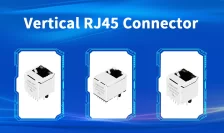
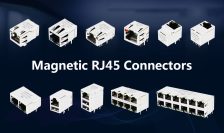
Découvrez les connecteurs RJ45 verticaux LINK-PP. Économisez de l’espace sur la carte grâce à des conceptions à entrée supérieure offrant des magnétiques intégrés, un blindage et des performances Ethernet fiables.
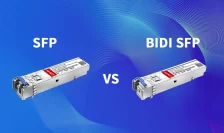
Comparez SFP et SFP BiDi : différences clés, exigences en matière de fibre, compatibilité et cas d’usage recommandés pour vous aider à choisir le module SFP adapté à votre réseau.
Les IFR (interférences de fréquence radio) sont des signaux radio indésirables qui perturbent les dispositifs électroniques, provoquant des problèmes de performance et de communication.
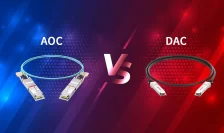
Différences entre DAC et AOC : les DAC conviennent aux liaisons courtes et à faible coût ; les AOC excellent dans les réseaux à longue distance et sensibles aux interférences électromagnétiques (EMI). Choisissez le câble adapté à vos besoins.
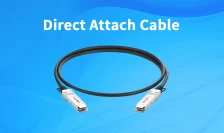
Learn what Direct Attach Cables are, how they work, their advantages over fiber optics & AOCs, common types, and why they dominate short-reach data center links
Découvrez comment les connecteurs RJ45 intégrés LINK-PP améliorent l’intégrité du signal grâce à l’isolation, à la suppression du bruit et à l’adaptation de l’impédance.
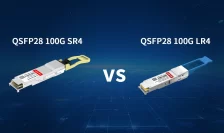
Comparez les transceivers QSFP28 100G SR4 et LR4 pour choisir le bon transceiver 100G adapté à votre réseau, en fonction de la distance, du type de fibre, des connecteurs et du budget.
Le rapport de transformation dans les transformateurs LAN définit la relation entre les enroulements, généralement 1:1, garantissant l’intégrité du signal, la stabilité de la tension et la conformité aux normes Ethernet.
Découvrez comment les unités de traitement des données (DPU) optimisent les performances des centres de données, en accélérant le réseau, le stockage et la sécurité. Découvrez les modules optiques LINK-PP pour des interconnexions haute vitesse.
Explorez les différences fondamentales entre GPU et CPU, leurs distinctions architecturales et les tests de performance pour comprendre quel processeur répond le mieux à vos besoins informatiques.
Long Term Evolution (LTE) is a 4G wireless standard offering high-speed, low-latency data for mobile devices, enabling fast, reliable internet connections.
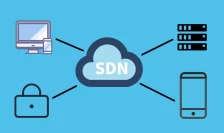
Software-Defined Networking offers centralized control, flexibility, and automation for efficient network management and rapid adaptation to changing needs.
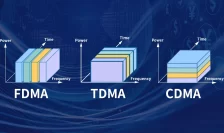
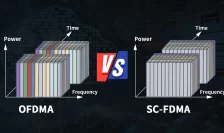
OFDMA vs SC-FDMA: Compare their roles in LTE/5G, impact on download speed, battery life, and why networks use OFDMA for downlink and SC-FDMA for uplink.
What Frame Check Sequence (FCS) means, how CRC-32 detects corrupted Ethernet frames, and why FCS errors are commonly associated with cable faults, fiber issues, or optical transceiver problems.
Discover how optical cross‑connect (OXC) enables all‑optical switching in DWDM/OTN networks, with LINK‑PP SFP modules ensuring seamless integration and superior performance.
Learn what Dispersion Compensation Fiber (DCF) is, how it reduces chromatic dispersion, where it is used, and why it matters in modern optical networks.
Learn what OEO means in optical communication, how optical-electrical-optical regeneration works, and when it is used in DWDM networks and optical links. Keywords:
Discover the LQ‑SW40‑SR4C 40GBASE‑SR module: high-speed, low-power, QSFP+ optics for multimode fibre networks. Perfect for data centres and network upgrades.
Learn what hyperconverged infrastructure HCI is, how it compares with virtualization and dHCI, and when Nutanix, Sangfor, or SFP-based designs fit best.
Understand SFP+ 40km (10GBASE-ER) modules, including specs, SMF compatibility, and how to choose the right extended-reach optical transceiver for your network.