Découvrez les différences entre les connecteurs RJ45 intégrés et séparés de LINK-PP. Apprenez à choisir la bonne solution pour vos applications Ethernet.
Un module optique CPO intègre des composants optiques et électroniques afin d’accroître la vitesse, l’efficacité et la bande passante des centres de données tout en réduisant la consommation d’énergie.
Les transceivers LPO réduisent la consommation d’énergie, diminuent la latence et améliorent la fiabilité des centres de données, ce qui les rend idéaux pour des liaisons optiques haute vitesse et écoénergétiques.
Les transceivers optiques permettent un transfert de données haute vitesse et fiable dans les câbles sous-marins, assurant la connectivité mondiale et répondant aux besoins croissants en bande passante sous l’eau.
Understand the differences between FTTH and FTTB. Learn how LINK-PP’s optical transceivers support both fiber access architectures for reliable connectivity.
Soudage par vague contre soudage en reflow : comparez les procédés, les applications, les coûts et les usages optimaux pour l’assemblage de cartes de circuits imprimés afin de choisir la méthode adaptée à votre projet.
Discover what data bandwidth means, how it affects devices, and why it matters in digital communication. Learn how LINK-PP supports high-speed data transfer.
Le taux d’erreurs binaire (BER) mesure les erreurs de données dans les réseaux. Un BER élevé entraîne des vitesses réduites, la perte de fichiers et une mauvaise qualité des appels. Découvrez comment le BER affecte les performances.
Découvrez des analyses détaillées des déploiements FTTx, notamment la FTTH, la FTTB, la FTTC, et bien plus encore. Découvrez comment les modules optiques LINK-PP soutiennent des réseaux fibre fiables.
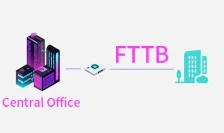
Découvrez le FTTB (Fibre jusqu’à l’immeuble) : définition, avantages et déploiement. Comparez le FTTB et le FTTH et explorez les solutions de connectivité LINK-PP.
Comparez l’émetteur-récepteur SFP et l’émetteur-récepteur SFF pour déterminer lequel offre de meilleures performances en termes de vitesse, de flexibilité et d’options de mise à niveau pour vos équipements réseau.
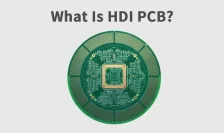
Découvrez ce qu’est un PCB HDI (interconnexion haute densité), ses avantages, ses techniques de fabrication et ses applications clés dans l’électronique moderne et les dispositifs 5G.
Explication des modules SFF authentiques, de leurs avantages essentiels dans les systèmes à configuration fixe, et de la raison pour laquelle ils restent un pilier fondamental de la conception réseau moderne.
Les transceivers optiques QSFP56 permettent l’Ethernet 200G, des connexions haute densité et des mises à niveau efficaces pour les réseaux modernes de centres de données.
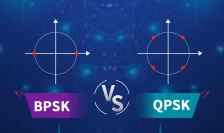
Comparez la modulation BPSK et la modulation QPSK afin de choisir le schéma approprié en fonction de la résistance au bruit, du débit binaire et de l’efficacité spectrale.
La modulation QPSK transmet deux bits par symbole, ce qui augmente les débits de données et la fiabilité dans les systèmes de communication sans fil, par satellite et numériques.
What Frame Check Sequence (FCS) means, how CRC-32 detects corrupted Ethernet frames, and why FCS errors are commonly associated with cable faults, fiber issues, or optical transceiver problems.
Discover how optical cross‑connect (OXC) enables all‑optical switching in DWDM/OTN networks, with LINK‑PP SFP modules ensuring seamless integration and superior performance.
Learn what Dispersion Compensation Fiber (DCF) is, how it reduces chromatic dispersion, where it is used, and why it matters in modern optical networks.
Learn what OEO means in optical communication, how optical-electrical-optical regeneration works, and when it is used in DWDM networks and optical links. Keywords:
Discover the LQ‑SW40‑SR4C 40GBASE‑SR module: high-speed, low-power, QSFP+ optics for multimode fibre networks. Perfect for data centres and network upgrades.
Learn what hyperconverged infrastructure HCI is, how it compares with virtualization and dHCI, and when Nutanix, Sangfor, or SFP-based designs fit best.
Understand SFP+ 40km (10GBASE-ER) modules, including specs, SMF compatibility, and how to choose the right extended-reach optical transceiver for your network.