Découvrez ce qu’est un plan arrière, comment les canaux de plan arrière prennent en charge l’Ethernet haute vitesse 40G/100G, les normes clés et les défis de conception. Apprenez comment les connecteurs LINK-PP RJ45 améliorent les performances du plan arrière.
Découvrez la norme IEEE 802.3bj pour l’Ethernet 100G relative aux interconnexions par plan arrière et par câble cuivre. Explorez les technologies PAM4, FEC, les PHY KP4/KR4/CR4, ainsi que la manière dont les modules LINK-PP prennent en charge les réseaux haute vitesse.
HTTP sur SSL chiffrage vos données, assurant une communication privée et sécurisée et protégeant les informations sensibles contre les hackers pendant les visites sur le web.
Explication de VLAN contre SVI : le VLAN segmente les réseaux au niveau de la couche 2, tandis que le SVI permet le routage inter-VLAN au niveau de la couche 3 pour la communication entre les VLAN.
Comprendre le TDCEQ, la métrique critique de la qualité du transmetteur PAM4 pour les modules optiques modernes. Apprenez comment le tdecq mesure la fermeture verticale de l'oeil et affecte la performance et la conformité des modules 50/100/400g.
Le FTP sur SSL (FTPS) sécurise les transferts de fichiers en chiffrant les données avec SSL/TLS, protégeant ainsi les informations sensibles contre l'accès non autorisé pendant le transfert.
Découvrez le rôle du Gearbox dans les transceivers optiques modernes. Apprenez comment il permet l’alignement des canaux, la conversion de débit et le « breakout » pour les réseaux 50 G, 100 G et 200 G.
Apprenez ce qu’est l’FMMU (Fieldbus Memory Management Unit) et comment il permet une communication EtherCAT en temps réel grâce à une cartographie mémoire efficace et un traitement des données en temps réel.
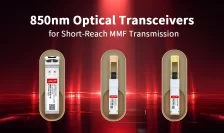
10GBASE-SR, 40GBASE-SR4, 100GBASE-SR4, and 400GBASE-SR8 850nm optical modules are the most reliable and cost-effective choice for short-reach multimode fiber connections.
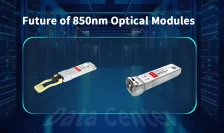
Explore the future of 850nm optical modules in data centers, covering SR8/SR16 advancements, parallel optics, and the impact of single-mode fiber adoption.
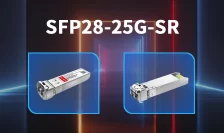
The SFP28-25G-SR transceiver delivers 25Gbps speeds, short-range fiber connectivity, and reliable performance for data centers and enterprise networks.
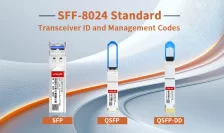
Learn why EEPROM is essential for module identification, monitoring, and compatibility, and how LINK-PP’s SFP/QSFP modules follow SFF-8472 and SFF-8024 Standard.
Learn what SFF-8636 is, why it matters for QSFP/QSFP28 optics, and how its 2-wire management interface, memory map, power classes, and alarms ensure interoperability.
Understand how SFF-8024 ensures accurate module identification, interoperability, and scalability for SFP, SFP+, QSFP, OSFP, and next-generation optical modules.
What Frame Check Sequence (FCS) means, how CRC-32 detects corrupted Ethernet frames, and why FCS errors are commonly associated with cable faults, fiber issues, or optical transceiver problems.
Discover how optical cross‑connect (OXC) enables all‑optical switching in DWDM/OTN networks, with LINK‑PP SFP modules ensuring seamless integration and superior performance.
Learn what Dispersion Compensation Fiber (DCF) is, how it reduces chromatic dispersion, where it is used, and why it matters in modern optical networks.
Learn what OEO means in optical communication, how optical-electrical-optical regeneration works, and when it is used in DWDM networks and optical links. Keywords:
Learn what a Fiber Optical Light Source is, how it works, its types, and how to choose the right one for accurate fiber testing and network performance.
Discover the LQ‑SW40‑SR4C 40GBASE‑SR module: high-speed, low-power, QSFP+ optics for multimode fibre networks. Perfect for data centres and network upgrades.
Learn what hyperconverged infrastructure HCI is, how it compares with virtualization and dHCI, and when Nutanix, Sangfor, or SFP-based designs fit best.
Understand SFP+ 40km (10GBASE-ER) modules, including specs, SMF compatibility, and how to choose the right extended-reach optical transceiver for your network.