5G backhaul links cell sites to core networks, enabling high-speed, low-latency 5G services. Strong backhaul is vital for 2025’s data and device growth.
Le soudage par reflow à travers-trou permet la soudure simultanée des composants à montage traversant et des composants à montage en surface dans un seul processus de reflow efficace.
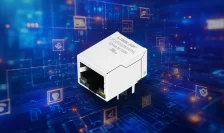
Le connecteur RJ45 LPJG0926HENL doté de magnétiques intégrés prend en charge le PoE+, offre une efficacité spatiale et répond aux exigences de conformité pour des applications Ethernet hautes performances.
Le fronthaul 5G relie les unités radio et les unités de traitement, permettant un transfert de données à haut débit et à faible latence, essentiel pour une communication 5G fiable et efficace.
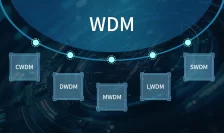
CWDM contre DWDM contre MWDM contre LWDM contre SWDM : comparez l’écart entre canaux, la distance, le coût et les cas d’usage optimaux afin de choisir le WDM adapté à vos besoins réseau.
Qu’est-ce que le DWDM ? Le multiplexage dense par répartition en longueurs d’onde permet à plusieurs canaux de données de circuler sur une seule fibre, augmentant ainsi la bande passante et l’efficacité des réseaux optiques.
Découvrez les bandes de longueurs d’onde utilisées dans la fibre optique, l’évolution technologique et les tendances. Voyez comment les modules LINK-PP prennent en charge les longueurs d’onde clés pour une transmission de données efficace.
Le connecteur RJ45 avec composants magnétiques améliore les performances des commutateurs réseau en renforçant l’intégrité du signal, en réduisant les interférences électromagnétiques (EMI) et en permettant une alimentation Ethernet fiable (Power over Ethernet).
Qu’est-ce que le CWDM ? Le CWDM est une technologie économique de fibre optique qui augmente la bande passante en multiplexant plusieurs longueurs d’onde sur une seule fibre optique.
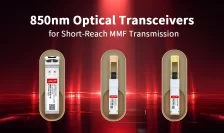
10GBASE-SR, 40GBASE-SR4, 100GBASE-SR4, and 400GBASE-SR8 850nm optical modules are the most reliable and cost-effective choice for short-reach multimode fiber connections.
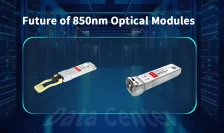
Explore the future of 850nm optical modules in data centers, covering SR8/SR16 advancements, parallel optics, and the impact of single-mode fiber adoption.
La transceiver SFP28-25G-SR offre des débits de 25 Gbps, une connectivité fibre à courte portée et des performances fiables pour les centres de données et les réseaux d’entreprise.
La transceiver sfp28-25g-esr est une transceiver optique 25 G offrant une transmission de données rapide et fiable, ainsi qu’une portée étendue pour les infrastructures réseau modernes.
Découvrez pourquoi la mémoire EEPROM est essentielle pour l’identification des modules, la surveillance et la compatibilité, et comment les modules SFP/QSFP de LINK-PP respectent les normes SFF-8472 et SFF-8024.
Découvrez ce qu’est la norme SFF-8636, pourquoi elle est essentielle pour les optiques QSFP/QSFP28, et comment son interface de gestion à deux fils, sa carte mémoire, ses classes de puissance et ses alarmes garantissent l’interopérabilité.
Convertissez la fibre entre mode multiple et mode simple à l’aide de méthodes intelligentes afin d’obtenir une vitesse accrue, une portée plus longue et des performances réseau fiables.
Les convertisseurs de support relient les câbles en cuivre et en fibre, en convertissant les signaux pour étendre la portée du réseau et prendre en charge les équipements anciens.
Les modules optiques renforcent l’informatique en nuage en permettant une transmission de données rapide, fiable et évolutif dans les centres de données modernes.
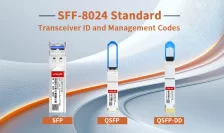
Understand how SFF-8024 ensures accurate module identification, interoperability, and scalability for SFP, SFP+, QSFP, OSFP, and next-generation optical modules.
What Frame Check Sequence (FCS) means, how CRC-32 detects corrupted Ethernet frames, and why FCS errors are commonly associated with cable faults, fiber issues, or optical transceiver problems.
Discover how optical cross‑connect (OXC) enables all‑optical switching in DWDM/OTN networks, with LINK‑PP SFP modules ensuring seamless integration and superior performance.
Learn what Dispersion Compensation Fiber (DCF) is, how it reduces chromatic dispersion, where it is used, and why it matters in modern optical networks.
Learn what OEO means in optical communication, how optical-electrical-optical regeneration works, and when it is used in DWDM networks and optical links. Keywords:
Discover the LQ‑SW40‑SR4C 40GBASE‑SR module: high-speed, low-power, QSFP+ optics for multimode fibre networks. Perfect for data centres and network upgrades.
Learn what hyperconverged infrastructure HCI is, how it compares with virtualization and dHCI, and when Nutanix, Sangfor, or SFP-based designs fit best.
Understand SFP+ 40km (10GBASE-ER) modules, including specs, SMF compatibility, and how to choose the right extended-reach optical transceiver for your network.