Un identificateur de réseau VXLAN (VNI) est un identifiant de segment unique sur 24 bits qui permet une segmentation et une isolation réseau évolutives dans de grands environnements basés sur VXLAN.
Découvrez comment les connecteurs RJ45 Magjack permettent une communication Ethernet robuste entre les automates programmables (PLC) et les hôtes SCADA dans l’automatisation industrielle, garantissant l’intégrité du signal et la fiabilité du système.
Découvrez comment les modules optiques améliorent les performances des systèmes PLC, permettant une communication haute vitesse sur de longues distances et des réseaux d’automatisation industrielle fiables.
Un PLC – contrôleur logique programmable – automatise les machines et les processus, offrant un contrôle fiable et flexible pour des systèmes d’automatisation industrielle efficaces.
Découvrez ce que sont les systèmes de supervision et d’acquisition de données (SCADA), comment ils fonctionnent et leur rôle essentiel dans l’automatisation industrielle et les infrastructures intelligentes.
Un VLAN segmente un réseau à la couche liaison de données, améliorant la sécurité, les performances et la gestion en isolant les dispositifs au sein de groupes virtuels.
VLAN contre VXLAN : comparez évolutivité, flexibilité et coûts afin de choisir la meilleure segmentation réseau pour des installations petites ou pour des environnements étendus basés sur le cloud.
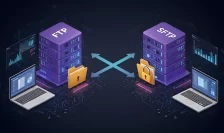
FTP contre SFTP : comparez sécurité, chiffrement et cas d’usage afin de choisir le meilleur protocole pour des transferts de fichiers sûrs et efficaces.
Découvrez comment les modules optiques LINK-PP 25G SFP28 renforcent les centres de données hyperscalables grâce à une bande passante élevée, une faible latence et une efficacité énergétique. Découvrez leurs principaux avantages et cas d’usage.
Les modules optiques LINK-PP offrent une bande passante élevée, une faible latence et une fiabilité accrue pour les charges de travail liées à l’IA, à l’Internet des objets (IoT) et aux mégadonnées, dans des réseaux évolutifs et économes en énergie.
Optical transceivers enable high-speed, reliable data transfer in submarine cables, powering global connectivity and meeting growing bandwidth demands underwater.
Understand the differences between FTTH and FTTB. Learn how LINK-PP’s optical transceivers support both fiber access architectures for reliable connectivity.
Soudage par vague contre soudage en reflow : comparez les procédés, les applications, les coûts et les usages optimaux pour l’assemblage de cartes de circuits imprimés afin de choisir la méthode adaptée à votre projet.
Explore detailed insights into FTTx deployments including FTTH, FTTB, FTTC, and more. Learn how LINK-PP’s optical modules support reliable fiber networks.
5G backhaul links cell sites to core networks, enabling high-speed, low-latency 5G services. Strong backhaul is vital for 2025’s data and device growth.
Le fronthaul 5G relie les unités radio et les unités de traitement, permettant un transfert de données à haut débit et à faible latence, essentiel pour une communication 5G fiable et efficace.
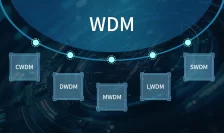
CWDM contre DWDM contre MWDM contre LWDM contre SWDM : comparez l’écart entre canaux, la distance, le coût et les cas d’usage optimaux afin de choisir le WDM adapté à vos besoins réseau.
Découvrez les bandes de longueurs d’onde utilisées dans la fibre optique, l’évolution technologique et les tendances. Voyez comment les modules LINK-PP prennent en charge les longueurs d’onde clés pour une transmission de données efficace.
Le connecteur RJ45 avec composants magnétiques améliore les performances des commutateurs réseau en renforçant l’intégrité du signal, en réduisant les interférences électromagnétiques (EMI) et en permettant une alimentation Ethernet fiable (Power over Ethernet).
What Frame Check Sequence (FCS) means, how CRC-32 detects corrupted Ethernet frames, and why FCS errors are commonly associated with cable faults, fiber issues, or optical transceiver problems.
Discover how optical cross‑connect (OXC) enables all‑optical switching in DWDM/OTN networks, with LINK‑PP SFP modules ensuring seamless integration and superior performance.
Learn what Dispersion Compensation Fiber (DCF) is, how it reduces chromatic dispersion, where it is used, and why it matters in modern optical networks.
Learn what OEO means in optical communication, how optical-electrical-optical regeneration works, and when it is used in DWDM networks and optical links. Keywords:
Discover the LQ‑SW40‑SR4C 40GBASE‑SR module: high-speed, low-power, QSFP+ optics for multimode fibre networks. Perfect for data centres and network upgrades.
Learn what hyperconverged infrastructure HCI is, how it compares with virtualization and dHCI, and when Nutanix, Sangfor, or SFP-based designs fit best.
Understand SFP+ 40km (10GBASE-ER) modules, including specs, SMF compatibility, and how to choose the right extended-reach optical transceiver for your network.