Découvrez comment fonctionne la traduction d’adresses réseau (NAT), ses types, ses avantages, ses limites, ainsi que les meilleures pratiques pour les déploiements IPv6 et en entreprise.
Le séparateur FBT offre une solution économique pour diviser les signaux optiques dans les réseaux en fibre, idéal pour les petites installations nécessitant une répartition simple et personnalisable des signaux.
L’adresse IPv4 utilise un format numérique sur 32 bits, tandis qu’IPv6 propose des adresses alphanumériques sur 128 bits, une capacité accrue et une sécurité améliorée pour les réseaux en croissance.
Le réflectomètre optique dans le domaine temporel (OTDR) localise les défauts, mesure les pertes de soudure et garantit la fiabilité des câbles en fibre optique pour une maintenance efficace des réseaux.
La durée moyenne entre pannes (MTBF) indique combien de temps un équipement fonctionne avant de tomber en panne, vous aidant ainsi à planifier la maintenance et à améliorer la fiabilité.
Une adresse IPv4 identifie de façon unique votre appareil sur un réseau, permettant l’accès à Internet et le transfert sécurisé de données entre appareils dans le monde entier.
Découvrez comment les prises magnétiques RJ45 assurent une alimentation stable, des signaux propres et des connexions réseau fiables dans les téléphones VoIP — avec les solutions RJ45 prêtes pour PoE LINK-PP.
Découvrez ce qu’ont de particulier les connecteurs RJ45, leur brochage, leurs types de câblage et la manière dont ils prennent en charge les réseaux Ethernet, PoE et Gigabit. Découvrez les solutions RJ45 de LINK-PP pour une connectivité fiable.
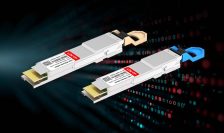
QSFP-DD Optical Transceivers deliver up to 800Gbps speeds, offering high bandwidth, energy efficiency, and compatibility for modern networks and data centers.
À propos de LINK-PP : Leader mondial des composants magnétiques, offrant des connecteurs RJ45, des transformateurs LAN et des transceivers optiques de haute qualité pour des réseaux fiables.
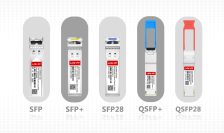
Comparez les transceivers optiques SFP, SFP+, SFP28, QSFP+ et QSFP28. Découvrez comment les facteurs de forme influencent la vitesse, la compatibilité et les performances dans les réseaux modernes.
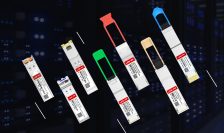
This article provides a professional guide on transceiver pull tab color codes by wavelength—spanning SFP, SFP+, CWDM, and BiDi modules—and introduces how LINK-
Optical transceivers convert electrical signals into light, transmitting data through fiber optic cables with high speed, reliability, and minimal loss.
Un transceiver BiDi utilise la technologie WDM pour envoyer et recevoir des données sur une seule fibre, ce qui réduit les coûts, simplifie les réseaux et améliore l’efficacité.
What Frame Check Sequence (FCS) means, how CRC-32 detects corrupted Ethernet frames, and why FCS errors are commonly associated with cable faults, fiber issues, or optical transceiver problems.
Discover how optical cross‑connect (OXC) enables all‑optical switching in DWDM/OTN networks, with LINK‑PP SFP modules ensuring seamless integration and superior performance.
Learn what Dispersion Compensation Fiber (DCF) is, how it reduces chromatic dispersion, where it is used, and why it matters in modern optical networks.
Learn what OEO means in optical communication, how optical-electrical-optical regeneration works, and when it is used in DWDM networks and optical links. Keywords:
Discover the LQ‑SW40‑SR4C 40GBASE‑SR module: high-speed, low-power, QSFP+ optics for multimode fibre networks. Perfect for data centres and network upgrades.
Learn what hyperconverged infrastructure HCI is, how it compares with virtualization and dHCI, and when Nutanix, Sangfor, or SFP-based designs fit best.
Understand SFP+ 40km (10GBASE-ER) modules, including specs, SMF compatibility, and how to choose the right extended-reach optical transceiver for your network.