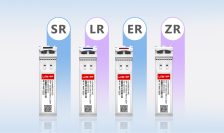
Les émetteurs-récepteurs LINK-PP 100G offrent une connectivité haute vitesse, une efficacité énergétique et une intégration transparente, ce qui les rend idéaux pour les réseaux modernes et les centres de données.
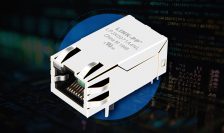
Découvrez les principales caractéristiques électriques, mécaniques et environnementales des connecteurs RJ45 intégrés afin de sélectionner la solution adaptée à vos applications Ethernet.
Apprenez à choisir les meilleurs émetteurs-récepteurs optiques 10G LINK-PP pour votre réseau en évaluant efficacement la compatibilité, la performance, le coût et l'évolutivité.
Examen du Magjack RJ45 100/1000 Base-T LINK-PP LPJK0071AINL, mettant en avant ses magnétiques intégrés, son blindage EMI et ses performances Ethernet haute vitesse.
Understand the role of 1x9 transceivers in fiber optic networks, their cost-effectiveness, compatibility with legacy systems, and reliable data transmission.
Power Over Ethernet (PoE) combines power and data delivery via a single cable, simplifying installations for devices like IP cameras, VoIP phones, and IoT systems.
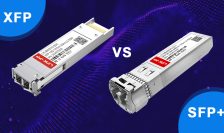
Compare XFP and SFP+ transceivers: XFP offers long-distance, high-speed performance, while SFP+ is compact, energy-efficient, and ideal for short-range tasks.
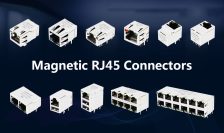
Un RJ45 avec magnétiques intègre des transformateurs et des chokes pour améliorer la qualité du signal, supprimer l'EMI et simplifier les conceptions. Idéal pour l'utilisation de connecteurs RJ45 magnétiques.
Quality certifications like ISO 9001:2015, RoHS, and FCC ensure optical transceivers meet strict standards for reliability, compliance, and performance.
Les connecteurs LINK-PP intégrés RJ45 offrent des magnétiques intégrés, une couche de protection contre l'EMI, un support PoE et des vitesses Ethernet rapides, assurant ainsi un réseau fiable et efficient.
L’Ethernet Multi-Gig augmente les débits réseau à 2,5, 5 ou 10 Gbps en utilisant les câbles existants, ce qui simplifie les mises à niveau pour un streaming, des jeux et des transferts de fichiers plus rapides.
Le rôle du SDN dans l’interconnexion des centres de données permet l’automatisation, le contrôle centralisé, l’évolutivité, ainsi qu’une gestion réseau sécurisée et efficace.
AWS (Amazon Web Services) powers global cloud computing with scalable services and high-speed data center networks. Learn AWS basics, architecture, and how optical transceivers support AWS connectivity.
Découvrez ce qu’est un commutateur MoR (Middle-of-Rack), comment il se compare aux architectures ToR/EoR, et quels modules SFP+/SFP28/QSFP conviennent le mieux — un guide pratique pour la conception de centres de données.
Learn what a ToR (Top-of-Rack) switch is, how ToR architecture works, and why it’s the preferred networking model in modern data centers. Includes benefits, use cases, and compatible optical transceiver solutions from LINK-PP.
Le WLAN couvre tous les réseaux locaux sans fil, tandis que le Wi-Fi est un type spécifique de WLAN utilisant des normes définies pour des connexions rapides et fiables.
HTTP vs HTTPS : HTTPS chiffre les données pour une transmission sécurisée, tandis que HTTP laisse les informations exposées. Choisissez HTTPS pour la confidentialité, la confiance et la conformité.
Comparez les transceivers 100G LR4, CWDM4 et PSM4 afin de déterminer le meilleur choix pour votre réseau en fonction de la distance, du coût et des exigences en matière de câblage.
Découvrez ce qu’est un plan arrière, comment les canaux de plan arrière prennent en charge l’Ethernet haute vitesse 40G/100G, les normes clés et les défis de conception. Apprenez comment les connecteurs LINK-PP RJ45 améliorent les performances du plan arrière.
Découvrez la norme IEEE 802.3bj pour l’Ethernet 100G relative aux interconnexions par plan arrière et par câble cuivre. Explorez les technologies PAM4, FEC, les PHY KP4/KR4/CR4, ainsi que la manière dont les modules LINK-PP prennent en charge les réseaux haute vitesse.
What Frame Check Sequence (FCS) means, how CRC-32 detects corrupted Ethernet frames, and why FCS errors are commonly associated with cable faults, fiber issues, or optical transceiver problems.
Discover how optical cross‑connect (OXC) enables all‑optical switching in DWDM/OTN networks, with LINK‑PP SFP modules ensuring seamless integration and superior performance.
Learn what Dispersion Compensation Fiber (DCF) is, how it reduces chromatic dispersion, where it is used, and why it matters in modern optical networks.
Learn what OEO means in optical communication, how optical-electrical-optical regeneration works, and when it is used in DWDM networks and optical links. Keywords:
Discover the LQ‑SW40‑SR4C 40GBASE‑SR module: high-speed, low-power, QSFP+ optics for multimode fibre networks. Perfect for data centres and network upgrades.
Learn what hyperconverged infrastructure HCI is, how it compares with virtualization and dHCI, and when Nutanix, Sangfor, or SFP-based designs fit best.
Understand SFP+ 40km (10GBASE-ER) modules, including specs, SMF compatibility, and how to choose the right extended-reach optical transceiver for your network.
Découvrez ce qu’est le 40GBASE-ER4, sa portée sur fibre monomode duplex, ses fonctionnalités prises en charge et comment choisir l’optique QSFP+ adaptée.
Subscribe to LINK-PP
newsletter
Don’t miss anything. Get all the latest posts delivered straight to your inbox.