Un identificateur de réseau VXLAN (VNI) est un identifiant de segment unique sur 24 bits qui permet une segmentation et une isolation réseau évolutives dans de grands environnements basés sur VXLAN.
Un VLAN segmente un réseau à la couche liaison de données, améliorant la sécurité, les performances et la gestion en isolant les dispositifs au sein de groupes virtuels.
Virtual Extensible LAN permet une virtualisation réseau scalable, sécurisée et flexible, supportant des millions de segments pour répondre aux besoins modernes des centres de données.
Réduisez la consommation d'énergie des transceivers optiques grâce à des modules efficaces, un refroidissement intelligent et une gestion intelligente dans les centres de données modernes.
Découvrez comment fonctionne la traduction d’adresses réseau (NAT), ses types, ses avantages, ses limites, ainsi que les meilleures pratiques pour les déploiements IPv6 et en entreprise.
Le séparateur FBT offre une solution économique pour diviser les signaux optiques dans les réseaux en fibre, idéal pour les petites installations nécessitant une répartition simple et personnalisable des signaux.
Le réflectomètre optique dans le domaine temporel (OTDR) localise les défauts, mesure les pertes de soudure et garantit la fiabilité des câbles en fibre optique pour une maintenance efficace des réseaux.
La durée moyenne entre pannes (MTBF) indique combien de temps un équipement fonctionne avant de tomber en panne, vous aidant ainsi à planifier la maintenance et à améliorer la fiabilité.
Une adresse IPv4 identifie de façon unique votre appareil sur un réseau, permettant l’accès à Internet et le transfert sécurisé de données entre appareils dans le monde entier.
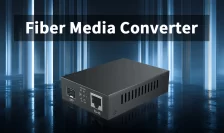
Les convertisseurs de support relient les câbles en cuivre et en fibre, en convertissant les signaux pour étendre la portée du réseau et prendre en charge les équipements anciens.
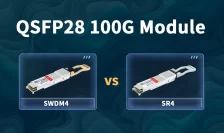
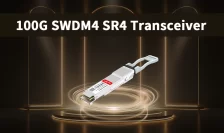
Un transceiver 100G SWDM4 fournit 100 Gbps sur fibre multimode duplex à l’aide de quatre longueurs d’onde, permettant des mises à niveau réseau haute vitesse à moindre coût.
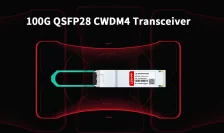
Le transceiver QSFP28 100G CWDM4 est la solution standard du secteur pour des connexions Ethernet Gigabit à haut débit et à faible coût sur des distances allant jusqu’à 2 km
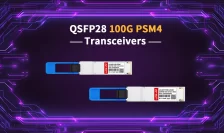
Les transceivers QSFP28 100G PSM4 offrent un Ethernet 100G haute vitesse et rentable sur fibre monomode, idéal pour les centres de données et les réseaux d'entreprise.
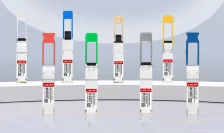
Choisissez le meilleur transceiver optique QSFP28 100G pour votre réseau en comparant la compatibilité, la distance, le type de fibre et les options d’adaptation à l’avenir.
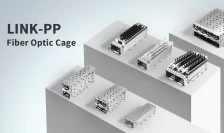
Select the best fiber optic cage by considering compatibility, port density, thermal management (heatsink options), light pipe integration, EMI shielding, etc.
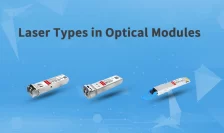
Découvrez comment les lasers VCSEL, FP, DFB et EML diffèrent dans les modules optiques. Explorez leurs caractéristiques principales, leurs usages courants et la manière dont LINK‑PP les intègre dans ses transceivers.
What Frame Check Sequence (FCS) means, how CRC-32 detects corrupted Ethernet frames, and why FCS errors are commonly associated with cable faults, fiber issues, or optical transceiver problems.
Learn what Dispersion Compensation Fiber (DCF) is, how it reduces chromatic dispersion, where it is used, and why it matters in modern optical networks.
Learn what OEO means in optical communication, how optical-electrical-optical regeneration works, and when it is used in DWDM networks and optical links. Keywords:
Learn what a Fiber Optical Light Source is, how it works, its types, and how to choose the right one for accurate fiber testing and network performance.
Understand what a Digital Communication Analyzer (DCA) is, how it works, and why it is essential for optical module testing, eye diagrams, and signal integrity.
Learn what hyperconverged infrastructure HCI is, how it compares with virtualization and dHCI, and when Nutanix, Sangfor, or SFP-based designs fit best.
Understand SFP+ 40km (10GBASE-ER) modules, including specs, SMF compatibility, and how to choose the right extended-reach optical transceiver for your network.
Découvrez ce qu’est le 40GBASE-ER4, sa portée sur fibre monomode duplex, ses fonctionnalités prises en charge et comment choisir l’optique QSFP+ adaptée.
Subscribe to LINK-PP
newsletter
Don’t miss anything. Get all the latest posts delivered straight to your inbox.