Découvrez ce qu’est un réseau de télécommunications, comment il fonctionne et son rôle dans la 5G. Explorez les opportunités, les défis et la manière dont les solutions LINK‑PP soutiennent les réseaux de nouvelle génération.
Le routage et la transmission virtuels (VRF) permettent d’héberger plusieurs tables de routage privées sur un seul équipement, améliorant ainsi la sécurité, la segmentation et la gestion du trafic réseau.
L’apprentissage automatique (ML) permet aux ordinateurs d’apprendre à partir de données, d’identifier des motifs et de formuler des prédictions, alimentant des outils tels que les assistants vocaux et les systèmes de recommandation.
Discover how TSN (Time-Sensitive Networking) brings deterministic, low-latency, and reliable data delivery to Industry 4.0 and automotive Ethernet networks.
Discover how optical transceivers power Smart Industry 4.0 networks—enabling high-speed, low-latency, reliable connectivity in modern factories with 1G, 10G and 25G modules certified for industrial use.
Explore the LINK-PP LS-SM3125-10I industrial-grade SFP28 transceiver, delivering 25 Gb/s over 10 km single-mode fibre at 1310 nm, with DOM and wide-temperature support for backbone and 5G front-haul.
SSH vs SSL : SSH sécurise l’accès distant et les transferts de fichiers, tandis que SSL protège les communications web. Choisissez le protocole adapté à vos besoins de sécurité.
Les circuits intégrés photoniques utilisent la lumière pour transmettre des données, offrant des vitesses plus élevées, une consommation d’énergie réduite et des connexions fiables pour les réseaux modernes.
Semiconductor material properties determine optical module speed, efficiency, and reliability by affecting bandgap, carrier mobility, and thermal conductivity.
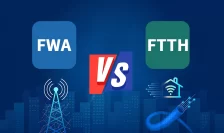
Compare FTTH and FWA broadband technologies. Learn their differences in speed, cost, deployment, and use cases. Discover how LINK-PP SFP modules support both networks.
Les réseaux optiques passifs utilisent la fibre et des diviseurs non alimentés pour fournir un internet rapide et fiable des fournisseurs à plusieurs utilisateurs de manière efficace.
Découvrez ce qu’est un centre de données, son fonctionnement, ses principaux types et les tendances futures. Comprenez pourquoi les centres de données constituent l’infrastructure essentielle du cloud, de l’intelligence artificielle et des services numériques actuels.
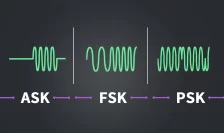
ASK est idéal pour des projets simples et à faible coût, tandis que FSK s'applique aux environnements bruyants et PSK offre des hauteurs de données. Comparez ASK, FSK et PSK ici.
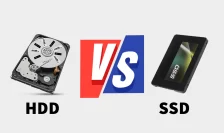
Découvrez les différences entre l'HDD et le SSD en termes de vitesse, de fiabilité et de coût. Apprenez quel type de disque de stockage convient à vos besoins et explorez les solutions de connectivité LINK-PP.
Discover what HDI PCB (High-Density Interconnect) is, its advantages, manufacturing techniques, and key applications in modern electronics and 5G devices.
What Frame Check Sequence (FCS) means, how CRC-32 detects corrupted Ethernet frames, and why FCS errors are commonly associated with cable faults, fiber issues, or optical transceiver problems.
Discover how optical cross‑connect (OXC) enables all‑optical switching in DWDM/OTN networks, with LINK‑PP SFP modules ensuring seamless integration and superior performance.
Learn what Dispersion Compensation Fiber (DCF) is, how it reduces chromatic dispersion, where it is used, and why it matters in modern optical networks.
Learn what a Fiber Optical Light Source is, how it works, its types, and how to choose the right one for accurate fiber testing and network performance.
Découvrez le Développement du Développement (DFE), la technique non-linéaire essentielle pour minimiser le ISI. Apprenez comment le DFE améliore le BER des bits dans les transceivers optiques et les liens de données à longue distance.
Learn what hyperconverged infrastructure HCI is, how it compares with virtualization and dHCI, and when Nutanix, Sangfor, or SFP-based designs fit best.
Découvrez ce qu’est le 40GBASE-ER4, sa portée sur fibre monomode duplex, ses fonctionnalités prises en charge et comment choisir l’optique QSFP+ adaptée.
Learn how a 1000BASE-T SFP transceiver module works with Category 5 copper wire, including compatibility limits, heat issues, and real-world deployment tips.