Découvrez comment fonctionne la traduction d’adresses réseau (NAT), ses types, ses avantages, ses limites, ainsi que les meilleures pratiques pour les déploiements IPv6 et en entreprise.
L’adresse IPv4 utilise un format numérique sur 32 bits, tandis qu’IPv6 propose des adresses alphanumériques sur 128 bits, une capacité accrue et une sécurité améliorée pour les réseaux en croissance.
La durée moyenne entre pannes (MTBF) indique combien de temps un équipement fonctionne avant de tomber en panne, vous aidant ainsi à planifier la maintenance et à améliorer la fiabilité.
Une adresse IPv4 identifie de façon unique votre appareil sur un réseau, permettant l’accès à Internet et le transfert sécurisé de données entre appareils dans le monde entier.
Découvrez comment les prises magnétiques RJ45 assurent une alimentation stable, des signaux propres et des connexions réseau fiables dans les téléphones VoIP — avec les solutions RJ45 prêtes pour PoE LINK-PP.
Découvrez ce qu’ont de particulier les connecteurs RJ45, leur brochage, leurs types de câblage et la manière dont ils prennent en charge les réseaux Ethernet, PoE et Gigabit. Découvrez les solutions RJ45 de LINK-PP pour une connectivité fiable.
Découvrez ce qu’ont de particulier les téléphones VoIP, comment ils fonctionnent et pourquoi ils sont essentiels pour les communications modernes. Apprenez leurs principaux avantages et comment les connecteurs RJ45 de LINK-PP les soutiennent.
RDMA over Converged Ethernet enables fast, low-latency data transfers using standard Ethernet hardware, reducing CPU usage and improving network efficiency.
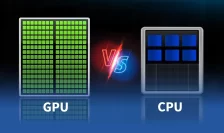
Explorez les différences fondamentales entre GPU et CPU, leurs distinctions architecturales et les tests de performance pour comprendre quel processeur répond le mieux à vos besoins informatiques.
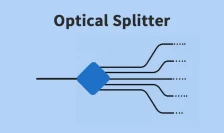
explique comment les séparateurs optiques permettent la technologie FTTH, leurs types (FBT contre PLC), leurs rapports clés, et la façon dont ils s’intègrent aux modules optiques LINK-PP pour un réseau fluide.
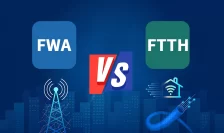
Compare FTTH and FWA broadband technologies. Learn their differences in speed, cost, deployment, and use cases. Discover how LINK-PP SFP modules support both networks.
Les réseaux optiques passifs utilisent la fibre et des diviseurs non alimentés pour fournir un internet rapide et fiable des fournisseurs à plusieurs utilisateurs de manière efficace.
Découvrez ce qu’est un centre de données, son fonctionnement, ses principaux types et les tendances futures. Comprenez pourquoi les centres de données constituent l’infrastructure essentielle du cloud, de l’intelligence artificielle et des services numériques actuels.
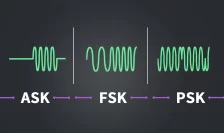
ASK est idéal pour des projets simples et à faible coût, tandis que FSK s'applique aux environnements bruyants et PSK offre des hauteurs de données. Comparez ASK, FSK et PSK ici.
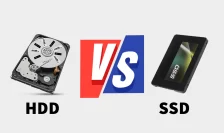
Découvrez les différences entre l'HDD et le SSD en termes de vitesse, de fiabilité et de coût. Apprenez quel type de disque de stockage convient à vos besoins et explorez les solutions de connectivité LINK-PP.
This guide clarifies the differences between soldered SFF and 1x9 transceiver form factors. Learn their specs, applications, and how to choose for your network.
What Frame Check Sequence (FCS) means, how CRC-32 detects corrupted Ethernet frames, and why FCS errors are commonly associated with cable faults, fiber issues, or optical transceiver problems.
Discover how optical cross‑connect (OXC) enables all‑optical switching in DWDM/OTN networks, with LINK‑PP SFP modules ensuring seamless integration and superior performance.
Learn what Dispersion Compensation Fiber (DCF) is, how it reduces chromatic dispersion, where it is used, and why it matters in modern optical networks.
Learn what OEO means in optical communication, how optical-electrical-optical regeneration works, and when it is used in DWDM networks and optical links. Keywords:
Learn what a Fiber Optical Light Source is, how it works, its types, and how to choose the right one for accurate fiber testing and network performance.
Learn what hyperconverged infrastructure HCI is, how it compares with virtualization and dHCI, and when Nutanix, Sangfor, or SFP-based designs fit best.
Understand SFP+ 40km (10GBASE-ER) modules, including specs, SMF compatibility, and how to choose the right extended-reach optical transceiver for your network.
Découvrez ce qu’est le 40GBASE-ER4, sa portée sur fibre monomode duplex, ses fonctionnalités prises en charge et comment choisir l’optique QSFP+ adaptée.
Learn how a 1000BASE-T SFP transceiver module works with Category 5 copper wire, including compatibility limits, heat issues, and real-world deployment tips.