Les transceivers à double débit fonctionnent à deux débits de données distincts, offrant flexibilité, rentabilité et compatibilité transparente pour les mises à niveau réseau modernes.
Les émetteurs-récepteurs LINK-PP 100G offrent une connectivité haute vitesse, une efficacité énergétique et une intégration transparente, ce qui les rend idéaux pour les réseaux modernes et les centres de données.
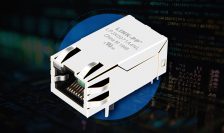
Découvrez les principales caractéristiques électriques, mécaniques et environnementales des connecteurs RJ45 intégrés afin de sélectionner la solution adaptée à vos applications Ethernet.
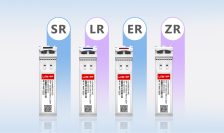
Apprenez à choisir les meilleurs émetteurs-récepteurs optiques 10G LINK-PP pour votre réseau en évaluant efficacement la compatibilité, la performance, le coût et l'évolutivité.
Examen du Magjack RJ45 100/1000 Base-T LINK-PP LPJK0071AINL, mettant en avant ses magnétiques intégrés, son blindage EMI et ses performances Ethernet haute vitesse.
Understand the role of 1x9 transceivers in fiber optic networks, their cost-effectiveness, compatibility with legacy systems, and reliable data transmission.
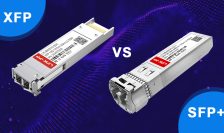
Compare XFP and SFP+ transceivers: XFP offers long-distance, high-speed performance, while SFP+ is compact, energy-efficient, and ideal for short-range tasks.
Un RJ45 avec magnétiques intègre des transformateurs et des chokes pour améliorer la qualité du signal, supprimer l'EMI et simplifier les conceptions. Idéal pour l'utilisation de connecteurs RJ45 magnétiques.
Les connecteurs LINK-PP intégrés RJ45 offrent des magnétiques intégrés, une couche de protection contre l'EMI, un support PoE et des vitesses Ethernet rapides, assurant ainsi un réseau fiable et efficient.
Single fiber transceivers, like the Bidi Transceiver, use one fiber for bidirectional data, while dual fiber transceivers require two fibers for separate TX and RX.
Explore the differences between LAN, MAN, and WAN networks, their technologies, typical applications, and why LINK‑PP components are ideal for each deployment.
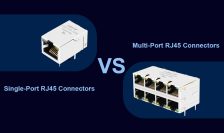
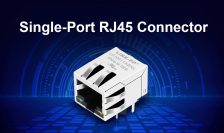
Explore Single-Port vs. Multi-Port RJ45 Connectors with data-driven comparisons on signal integrity, density, reliability, and LINK-PP support for pro buyers and engineers.
Les modules optiques permettent le transfert de données à haute vitesse et faible latence dans le calcul périphérique, soutenant le 5G, l'IoT et les applications en temps réel avec une connectivité fiable.
Install optical modules safely with ESD protection, proper handling, and dust control. Follow these steps to avoid damage and ensure network reliability.
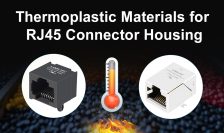
Compare high-temperature thermoplastics like PBT, LCP, PA66 & PEEK for RJ45 connectors. Learn material limits, soldering compatibility, and best use cases.
What Frame Check Sequence (FCS) means, how CRC-32 detects corrupted Ethernet frames, and why FCS errors are commonly associated with cable faults, fiber issues, or optical transceiver problems.
Discover how optical cross‑connect (OXC) enables all‑optical switching in DWDM/OTN networks, with LINK‑PP SFP modules ensuring seamless integration and superior performance.
Learn what Dispersion Compensation Fiber (DCF) is, how it reduces chromatic dispersion, where it is used, and why it matters in modern optical networks.
Learn what a Fiber Optical Light Source is, how it works, its types, and how to choose the right one for accurate fiber testing and network performance.
Découvrez le Développement du Développement (DFE), la technique non-linéaire essentielle pour minimiser le ISI. Apprenez comment le DFE améliore le BER des bits dans les transceivers optiques et les liens de données à longue distance.
Learn what hyperconverged infrastructure HCI is, how it compares with virtualization and dHCI, and when Nutanix, Sangfor, or SFP-based designs fit best.
Découvrez ce qu’est le 40GBASE-ER4, sa portée sur fibre monomode duplex, ses fonctionnalités prises en charge et comment choisir l’optique QSFP+ adaptée.
Learn how a 1000BASE-T SFP transceiver module works with Category 5 copper wire, including compatibility limits, heat issues, and real-world deployment tips.