A fiber optic coupler splits or combines light signals in optical networks, improving data flow, reliability, and network flexibility for various applications.
Les optiques ouvertes et la désagrégation dans les réseaux de centres de données réduisent les coûts, augmentent la flexibilité et améliorent les performances tout en réduisant la dépendance aux fournisseurs et la consommation d'énergie.
Découvrez comment associer des modules SFP à votre commutateur ou convertisseur de supports en vérifiant la compatibilité, la vitesse, le type de fibre, la longueur d’onde et la distance. Un guide clair et pratique.
L’optique embarquée améliore la vitesse des données, l’efficacité énergétique et la densité des canaux pour les centres de données, les superordinateurs et les systèmes réseau avancés.
Un convertisseur de longueur d’onde 2025 transforme rapidement la longueur d’onde de la lumière, permettant des calculs précis de fréquence, d’énergie et de nombre d’ondes pour les dispositifs.
Un guide clair et professionnel sur l’IIoT (Industrial Internet of Things), couvrant l’architecture, les protocoles, les meilleures pratiques de sécurité et les composants réseau adaptés pour les déploiements industriels.
Découvrez le MTBF (Temps Moyen entre Défaillances), son importance pour la fiabilité du système, et comment les connecteurs industriels et les modules SFP/SFP+ de LINK-PP maximisent l'uptime.
Découvrez comment les ordinateurs industriels (IPC) utilisent les logements LINK-PP SFP/SFP+ pour créer des liaisons montantes fibre haute vitesse protégées contre les interférences électromagnétiques (EMI) destinées aux automates programmables (PLC) et aux réseaux périphériques. Idéal pour l’industrie 4.0 et les usines intelligentes.
Signal integrity and low latency in data center transceivers ensure reliable, error-free data transmission and optimal performance for real-time applications.
Les ordinateurs industriels (IPC) assurent un calcul robuste et fiable pour l’Internet industriel des objets (IIoT) et la commande périphérique, garantissant un fonctionnement continu dans des environnements industriels exigeants.
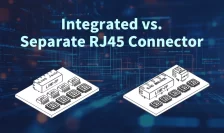
Learn the differences between integrated and separate RJ45 connectors from LINK-PP. Discover how to choose the right solution for your Ethernet applications.
LPO transceivers cut power use, lower latency, and boost reliability in data centers, making them ideal for high-speed, energy-efficient optical links.
Soudage par vague contre soudage en reflow : comparez les procédés, les applications, les coûts et les usages optimaux pour l’assemblage de cartes de circuits imprimés afin de choisir la méthode adaptée à votre projet.
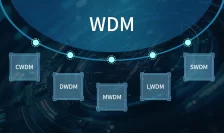
CWDM contre DWDM contre MWDM contre LWDM contre SWDM : comparez l’écart entre canaux, la distance, le coût et les cas d’usage optimaux afin de choisir le WDM adapté à vos besoins réseau.
Discover how LINK-PP’s LAN transformers deliver high speed and signal integrity, and certified electrical isolation—ideal for industrial, PoE, and IoT network.
Medical-grade RJ45 connector ensures safe, reliable, and compliant network connections in medical devices, meeting IEC 60601-1 and sterilization standards.
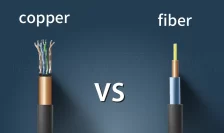
Fiber optic cable offers faster speeds, longer distances, and better reliability than copper cable, making it ideal for high-performance internet and networks.
CWDM vs DWDM: Cost-effective 8-channel metro optics vs high-density 96+ channel long-haul systems. Choose LINK-PP optical transceivers for both WDM solutions.
What Frame Check Sequence (FCS) means, how CRC-32 detects corrupted Ethernet frames, and why FCS errors are commonly associated with cable faults, fiber issues, or optical transceiver problems.
Discover how optical cross‑connect (OXC) enables all‑optical switching in DWDM/OTN networks, with LINK‑PP SFP modules ensuring seamless integration and superior performance.
Learn what Dispersion Compensation Fiber (DCF) is, how it reduces chromatic dispersion, where it is used, and why it matters in modern optical networks.
Learn what OEO means in optical communication, how optical-electrical-optical regeneration works, and when it is used in DWDM networks and optical links. Keywords:
Learn what a Fiber Optical Light Source is, how it works, its types, and how to choose the right one for accurate fiber testing and network performance.
Learn what hyperconverged infrastructure HCI is, how it compares with virtualization and dHCI, and when Nutanix, Sangfor, or SFP-based designs fit best.
Découvrez ce qu’est le 40GBASE-ER4, sa portée sur fibre monomode duplex, ses fonctionnalités prises en charge et comment choisir l’optique QSFP+ adaptée.
Learn how a 1000BASE-T SFP transceiver module works with Category 5 copper wire, including compatibility limits, heat issues, and real-world deployment tips.