Qu’est-ce qu’Ethernet ? Ethernet est une technologie de réseau filaire offrant des connexions rapides, stables et sécurisées pour les foyers, les bureaux et les entreprises.
Un système de surveillance optique suit en temps réel les signaux des fibres optiques, permettant de détecter les pannes et d’améliorer la fiabilité et la sécurité du réseau.
Découvrez comment les unités de traitement des données (DPU) optimisent les performances des centres de données, en accélérant le réseau, le stockage et la sécurité. Découvrez les modules optiques LINK-PP pour des interconnexions haute vitesse.
Explorez les différences fondamentales entre GPU et CPU, leurs distinctions architecturales et les tests de performance pour comprendre quel processeur répond le mieux à vos besoins informatiques.
Learn how Integrated Circuits (ICs) work with LINK-PP products such as RJ45 connectors, LAN transformers, and optical transceivers. Explore applications in Ethernet, PoE, and data centers.
Découvrez les fondamentaux des unités de traitement graphique (GPU), leurs spécifications et leurs applications dans les jeux vidéo, l’intelligence artificielle et le calcul haute performance. Apprenez à choisir le GPU adapté à vos besoins.
Découvrez ce qu’est un circuit intégré (CI), son fonctionnement et son rôle dans l’électronique. Apprenez-en davantage sur les types de CI, leurs applications et la façon dont les produits réseau LINK-PP complètent les CI.
Le réseau de distribution optique garantit une FTTH rapide et fiable en reliant les fournisseurs aux foyers via une fibre passive et évolutif, soutenant la diffusion de services large bande haut débit.
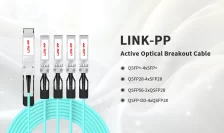
Un câble AOC « breakout » divise un port haute vitesse en plusieurs ports, offrant des connexions réseau rapides, flexibles et économes en énergie pour les centres de données de 2025.
Sélectionnez la meilleure cage pour fibres optiques en tenant compte de la compatibilité, de la densité de ports, de la gestion thermique (options de dissipateurs thermiques), de l’intégration de conduits lumineux, du blindage EMI, etc.
Qu’est-ce que la norme UL94 V-0 ? Découvrez ce classement de sécurité incendie le plus strict, sa valeur réelle lors des achats, les scénarios de conformité, et obtenez des solutions réseau certifiées UL94 V-0 par LINK-PP.
Learn about J-STD-002 solderability testing and how LINK-PP’s Integrated RJ45, LAN Transformers, Modular Jacks, and Fiber Optic Cages meet this standard.
Découvrez comment les lasers VCSEL, FP, DFB et EML diffèrent dans les modules optiques. Explorez leurs caractéristiques principales, leurs usages courants et la manière dont LINK‑PP les intègre dans ses transceivers.
Explore the differences between LAN, MAN, and WAN networks, their technologies, typical applications, and why LINK‑PP components are ideal for each deployment.
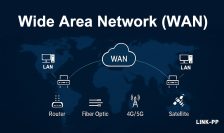
Découvrez ce qu’est un réseau étendu (WAN), comment il diffère d’un LAN et pourquoi le WAN est essentiel pour la connectivité entreprise d’aujourd’hui.
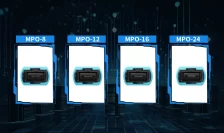
Comparez les connecteurs MPO à 8, 12, 16 et 24 fibres pour comprendre les différences en nombre de fibres, en compatibilité, et la façon dont chaque type répond aux besoins de votre réseau.
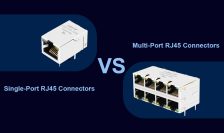
Explore Single-Port vs. Multi-Port RJ45 Connectors with data-driven comparisons on signal integrity, density, reliability, and LINK-PP support for pro buyers and engineers.
What Frame Check Sequence (FCS) means, how CRC-32 detects corrupted Ethernet frames, and why FCS errors are commonly associated with cable faults, fiber issues, or optical transceiver problems.
Discover how optical cross‑connect (OXC) enables all‑optical switching in DWDM/OTN networks, with LINK‑PP SFP modules ensuring seamless integration and superior performance.
Learn what Dispersion Compensation Fiber (DCF) is, how it reduces chromatic dispersion, where it is used, and why it matters in modern optical networks.
Learn what OEO means in optical communication, how optical-electrical-optical regeneration works, and when it is used in DWDM networks and optical links. Keywords:
Discover the LQ‑SW40‑SR4C 40GBASE‑SR module: high-speed, low-power, QSFP+ optics for multimode fibre networks. Perfect for data centres and network upgrades.
Learn what hyperconverged infrastructure HCI is, how it compares with virtualization and dHCI, and when Nutanix, Sangfor, or SFP-based designs fit best.
Understand SFP+ 40km (10GBASE-ER) modules, including specs, SMF compatibility, and how to choose the right extended-reach optical transceiver for your network.
Découvrez ce qu’est le 40GBASE-ER4, sa portée sur fibre monomode duplex, ses fonctionnalités prises en charge et comment choisir l’optique QSFP+ adaptée.
Subscribe to LINK-PP
newsletter
Don’t miss anything. Get all the latest posts delivered straight to your inbox.