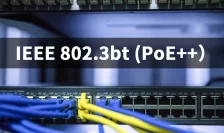
Découvrez les différences clés entre IEEE 802.3af (PoE), 802.3at (PoE+) et 802.3bt (PoE++). Comprenez les niveaux de puissance, la compatibilité et les applications avec les solutions magnétiques PoE de LINK-PP.
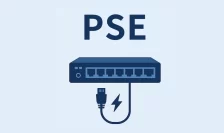
Learn the difference between PSE and PD in PoE networks, how detection & classification work, and which LINK-PP PoE RJ45 products suit your WAP, camera or VoIP deployment.
L’informatique en périphérie traite les données près de leur source, ce qui permet de prendre des décisions plus rapidement, de réduire la latence et d’utiliser efficacement la bande passante pour les applications en temps réel.
Découvrez ce qu’est l’équipement d’alimentation (PSE), son fonctionnement dans les réseaux PoE, et explorez les connecteurs RJ45 et transformateurs compatibles PoE de LINK-PP.
Les transceivers optiques LINK-PP offrent une compatibilité totale avec les commutateurs Cisco Catalyst 9300, garantissant des performances fiables et une expansion réseau rentable.
Découvrez la norme IEEE 802.3bt (PoE++) qui fournit jusqu’à 100 W sur Ethernet. Apprenez ses principales caractéristiques, ses types d’alimentation et ses applications grâce aux solutions LINK-PP de magnétiques PoE++.
Comparez les modules 10G SFP+ longue portée (LR) et courte portée (SR) selon la distance, le type de fibre et le coût afin de choisir la solution la mieux adaptée à vos besoins réseau.
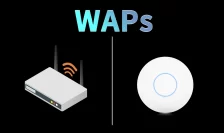
Découvrez ce qu’est un point d’accès sans fil (WAP), son fonctionnement et pourquoi il est essentiel pour des réseaux Wi-Fi robustes. Apprenez-en davantage sur les types, les cas d’usage et l’intégration du connecteur RJ45 PoE LINK-PP LPJK6072AONL.
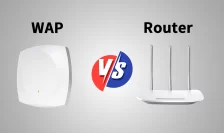
Découvrez les différences entre un point d’accès sans fil (WAP) et un routeur, leurs cas d’usage dans les réseaux domestiques et professionnels, ainsi que la manière dont les connecteurs PoE RJ45 LINK‑PP LPJK6072AONL prennent en charge les déploiements de WAP.
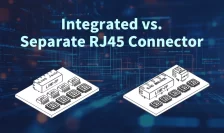
Learn the differences between integrated and separate RJ45 connectors from LINK-PP. Discover how to choose the right solution for your Ethernet applications.
LPO transceivers cut power use, lower latency, and boost reliability in data centers, making them ideal for high-speed, energy-efficient optical links.
Soudage par vague contre soudage en reflow : comparez les procédés, les applications, les coûts et les usages optimaux pour l’assemblage de cartes de circuits imprimés afin de choisir la méthode adaptée à votre projet.
5G backhaul links cell sites to core networks, enabling high-speed, low-latency 5G services. Strong backhaul is vital for 2025’s data and device growth.
Le fronthaul 5G relie les unités radio et les unités de traitement, permettant un transfert de données à haut débit et à faible latence, essentiel pour une communication 5G fiable et efficace.
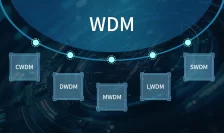
CWDM contre DWDM contre MWDM contre LWDM contre SWDM : comparez l’écart entre canaux, la distance, le coût et les cas d’usage optimaux afin de choisir le WDM adapté à vos besoins réseau.
Découvrez les bandes de longueurs d’onde utilisées dans la fibre optique, l’évolution technologique et les tendances. Voyez comment les modules LINK-PP prennent en charge les longueurs d’onde clés pour une transmission de données efficace.
Découvrez comment les transformateurs LAN de LINK-PP assurent une haute vitesse et une intégrité du signal, ainsi qu’une isolation électrique certifiée — idéaux pour les réseaux industriels, PoE et IoT.
What Frame Check Sequence (FCS) means, how CRC-32 detects corrupted Ethernet frames, and why FCS errors are commonly associated with cable faults, fiber issues, or optical transceiver problems.
Discover how optical cross‑connect (OXC) enables all‑optical switching in DWDM/OTN networks, with LINK‑PP SFP modules ensuring seamless integration and superior performance.
Learn what Dispersion Compensation Fiber (DCF) is, how it reduces chromatic dispersion, where it is used, and why it matters in modern optical networks.
Learn what OEO means in optical communication, how optical-electrical-optical regeneration works, and when it is used in DWDM networks and optical links. Keywords:
Discover the LQ‑SW40‑SR4C 40GBASE‑SR module: high-speed, low-power, QSFP+ optics for multimode fibre networks. Perfect for data centres and network upgrades.
Learn what hyperconverged infrastructure HCI is, how it compares with virtualization and dHCI, and when Nutanix, Sangfor, or SFP-based designs fit best.
Understand SFP+ 40km (10GBASE-ER) modules, including specs, SMF compatibility, and how to choose the right extended-reach optical transceiver for your network.
Découvrez ce qu’est le 40GBASE-ER4, sa portée sur fibre monomode duplex, ses fonctionnalités prises en charge et comment choisir l’optique QSFP+ adaptée.
Subscribe to LINK-PP
newsletter
Don’t miss anything. Get all the latest posts delivered straight to your inbox.