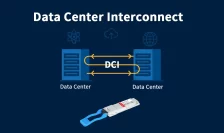
Discover what CMIS is and why it’s vital for managing modern optical modules (QSFP-DD, OSFP, etc.). Learn how LINK-PP’s future-ready modules comply with CMIS .
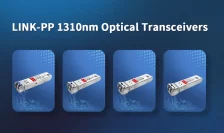
Looking for 1310nm optical transceivers? Learn key buying tips, explore LINK-PP’s SFP, SFP28, and QSFP28 modules, and get reliable performance with warranty coverage.
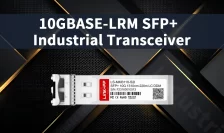
10GBASE-LRM Industrial Transceiver Supports 10.3Gbps, 220m MMF reach, industrial temperature (-40~85°C), and full compatibility with Cisco, Arista, Dell, H3C.
Le câble en cuivre à paires torsadées utilise deux fils isolés torsadés ensemble afin de bloquer les interférences, assurant ainsi une transmission fiable de données et de voix dans les réseaux.
La transceiver sfp28-25g-esr est une transceiver optique 25 G offrant une transmission de données rapide et fiable, ainsi qu’une portée étendue pour les infrastructures réseau modernes.
Découvrez pourquoi la mémoire EEPROM est essentielle pour l’identification des modules, la surveillance et la compatibilité, et comment les modules SFP/QSFP de LINK-PP respectent les normes SFF-8472 et SFF-8024.
Assurer une performance fiable des transceveurs optiques nécessite des tests réguliers pour des indicateurs tels que le BER, le rapport extinction et la sensibilité du récepteur pour éviter les perturbations du réseau.
Le TOSA, le ROSA et le BOSA sont des composants clés des transcepteurs optiques, permettant la transmission, la réception et la communication bidirectionnelle de données à haut débit dans les réseaux modernes.
Explorez les technologies des photodiodes PIN et APD, leurs principes de fonctionnement, leurs différences fondamentales ainsi que leurs applications dans les communications optiques.
Explore les types de lasers utilisés dans les modules optiques, comparaison des lasers DFB, FP, VCSEL et EML. Découvrez les applications et comment choisir le type adapté.
Les transceivers optiques QSFP-DD offrent des débits allant jusqu’à 800 Gbps, assurant une bande passante élevée, une efficacité énergétique et une compatibilité pour les réseaux modernes et les centres de données.
À propos de LINK-PP : Leader mondial des composants magnétiques, offrant des connecteurs RJ45, des transformateurs LAN et des transceivers optiques de haute qualité pour des réseaux fiables.
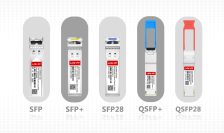
Comparez les transceivers optiques SFP, SFP+, SFP28, QSFP+ et QSFP28. Découvrez comment les facteurs de forme influencent la vitesse, la compatibilité et les performances dans les réseaux modernes.
Les modules transceivers optiques en fibre LINK-PP offrent un transfert de données à haute vitesse, une grande robustesse, une compatibilité éprouvée et des solutions économiques pour des performances réseau fiables.
What Frame Check Sequence (FCS) means, how CRC-32 detects corrupted Ethernet frames, and why FCS errors are commonly associated with cable faults, fiber issues, or optical transceiver problems.
Discover how optical cross‑connect (OXC) enables all‑optical switching in DWDM/OTN networks, with LINK‑PP SFP modules ensuring seamless integration and superior performance.
Learn what Dispersion Compensation Fiber (DCF) is, how it reduces chromatic dispersion, where it is used, and why it matters in modern optical networks.
Learn what OEO means in optical communication, how optical-electrical-optical regeneration works, and when it is used in DWDM networks and optical links. Keywords:
Discover the LQ‑SW40‑SR4C 40GBASE‑SR module: high-speed, low-power, QSFP+ optics for multimode fibre networks. Perfect for data centres and network upgrades.
Learn what hyperconverged infrastructure HCI is, how it compares with virtualization and dHCI, and when Nutanix, Sangfor, or SFP-based designs fit best.
Understand SFP+ 40km (10GBASE-ER) modules, including specs, SMF compatibility, and how to choose the right extended-reach optical transceiver for your network.
Découvrez ce qu’est le 40GBASE-ER4, sa portée sur fibre monomode duplex, ses fonctionnalités prises en charge et comment choisir l’optique QSFP+ adaptée.
Subscribe to LINK-PP
newsletter
Don’t miss anything. Get all the latest posts delivered straight to your inbox.