Comprenez comment les commutateurs sélectifs de longueur d'onde (WSS) permettent un routage dynamique des longueurs d'onde dans les ROADMs, améliorant la flexibilité, la scalabilité et l'efficacité du débit.
Comprenez le rôle essentiel du ROADM dans les réseaux cloud, permettant la flexibilité, l'efficacité, la sécurité et la scalabilité pour l'infrastructure cloud moderne.
10G PON fournit des vitesses allant jusqu'à 10 Gbps en utilisant des fibres optiques avancées, assurant une connexion Internet fiable et à haute vitesse pour les particuliers, les entreprises et les applications modernes.
L'encryption optique sécurise les réseaux à haute vitesse en chiffrant les signaux optiques bruts, garantissant une faible latence, une protection robuste des données et une sécurité prête à l'avenir.
Le 50G PON offre des vitesses de 50 Gbps, une faible latence et une scalabilité, permettant une large bande sans interruption pour le gaming cloud, le transport 5G et les réseaux prêts à l'avenir d'ici 2025.
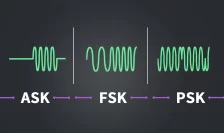
ASK est idéal pour des projets simples et à faible coût, tandis que FSK s'applique aux environnements bruyants et PSK offre des hauteurs de données. Comparez ASK, FSK et PSK ici.
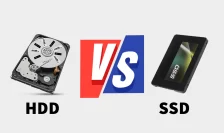
Découvrez les différences entre l'HDD et le SSD en termes de vitesse, de fiabilité et de coût. Apprenez quel type de disque de stockage convient à vos besoins et explorez les solutions de connectivité LINK-PP.
Ce guide clarifie les différences entre les facteurs de forme de transceivers SFF soudés et 1×9. Découvrez leurs caractéristiques techniques, leurs applications et comment choisir celui qui convient à votre réseau.
Découvrez ce qu’est un PCB HDI (interconnexion haute densité), ses avantages, ses techniques de fabrication et ses applications clés dans l’électronique moderne et les dispositifs 5G.
Les transceivers optiques QSFP56 permettent l’Ethernet 200G, des connexions haute densité et des mises à niveau efficaces pour les réseaux modernes de centres de données.
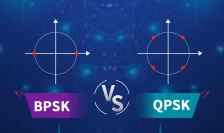
Comparez la modulation BPSK et la modulation QPSK afin de choisir le schéma approprié en fonction de la résistance au bruit, du débit binaire et de l’efficacité spectrale.
Explore the essential components and types of servers, including rack, blade, and hyperconverged infrastructures. Learn how servers power modern IT systems and support businesses worldwide.
What Frame Check Sequence (FCS) means, how CRC-32 detects corrupted Ethernet frames, and why FCS errors are commonly associated with cable faults, fiber issues, or optical transceiver problems.
Discover how optical cross‑connect (OXC) enables all‑optical switching in DWDM/OTN networks, with LINK‑PP SFP modules ensuring seamless integration and superior performance.
Learn what Dispersion Compensation Fiber (DCF) is, how it reduces chromatic dispersion, where it is used, and why it matters in modern optical networks.
Learn what OEO means in optical communication, how optical-electrical-optical regeneration works, and when it is used in DWDM networks and optical links. Keywords:
Discover the LQ‑SW40‑SR4C 40GBASE‑SR module: high-speed, low-power, QSFP+ optics for multimode fibre networks. Perfect for data centres and network upgrades.
Learn what hyperconverged infrastructure HCI is, how it compares with virtualization and dHCI, and when Nutanix, Sangfor, or SFP-based designs fit best.
Understand SFP+ 40km (10GBASE-ER) modules, including specs, SMF compatibility, and how to choose the right extended-reach optical transceiver for your network.
Découvrez ce qu’est le 40GBASE-ER4, sa portée sur fibre monomode duplex, ses fonctionnalités prises en charge et comment choisir l’optique QSFP+ adaptée.
Subscribe to LINK-PP
newsletter
Don’t miss anything. Get all the latest posts delivered straight to your inbox.