À propos de LINK-PP : Leader mondial des composants magnétiques, offrant des connecteurs RJ45, des transformateurs LAN et des transceivers optiques de haute qualité pour des réseaux fiables.
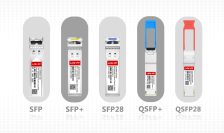
Comparez les transceivers optiques SFP, SFP+, SFP28, QSFP+ et QSFP28. Découvrez comment les facteurs de forme influencent la vitesse, la compatibilité et les performances dans les réseaux modernes.
The Receiver Optical Sub-Assembly (ROSA) is a critical optoelectronic component in Optical Tranceivers, responsible for converting incoming optical signals into
This article provides a professional guide on transceiver pull tab color codes by wavelength—spanning SFP, SFP+, CWDM, and BiDi modules—and introduces how LINK-
Un transceiver BiDi utilise la technologie WDM pour envoyer et recevoir des données sur une seule fibre, ce qui réduit les coûts, simplifie les réseaux et améliore l’efficacité.
Optical modules serve as the "translators" of fiber-optic networks, enabling seamless electrical-to-optical (E/O) and optical-to-electrical (O/E) conversion.
Optical transceiver modules convert electrical signals to light, enabling high-speed data transmission in fiber optic networks for modern communication.
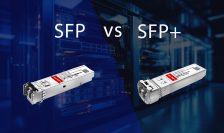
Les transceivers SFP et SFP+ diffèrent en vitesse, compatibilité et utilisation. Le SFP supporte jusqu'à 1 Gbps, tandis que le SFP+ gère jusqu'à 10 Gbps pour des réseaux plus rapides.
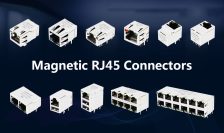
Un RJ45 avec magnétiques intègre des transformateurs et des chokes pour améliorer la qualité du signal, supprimer l'EMI et simplifier les conceptions. Idéal pour l'utilisation de connecteurs RJ45 magnétiques.
Les connecteurs LINK-PP intégrés RJ45 offrent des magnétiques intégrés, une couche de protection contre l'EMI, un support PoE et des vitesses Ethernet rapides, assurant ainsi un réseau fiable et efficient.
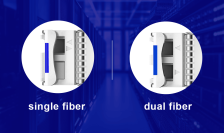
Single fiber transceivers, like the Bidi Transceiver, use one fiber for bidirectional data, while dual fiber transceivers require two fibers for separate TX and RX.
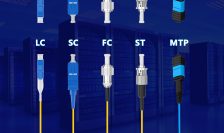
Explore common fiber connector types like SC, LC, ST, FC, and MPO/MTP, their characteristics, and applications in optical transceivers for efficient networks.
Assurer une performance fiable des transceveurs optiques nécessite des tests réguliers pour des indicateurs tels que le BER, le rapport extinction et la sensibilité du récepteur pour éviter les perturbations du réseau.
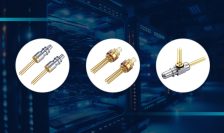
Le TOSA, le ROSA et le BOSA sont des composants clés des transcepteurs optiques, permettant la transmission, la réception et la communication bidirectionnelle de données à haut débit dans les réseaux modernes.
What Frame Check Sequence (FCS) means, how CRC-32 detects corrupted Ethernet frames, and why FCS errors are commonly associated with cable faults, fiber issues, or optical transceiver problems.
Discover how optical cross‑connect (OXC) enables all‑optical switching in DWDM/OTN networks, with LINK‑PP SFP modules ensuring seamless integration and superior performance.
Learn what Dispersion Compensation Fiber (DCF) is, how it reduces chromatic dispersion, where it is used, and why it matters in modern optical networks.
Learn what a Fiber Optical Light Source is, how it works, its types, and how to choose the right one for accurate fiber testing and network performance.
Découvrez le Développement du Développement (DFE), la technique non-linéaire essentielle pour minimiser le ISI. Apprenez comment le DFE améliore le BER des bits dans les transceivers optiques et les liens de données à longue distance.
Learn what hyperconverged infrastructure HCI is, how it compares with virtualization and dHCI, and when Nutanix, Sangfor, or SFP-based designs fit best.
Découvrez ce qu’est le 40GBASE-ER4, sa portée sur fibre monomode duplex, ses fonctionnalités prises en charge et comment choisir l’optique QSFP+ adaptée.
Learn how a 1000BASE-T SFP transceiver module works with Category 5 copper wire, including compatibility limits, heat issues, and real-world deployment tips.