What are SFP ports on a switch? Learn how SFP ports support fiber and Ethernet connections, how they compare with RJ45 and SFP+, and which module you need.
What Frame Check Sequence (FCS) means, how CRC-32 detects corrupted Ethernet frames, and why FCS errors are commonly associated with cable faults, fiber issues, or optical transceiver problems.
Discover the LQ‑SW40‑SR4C 40GBASE‑SR module: high-speed, low-power, QSFP+ optics for multimode fibre networks. Perfect for data centres and network upgrades.
Discover how optical cross‑connect (OXC) enables all‑optical switching in DWDM/OTN networks, with LINK‑PP SFP modules ensuring seamless integration and superior performance.
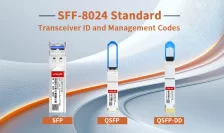
Understand how SFF-8024 ensures accurate module identification, interoperability, and scalability for SFP, SFP+, QSFP, OSFP, and next-generation optical modules.
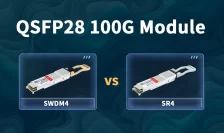
Comparez les modules 100G SWDM4 et 100G SR4 pour identifier la solution la mieux adaptée à votre centre de données : modernisez avec de la fibre duplex ou installez une nouvelle infrastructure avec de la fibre ruban et des connecteurs MPO.
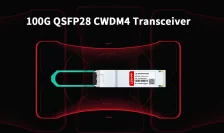
Le transceiver QSFP28 100G CWDM4 est la solution standard du secteur pour des connexions Ethernet Gigabit à haut débit et à faible coût sur des distances allant jusqu’à 2 km
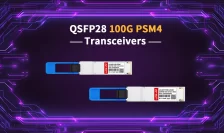
Les transceivers QSFP28 100G PSM4 offrent un Ethernet 100G haute vitesse et rentable sur fibre monomode, idéal pour les centres de données et les réseaux d'entreprise.
LINK-PP propose des connecteurs RJ45 haute performance, des composants magnétiques LAN (LAN Magenetics) et des modules optiques, garantissant des connexions stables, haute vitesse et fiables pour les systèmes IoT.
Découvrez comment les connecteurs RJ45 Magjack améliorent la fiabilité, les performances et l’efficacité de conception dans les appareils électroniques grand public, des téléviseurs intelligents aux consoles de jeu.
Choisissez le meilleur transceiver optique QSFP28 100G pour votre réseau en comparant la compatibilité, la distance, le type de fibre et les options d’adaptation à l’avenir.
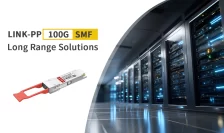
Explorez les différents types de modules QSFP28 100G en mode monomode selon la distance, le coût et l’usage afin de choisir la solution optimale pour les centres de données, les réseaux métropolitains ou les réseaux longue distance.
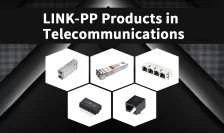
LINK-PP fournit des transceivers optiques, des connecteurs RJ45, des transformateurs LAN et des solutions fibre optique pour des réseaux télécom fiables et haut débit.
Découvrez ce qu’est la diaphonie dans Ethernet, comment elle affecte la qualité du signal et comment les conceptions LINK-PP contribuent à réduire les interférences pour une transmission de données fiable.
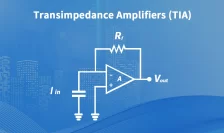
Les amplificateurs transimpédance (TIA) convertissent le courant du capteur en tension à l’aide d’un amplificateur opérationnel et d’une résistance de contre-réaction, permettant ainsi une mesure précise du signal.
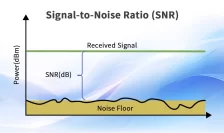
Le SNR, ou rapport signal/bruit, mesure la puissance du signal par rapport au bruit. Un SNR élevé signifie une qualité audio, d’image et de données plus claire, donc une meilleure qualité globale du signal.
Découvrez ce qu’est un PHY Ethernet, comment il relie la couche MAC au support réseau, ses fonctions essentielles, les types de signaux qu’il gère, et comment il s’apparie avec les magnétiques LINK‑PP pour la conception Ethernet.
Les IFR (interférences de fréquence radio) sont des signaux radio indésirables qui perturbent les dispositifs électroniques, provoquant des problèmes de performance et de communication.
Le rapport de transformation dans les transformateurs LAN définit la relation entre les enroulements, généralement 1:1, garantissant l’intégrité du signal, la stabilité de la tension et la conformité aux normes Ethernet.
L’inductance à vide (OCL) des transformateurs Ethernet affecte l’intégrité du signal et la suppression des interférences électromagnétiques (EMI) ; une OCL plus élevée empêche la perte de données.
La modulation d’amplitude à quatre niveaux (PAM4) est une méthode qui transmet deux bits par symbole, doublant ainsi les débits de données pour les réseaux haute vitesse.
La modulation Non-Return-to-Zero (NRZ) est une méthode de codage numérique utilisant deux niveaux de tension pour représenter les données binaires, offrant simplicité et efficacité dans les communications numériques.
Discover the LQ‑SW40‑SR4C 40GBASE‑SR module: high-speed, low-power, QSFP+ optics for multimode fibre networks. Perfect for data centres and network upgrades.
Learn what hyperconverged infrastructure HCI is, how it compares with virtualization and dHCI, and when Nutanix, Sangfor, or SFP-based designs fit best.
Understand SFP+ 40km (10GBASE-ER) modules, including specs, SMF compatibility, and how to choose the right extended-reach optical transceiver for your network.
Découvrez ce qu’est le 40GBASE-ER4, sa portée sur fibre monomode duplex, ses fonctionnalités prises en charge et comment choisir l’optique QSFP+ adaptée.
Subscribe to LINK-PP
newsletter
Don’t miss anything. Get all the latest posts delivered straight to your inbox.