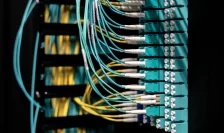
Le réseau de distribution optique garantit une FTTH rapide et fiable en reliant les fournisseurs aux foyers via une fibre passive et évolutif, soutenant la diffusion de services large bande haut débit.
Découvrez comment les émetteurs-récepteurs optiques alimentent les réseaux à large bande en permettant des données fibre à haut débit, une faible latence et une infrastructure évolutif avec les solutions LINK-PP.
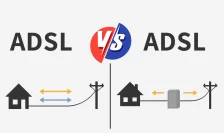
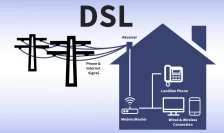
Découvrez ce qu’est l’ADSL (ligne d’abonné numérique), son fonctionnement, ainsi que les différences entre ADSL, VDSL et autres types. Explorez ses avantages, ses limites et l’avenir de la technologie ADSL dans l’accès large bande.
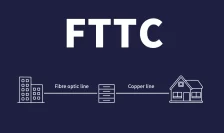
Découvrez ce qu’est la FTTC (fibre jusqu’au trottoir), son fonctionnement, ses avantages et inconvénients, ainsi que sa comparaison avec la FTTH et l’ADSL. Explorez ses applications, les équipements requis et les tendances futures de l’accès large bande.
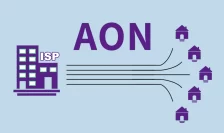
Les réseaux optiques actifs fournissent des lignes de fibre dédiées et des équipements alimentés pour des connexions Internet privées, fiables et à haut débit.
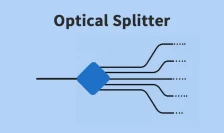
explique comment les séparateurs optiques permettent la technologie FTTH, leurs types (FBT contre PLC), leurs rapports clés, et la façon dont ils s’intègrent aux modules optiques LINK-PP pour un réseau fluide.
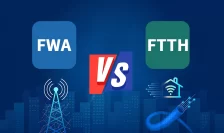
Compare FTTH and FWA broadband technologies. Learn their differences in speed, cost, deployment, and use cases. Discover how LINK-PP SFP modules support both networks.
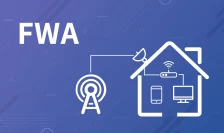
Découvrez ce qu’est l’AFS, comment il fournit un accès haut débit à l’aide de réseaux sans fil 4G/5G, et pourquoi il revêt une importance capitale pour la connectivité. Apprenez-en plus sur ses avantages, ses défis, et sur la façon dont les modules SFP LINK-PP soutiennent des déploiements AFS fiables.
L'encryption optique sécurise les réseaux à haute vitesse en chiffrant les signaux optiques bruts, garantissant une faible latence, une protection robuste des données et une sécurité prête à l'avenir.
Le 50G PON offre des vitesses de 50 Gbps, une faible latence et une scalabilité, permettant une large bande sans interruption pour le gaming cloud, le transport 5G et les réseaux prêts à l'avenir d'ici 2025.
What Frame Check Sequence (FCS) means, how CRC-32 detects corrupted Ethernet frames, and why FCS errors are commonly associated with cable faults, fiber issues, or optical transceiver problems.
Discover how optical cross‑connect (OXC) enables all‑optical switching in DWDM/OTN networks, with LINK‑PP SFP modules ensuring seamless integration and superior performance.
Learn what Dispersion Compensation Fiber (DCF) is, how it reduces chromatic dispersion, where it is used, and why it matters in modern optical networks.
Learn what OEO means in optical communication, how optical-electrical-optical regeneration works, and when it is used in DWDM networks and optical links. Keywords:
Discover the LQ‑SW40‑SR4C 40GBASE‑SR module: high-speed, low-power, QSFP+ optics for multimode fibre networks. Perfect for data centres and network upgrades.
Learn what hyperconverged infrastructure HCI is, how it compares with virtualization and dHCI, and when Nutanix, Sangfor, or SFP-based designs fit best.
Understand SFP+ 40km (10GBASE-ER) modules, including specs, SMF compatibility, and how to choose the right extended-reach optical transceiver for your network.
Découvrez ce qu’est le 40GBASE-ER4, sa portée sur fibre monomode duplex, ses fonctionnalités prises en charge et comment choisir l’optique QSFP+ adaptée.
Subscribe to LINK-PP
newsletter
Don’t miss anything. Get all the latest posts delivered straight to your inbox.