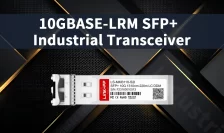
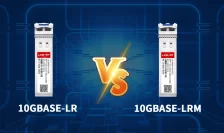
10GBASE-LRM Industrial Transceiver Supports 10.3Gbps, 220m MMF reach, industrial temperature (-40~85°C), and full compatibility with Cisco, Arista, Dell, H3C.
Le câble en cuivre à paires torsadées utilise deux fils isolés torsadés ensemble afin de bloquer les interférences, assurant ainsi une transmission fiable de données et de voix dans les réseaux.
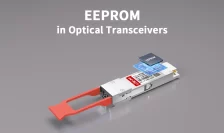
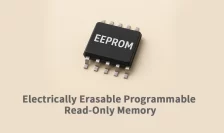
Learn why EEPROM is essential for module identification, monitoring, and compatibility, and how LINK-PP’s SFP/QSFP modules follow SFF-8472 and SFF-8024 Standard.
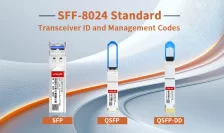
Understand how SFF-8024 ensures accurate module identification, interoperability, and scalability for SFP, SFP+, QSFP, OSFP, and next-generation optical modules.
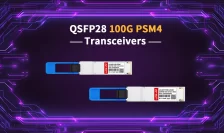
Les transceivers QSFP28 100G PSM4 offrent un Ethernet 100G haute vitesse et rentable sur fibre monomode, idéal pour les centres de données et les réseaux d'entreprise.
LINK-PP propose des connecteurs RJ45 haute performance, des composants magnétiques LAN (LAN Magenetics) et des modules optiques, garantissant des connexions stables, haute vitesse et fiables pour les systèmes IoT.
Réduisez la consommation d'énergie des transceivers optiques grâce à des modules efficaces, un refroidissement intelligent et une gestion intelligente dans les centres de données modernes.
L’adresse IPv4 utilise un format numérique sur 32 bits, tandis qu’IPv6 propose des adresses alphanumériques sur 128 bits, une capacité accrue et une sécurité améliorée pour les réseaux en croissance.
Découvrez comment les prises magnétiques RJ45 assurent une alimentation stable, des signaux propres et des connexions réseau fiables dans les téléphones VoIP — avec les solutions RJ45 prêtes pour PoE LINK-PP.
Découvrez ce qu’ont de particulier les connecteurs RJ45, leur brochage, leurs types de câblage et la manière dont ils prennent en charge les réseaux Ethernet, PoE et Gigabit. Découvrez les solutions RJ45 de LINK-PP pour une connectivité fiable.
Découvrez les différences clés entre IEEE 802.3af (PoE), 802.3at (PoE+) et 802.3bt (PoE++). Comprenez les niveaux de puissance, la compatibilité et les applications avec les solutions magnétiques PoE de LINK-PP.
Learn the difference between PSE and PD in PoE networks, how detection & classification work, and which LINK-PP PoE RJ45 products suit your WAP, camera or VoIP deployment.
Les transceivers optiques LINK-PP offrent une compatibilité totale avec les commutateurs Cisco Catalyst 9300, garantissant des performances fiables et une expansion réseau rentable.
Découvrez la norme IEEE 802.3bt (PoE++) qui fournit jusqu’à 100 W sur Ethernet. Apprenez ses principales caractéristiques, ses types d’alimentation et ses applications grâce aux solutions LINK-PP de magnétiques PoE++.
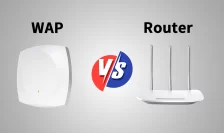
Learn the differences between a Wireless Access Point (WAP) and a router, their use cases in home and enterprise networks, and how LINK‑PP LPJK6072AONL PoE RJ45 connectors support WAP deployments.
What Frame Check Sequence (FCS) means, how CRC-32 detects corrupted Ethernet frames, and why FCS errors are commonly associated with cable faults, fiber issues, or optical transceiver problems.
Discover how optical cross‑connect (OXC) enables all‑optical switching in DWDM/OTN networks, with LINK‑PP SFP modules ensuring seamless integration and superior performance.
Learn what Dispersion Compensation Fiber (DCF) is, how it reduces chromatic dispersion, where it is used, and why it matters in modern optical networks.
Learn what a Fiber Optical Light Source is, how it works, its types, and how to choose the right one for accurate fiber testing and network performance.
Découvrez le Développement du Développement (DFE), la technique non-linéaire essentielle pour minimiser le ISI. Apprenez comment le DFE améliore le BER des bits dans les transceivers optiques et les liens de données à longue distance.
Learn what hyperconverged infrastructure HCI is, how it compares with virtualization and dHCI, and when Nutanix, Sangfor, or SFP-based designs fit best.
Découvrez ce qu’est le 40GBASE-ER4, sa portée sur fibre monomode duplex, ses fonctionnalités prises en charge et comment choisir l’optique QSFP+ adaptée.
Learn how a 1000BASE-T SFP transceiver module works with Category 5 copper wire, including compatibility limits, heat issues, and real-world deployment tips.