Comprenez comment les commutateurs sélectifs de longueur d'onde (WSS) permettent un routage dynamique des longueurs d'onde dans les ROADMs, améliorant la flexibilité, la scalabilité et l'efficacité du débit.
Comprenez le rôle essentiel du ROADM dans les réseaux cloud, permettant la flexibilité, l'efficacité, la sécurité et la scalabilité pour l'infrastructure cloud moderne.
10G PON fournit des vitesses allant jusqu'à 10 Gbps en utilisant des fibres optiques avancées, assurant une connexion Internet fiable et à haute vitesse pour les particuliers, les entreprises et les applications modernes.
L'encryption optique sécurise les réseaux à haute vitesse en chiffrant les signaux optiques bruts, garantissant une faible latence, une protection robuste des données et une sécurité prête à l'avenir.
Le 50G PON offre des vitesses de 50 Gbps, une faible latence et une scalabilité, permettant une large bande sans interruption pour le gaming cloud, le transport 5G et les réseaux prêts à l'avenir d'ici 2025.
What are SFP ports on a switch? Learn how SFP ports support fiber and Ethernet connections, how they compare with RJ45 and SFP+, and which module you need.
An SGMII SFP transceiver enables fast Ethernet connections over copper or fiber, supporting flexible speeds and device compatibility in modern networks.
What Frame Check Sequence (FCS) means, how CRC-32 detects corrupted Ethernet frames, and why FCS errors are commonly associated with cable faults, fiber issues, or optical transceiver problems.
Discover how optical cross‑connect (OXC) enables all‑optical switching in DWDM/OTN networks, with LINK‑PP SFP modules ensuring seamless integration and superior performance.
Learn what Dispersion Compensation Fiber (DCF) is, how it reduces chromatic dispersion, where it is used, and why it matters in modern optical networks.
Learn what OEO means in optical communication, how optical-electrical-optical regeneration works, and when it is used in DWDM networks and optical links. Keywords:
Learn how Integrated Circuits (ICs) work with LINK-PP products such as RJ45 connectors, LAN transformers, and optical transceivers. Explore applications in Ethernet, PoE, and data centers.
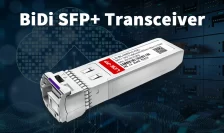
L’émetteur-récepteur BiDi SFP+ LS-BL495510-A0C offre une portée de 100 km, permet des économies sur la fibre et s’installe facilement pour des connexions réseau fiables à longue distance.
Comparez les transceivers 10G SFP+ LR et 25G SFP28 LR 1310 nm pour des liaisons en fibre monomode (SMF) sur 10 km. Découvrez les différences de débit, de consommation énergétique, de type de laser, de coût et les cas justifiant une mise à niveau. Explorez les modèles LINK-PP.
Découvrez ce qu’est la spécification SFF-8436, comment elle définit les émetteurs-récepteurs QSFP+ et pourquoi elle est essentielle pour l’Ethernet 40G, InfiniBand et Fibre Channel.
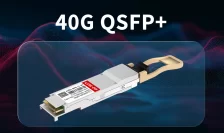
Le transceiver 40G QSFP+ LQ-M8540-SR4I assure une transmission fiable, haute vitesse et une grande durabilité pour les réseaux industriels, même dans des conditions extrêmes.
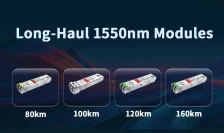
Découvrez jusqu’à quelle distance les transceivers optiques 1550 nm peuvent transmettre sur fibre monomode — jusqu’à 160 km. Découvrez les modèles LINK-PP conçus pour les applications longue distance.
Découvrez les principales applications des modules optiques 1550 nm dans les réseaux cœur, métropolitains et d’entreprise. Découvrez les transceivers LINK-PP conçus pour les liaisons fibre longue distance.
Les transceivers SFP28 LS-MM8532-S1C offrent des débits de 25 G/32 G, une large compatibilité, une faible consommation énergétique et des économies de coûts — idéaux pour préparer l’avenir de votre centre de données.
10GBASE-LRM Industrial Transceiver Supports 10.3Gbps, 220m MMF reach, industrial temperature (-40~85°C), and full compatibility with Cisco, Arista, Dell, H3C.
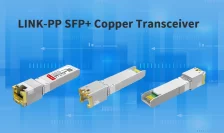
Découvrez le transceiver SFP+ 10GBase-T en cuivre LINK-PP. Prend en charge 10 Gbps sur câbles Cat6a/7 jusqu’à 80 m. Compatible avec Cisco, Dell, H3C, Juniper et Arista.
Subscribe to LINK-PP
newsletter
Don’t miss anything. Get all the latest posts delivered straight to your inbox.