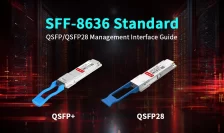
Découvrez ce qu’est la norme SFF-8636, pourquoi elle est essentielle pour les optiques QSFP/QSFP28, et comment son interface de gestion à deux fils, sa carte mémoire, ses classes de puissance et ses alarmes garantissent l’interopérabilité.
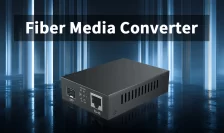
Convertissez la fibre entre mode multiple et mode simple à l’aide de méthodes intelligentes afin d’obtenir une vitesse accrue, une portée plus longue et des performances réseau fiables.
Les convertisseurs de support relient les câbles en cuivre et en fibre, en convertissant les signaux pour étendre la portée du réseau et prendre en charge les équipements anciens.
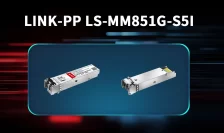
Découvrez comment le transceiver 1000BASE-SX LINK-PP LS-MM851G-S5I offre une solution hautement performante, compatible 100% et économique pour remplacer le GLC-SX-MMD.
Les modules optiques renforcent l’informatique en nuage en permettant une transmission de données rapide, fiable et évolutif dans les centres de données modernes.
Understand how SFF-8024 ensures accurate module identification, interoperability, and scalability for SFP, SFP+, QSFP, OSFP, and next-generation optical modules.
Les modules BiDi QSFP28 100G permettent l’Ethernet 100G sur fibre LC duplex, offrant une transmission bidirectionnelle, une taille compacte et un câblage simplifié.
Comparez les modules 100G SWDM4 et 100G SR4 pour identifier la solution la mieux adaptée à votre centre de données : modernisez avec de la fibre duplex ou installez une nouvelle infrastructure avec de la fibre ruban et des connecteurs MPO.
Découvrez la spécification SFF-8432, la norme mécanique pour les modules et cages SFP+. Découvrez son rôle dans les performances EMI, la durabilité et l'interopérabilité.
Discover how LINK-PP RJ45 Magjack improves QoS stability by enhancing signal integrity, reducing EMI, and ensuring reliable transmission for modern networks.
Explore the roles of LSRs and LERs in MPLS networks. Learn their functions, differences, and how LINK-PP products support high-speed, reliable label-switched paths.
L’interopérabilité dans les réseaux signifie que des dispositifs et des systèmes provenant de différents fournisseurs peuvent se connecter, partager des données et fonctionner ensemble de manière transparente à l’aide de normes communes.
La visualisation réseau utilise des graphes et des diagrammes pour mettre en évidence les connexions, les motifs et les relations au sein de jeux de données complexes.
Résolvez les problèmes réseau courants dans les réseaux de centres de données, notamment les pannes, les vitesses lentes et les erreurs de configuration, grâce à des conseils pratiques de dépannage.
Découvrez les différences entre les architectures de réseau P2P, P2MP, MP2P et MP2MP. Apprenez comment les transceivers optiques LINK-PP permettent une connectivité efficace et à haut débit.
Le jitter en optique provoque un flou d'image et des erreurs de données dans les systèmes optiques. Découvrez ses types, effets, causes, ainsi que les méthodes de mesure et de réduction du jitter.
Découvrez les différences entre les modulateurs photoniques en silicium et les modulateurs optiques traditionnels, leurs principes de fonctionnement, leurs avantages et leur rôle dans les transceivers optiques de nouvelle génération.
Découvrez comment les connecteurs RJ45 évoluent pour répondre aux défis de latence ultra-faible et de débit ultra-élevé posés par la 6G. Découvrez les solutions Ethernet haute fréquence avancées de LINK-PP.
What Frame Check Sequence (FCS) means, how CRC-32 detects corrupted Ethernet frames, and why FCS errors are commonly associated with cable faults, fiber issues, or optical transceiver problems.
Discover how optical cross‑connect (OXC) enables all‑optical switching in DWDM/OTN networks, with LINK‑PP SFP modules ensuring seamless integration and superior performance.
Learn what Dispersion Compensation Fiber (DCF) is, how it reduces chromatic dispersion, where it is used, and why it matters in modern optical networks.
Learn what OEO means in optical communication, how optical-electrical-optical regeneration works, and when it is used in DWDM networks and optical links. Keywords:
Discover the LQ‑SW40‑SR4C 40GBASE‑SR module: high-speed, low-power, QSFP+ optics for multimode fibre networks. Perfect for data centres and network upgrades.
Learn what hyperconverged infrastructure HCI is, how it compares with virtualization and dHCI, and when Nutanix, Sangfor, or SFP-based designs fit best.
Understand SFP+ 40km (10GBASE-ER) modules, including specs, SMF compatibility, and how to choose the right extended-reach optical transceiver for your network.