Découvrez ce qu’ont de particulier les téléphones VoIP, comment ils fonctionnent et pourquoi ils sont essentiels pour les communications modernes. Apprenez leurs principaux avantages et comment les connecteurs RJ45 de LINK-PP les soutiennent.
Découvrez comment le protocole LLDP (Link Layer Discovery Protocol) améliore les systèmes PoE grâce à une négociation intelligente de la puissance, une gestion énergétique efficace et la découverte des appareils dans les réseaux Ethernet modernes.
Évitez les coûteuses erreurs d’installation de fibres optiques en détectant les torsions, le mauvais nettoyage et les épissures défectueuses. Renforcez votre réseau fibre grâce à ces conseils d’experts.
RDMA over Converged Ethernet permet des transferts de données rapides et à faible latence à l’aide d’un matériel Ethernet standard, réduisant la charge du processeur et améliorant l’efficacité du réseau.
Une adresse IPv6 permet des connexions sécurisées et efficaces des appareils en ligne, offrant un espace d’adressage vaste et une gestion réseau améliorée par rapport à IPv4.
Découvrez les différences clés entre IEEE 802.3af (PoE), 802.3at (PoE+) et 802.3bt (PoE++). Comprenez les niveaux de puissance, la compatibilité et les applications avec les solutions magnétiques PoE de LINK-PP.
Découvrez ce qu’est un appareil alimenté (PD) dans les réseaux PoE, comment il reçoit de l’énergie d’un équipement d’alimentation (PSE), et explorez les composants prêts pour PoE de LINK-PP, tels que les modèles LPJK6072AONL et LP41223NL.
Learn the difference between PSE and PD in PoE networks, how detection & classification work, and which LINK-PP PoE RJ45 products suit your WAP, camera or VoIP deployment.
L’émetteur-récepteur optique LINK-PP LS-MM8510-S3C correspond à l’émetteur-récepteur Aruba J9150D en termes de vitesse, de compatibilité et de fiabilité, offrant un remplacement économique et transparent.
L’informatique en périphérie traite les données près de leur source, ce qui permet de prendre des décisions plus rapidement, de réduire la latence et d’utiliser efficacement la bande passante pour les applications en temps réel.
Les transceivers optiques LINK-PP offrent une compatibilité totale avec les commutateurs Cisco Catalyst 9300, garantissant des performances fiables et une expansion réseau rentable.
Découvrez la norme IEEE 802.3bt (PoE++) qui fournit jusqu’à 100 W sur Ethernet. Apprenez ses principales caractéristiques, ses types d’alimentation et ses applications grâce aux solutions LINK-PP de magnétiques PoE++.
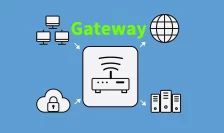
Learn what a network gateway is, how it works, and why it’s essential for connecting different networks. Understand gateway functions, types, and real-world applications in modern communication systems.
Comparez les modules 10G SFP+ longue portée (LR) et courte portée (SR) selon la distance, le type de fibre et le coût afin de choisir la solution la mieux adaptée à vos besoins réseau.
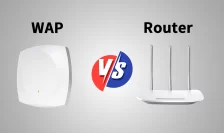
Découvrez les différences entre un point d’accès sans fil (WAP) et un routeur, leurs cas d’usage dans les réseaux domestiques et professionnels, ainsi que la manière dont les connecteurs PoE RJ45 LINK‑PP LPJK6072AONL prennent en charge les déploiements de WAP.
Les modules optiques 10G à longue portée permettent une transmission de données haute vitesse sur des distances allant jusqu’à 80 km. Découvrez les types, les caractéristiques techniques, la compatibilité et comment choisir le module adapté.
Découvrez ce que signifie IEEE 802.3af (PoE), comment elle fournit jusqu’à 15,4 W d’alimentation via des câbles Ethernet, et ses principales applications. Découvrez les magnétiques PoE RJ45 LINK-PP pour une alimentation stable.
Un émetteur-récepteur optique 10G à courte portée permet un transfert de données rapide et fiable sur une distance allant jusqu’à 300 m à l’aide de fibre multimode, idéal pour les centres de données et les réseaux d’entreprise.
Découvrez la norme IEEE 802.3at (PoE+), sa capacité de livraison de puissance de 30 W, ses principales applications et ses avantages. Apprenez comment les magnétiques RJ45 PoE+ LINK-PP soutiennent les réseaux modernes.
What Frame Check Sequence (FCS) means, how CRC-32 detects corrupted Ethernet frames, and why FCS errors are commonly associated with cable faults, fiber issues, or optical transceiver problems.
Discover how optical cross‑connect (OXC) enables all‑optical switching in DWDM/OTN networks, with LINK‑PP SFP modules ensuring seamless integration and superior performance.
Learn what Dispersion Compensation Fiber (DCF) is, how it reduces chromatic dispersion, where it is used, and why it matters in modern optical networks.
Learn what OEO means in optical communication, how optical-electrical-optical regeneration works, and when it is used in DWDM networks and optical links. Keywords:
Discover the LQ‑SW40‑SR4C 40GBASE‑SR module: high-speed, low-power, QSFP+ optics for multimode fibre networks. Perfect for data centres and network upgrades.
Learn what hyperconverged infrastructure HCI is, how it compares with virtualization and dHCI, and when Nutanix, Sangfor, or SFP-based designs fit best.
Understand SFP+ 40km (10GBASE-ER) modules, including specs, SMF compatibility, and how to choose the right extended-reach optical transceiver for your network.