Découvrez comment la perte de retour affecte les performances des MagJack RJ45 dans les applications Ethernet. Explorez des exemples concrets issus des connecteurs RJ45 LINK-PP, allant de 10/100 Mbps à 10 G.
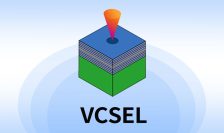
La technologie VCSEL permet des communications de données à haut débit, la détection 3D, le LiDAR et l’imagerie médicale grâce à des solutions laser compactes et efficaces.
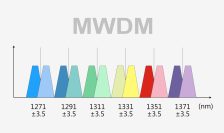
Qu’est-ce que le MWDM ? Le MWDM permet d’augmenter le nombre de canaux de données sur une seule fibre, soutenant ainsi un fronthaul 5G efficace et à forte capacité, avec un bon équilibre entre coût et évolutivité.
ESD Protection for electronics is simplified with LINK-PP’s smart factory, offering robust safeguards in Optical Ms, RJ45s, Transformers, and Fiber Optic Cages.
Qu’est-ce que le LWDM ? Le LWDM est une technologie LAN WDM utilisant plusieurs longueurs d’onde pour augmenter la bande passante et l’efficacité dans les réseaux locaux et les centres de données.
Discover how LINK-PP’s LAN transformers deliver high speed and signal integrity, and certified electrical isolation—ideal for industrial, PoE, and IoT network.
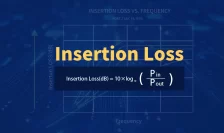
Les pertes d’insertion dans les connecteurs RJ45 affaiblissent la puissance du signal, ce qui nuit à la fiabilité du réseau. Découvrez comment minimiser les pertes d’insertion pour obtenir des performances optimales.
NG-PON2 offre un accès Internet plus rapide et plus fiable via la fibre optique, avec une capacité accrue, prenant en charge jusqu’à 256 utilisateurs et des débits allant jusqu’à 40 Gbit/s pour les foyers et les entreprises.
Le 10G-EPON offre une connexion Internet jusqu'à 10 Gbps, une bande passante supérieure et des performances fiables pour les particuliers et les entreprises nécessitant une connectivité fibre rapide et efficace.
XG-PON fournit un accès Internet en fibre optique allant jusqu’à 10 Gbps, prenant en charge davantage d’utilisateurs et des vitesses plus élevées pour les foyers et les entreprises grâce à une large bande passante fiable et haute capacité.
Découvrez ce qu’est l’IEEE 802.3an (10GBASE-T), comment il permet de délivrer 10 GbE sur des câbles à paires torsadées, ses caractéristiques clés, ses avantages et son rôle dans les réseaux modernes.
Découvrez ce qu’est le stockage dans le cloud, comment il fonctionne et pourquoi les entreprises y font confiance pour une gestion sécurisée et évolutive des données. Apprenez-en plus sur ses applications concrètes et ses solutions.
Découvrez comment le Big Data et l’intelligence artificielle se complètent mutuellement, favorisant des analyses plus intelligentes, l’automatisation et l’innovation dans les secteurs industriels modernes.
Les pertes de budget de liaison mesurent la chute de puissance du signal dans les réseaux en fibre optique, vous aidant à identifier, gérer et réduire les pertes afin d’assurer des performances fiables en matière de communication.
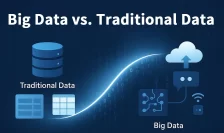
Learn the differences between Big Data and Traditional Data, including scale, speed, complexity, and infrastructure needs. Discover how optical modules enable modern Big Data workloads.
XGS-PON fournit des débits symétriques de 10 Gbps sur fibre, permettant un accès Internet rapide et fiable aux foyers et aux entreprises, avec des mises à niveau faciles et une faible consommation énergétique.
What Frame Check Sequence (FCS) means, how CRC-32 detects corrupted Ethernet frames, and why FCS errors are commonly associated with cable faults, fiber issues, or optical transceiver problems.
Discover how optical cross‑connect (OXC) enables all‑optical switching in DWDM/OTN networks, with LINK‑PP SFP modules ensuring seamless integration and superior performance.
Learn what Dispersion Compensation Fiber (DCF) is, how it reduces chromatic dispersion, where it is used, and why it matters in modern optical networks.
Learn what OEO means in optical communication, how optical-electrical-optical regeneration works, and when it is used in DWDM networks and optical links. Keywords:
Discover the LQ‑SW40‑SR4C 40GBASE‑SR module: high-speed, low-power, QSFP+ optics for multimode fibre networks. Perfect for data centres and network upgrades.
Learn what hyperconverged infrastructure HCI is, how it compares with virtualization and dHCI, and when Nutanix, Sangfor, or SFP-based designs fit best.
Understand SFP+ 40km (10GBASE-ER) modules, including specs, SMF compatibility, and how to choose the right extended-reach optical transceiver for your network.