Un identificateur de réseau VXLAN (VNI) est un identifiant de segment unique sur 24 bits qui permet une segmentation et une isolation réseau évolutives dans de grands environnements basés sur VXLAN.
Découvrez comment les connecteurs RJ45 Magjack permettent une communication Ethernet robuste entre les automates programmables (PLC) et les hôtes SCADA dans l’automatisation industrielle, garantissant l’intégrité du signal et la fiabilité du système.
Découvrez comment les modules optiques améliorent les performances des systèmes PLC, permettant une communication haute vitesse sur de longues distances et des réseaux d’automatisation industrielle fiables.
Un PLC – contrôleur logique programmable – automatise les machines et les processus, offrant un contrôle fiable et flexible pour des systèmes d’automatisation industrielle efficaces.
Découvrez ce que sont les systèmes de supervision et d’acquisition de données (SCADA), comment ils fonctionnent et leur rôle essentiel dans l’automatisation industrielle et les infrastructures intelligentes.
Un VLAN segmente un réseau à la couche liaison de données, améliorant la sécurité, les performances et la gestion en isolant les dispositifs au sein de groupes virtuels.
VLAN contre VXLAN : comparez évolutivité, flexibilité et coûts afin de choisir la meilleure segmentation réseau pour des installations petites ou pour des environnements étendus basés sur le cloud.
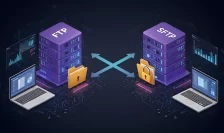
FTP contre SFTP : comparez sécurité, chiffrement et cas d’usage afin de choisir le meilleur protocole pour des transferts de fichiers sûrs et efficaces.
Découvrez comment les modules optiques LINK-PP 25G SFP28 renforcent les centres de données hyperscalables grâce à une bande passante élevée, une faible latence et une efficacité énergétique. Découvrez leurs principaux avantages et cas d’usage.
Les modules optiques LINK-PP offrent une bande passante élevée, une faible latence et une fiabilité accrue pour les charges de travail liées à l’IA, à l’Internet des objets (IoT) et aux mégadonnées, dans des réseaux évolutifs et économes en énergie.
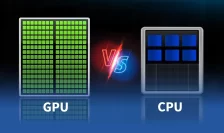
Explorez les différences fondamentales entre GPU et CPU, leurs distinctions architecturales et les tests de performance pour comprendre quel processeur répond le mieux à vos besoins informatiques.
Long Term Evolution (LTE) is a 4G wireless standard offering high-speed, low-latency data for mobile devices, enabling fast, reliable internet connections.
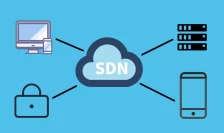
Software-Defined Networking offers centralized control, flexibility, and automation for efficient network management and rapid adaptation to changing needs.
Découvrez comment les unités de traitement des données (DPU) optimisent les performances des centres de données, en accélérant le réseau, le stockage et la sécurité. Découvrez les modules optiques LINK-PP pour des interconnexions haute vitesse.
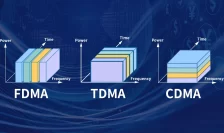
Comparez la FDMA, la TDMA et la CDMA pour les réseaux sans fil. Découvrez quelle méthode d’accès offre une meilleure efficacité, une plus grande capacité et des performances prêtes pour l’avenir.
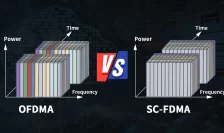
OFDMA vs SC-FDMA : comparez leurs rôles dans les réseaux LTE/5G, leur impact sur la vitesse de téléchargement, l’autonomie des batteries, et pourquoi les réseaux utilisent l’OFDMA pour la liaison descendante et la SC-FDMA pour la liaison montante.
What Frame Check Sequence (FCS) means, how CRC-32 detects corrupted Ethernet frames, and why FCS errors are commonly associated with cable faults, fiber issues, or optical transceiver problems.
Discover how optical cross‑connect (OXC) enables all‑optical switching in DWDM/OTN networks, with LINK‑PP SFP modules ensuring seamless integration and superior performance.
Learn what Dispersion Compensation Fiber (DCF) is, how it reduces chromatic dispersion, where it is used, and why it matters in modern optical networks.
Learn what OEO means in optical communication, how optical-electrical-optical regeneration works, and when it is used in DWDM networks and optical links. Keywords:
Discover the LQ‑SW40‑SR4C 40GBASE‑SR module: high-speed, low-power, QSFP+ optics for multimode fibre networks. Perfect for data centres and network upgrades.
Learn what hyperconverged infrastructure HCI is, how it compares with virtualization and dHCI, and when Nutanix, Sangfor, or SFP-based designs fit best.
Understand SFP+ 40km (10GBASE-ER) modules, including specs, SMF compatibility, and how to choose the right extended-reach optical transceiver for your network.