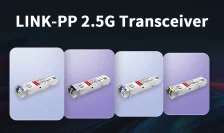
Apprenez la différence entre MTTR et MTBF, comment ils impactent la fiabilité du système, et comment les connecteurs industriels LINK-PP et les modules SFP/SFP+ améliorent l'uptime du réseau.
Un convertisseur de longueur d’onde 2025 transforme rapidement la longueur d’onde de la lumière, permettant des calculs précis de fréquence, d’énergie et de nombre d’ondes pour les dispositifs.
Découvrez le MTBF (Temps Moyen entre Défaillances), son importance pour la fiabilité du système, et comment les connecteurs industriels et les modules SFP/SFP+ de LINK-PP maximisent l'uptime.
Découvrez comment les ordinateurs industriels (IPC) utilisent les logements LINK-PP SFP/SFP+ pour créer des liaisons montantes fibre haute vitesse protégées contre les interférences électromagnétiques (EMI) destinées aux automates programmables (PLC) et aux réseaux périphériques. Idéal pour l’industrie 4.0 et les usines intelligentes.
Apprenez ce que signifie MTTR (temps moyen de réparation), pourquoi il est important pour la fiabilité du système, et comment les transceivers SFP/SFP+ hot-swappable de LINK-PP réduisent le temps de réparation.
Les réseaux optiques offrent une grande vitesse, une sécurité renforcée et une évolutivité accrue pour les déploiements de nuages privés et hybrides, garantissant une connectivité données fiable et efficace.
Un guide clair et professionnel sur l’IIoT (Industrial Internet of Things), couvrant l’architecture, les protocoles, les meilleures pratiques de sécurité et les composants réseau adaptés pour les déploiements industriels.
Optimisez les tissus IA à l’aide d’émetteurs-récepteurs optiques avancés afin d’accélérer et de fiabiliser la communication GPU-à-GPU, d’améliorer l’efficacité et d’assurer des performances évolutives.
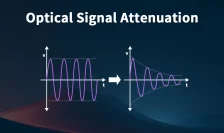
Signal integrity and low latency in data center transceivers ensure reliable, error-free data transmission and optimal performance for real-time applications.
Les émetteurs-récepteurs optiques verts réduisent la consommation d’énergie et les déchets, aidant votre centre de données durable à réduire ses coûts et son empreinte environnementale.
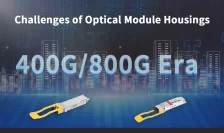
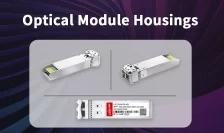
Découvrez les défis critiques des boîtiers de modules optiques dans l'ère 400G/800G : gestion de la chaleur, limites des matériaux, intégrité du signal et comment l'innovation y fait face.
Discover the role of optical module housings in data centers & 5G. Learn about materials like ceramics & alloys, thermal challenges, and explore Link-PP's optical transceivers.
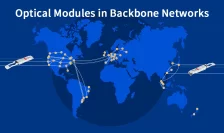
Découvrez comment les modules optiques alimentent les réseaux dorsaux : données à très haut débit, fiabilité, avantages LINK-PP et conseils d’approvisionnement pour les centres de données et les opérateurs.
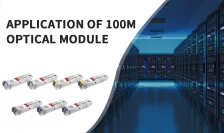
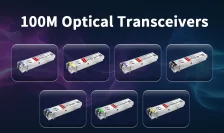
100M Optical Module enables fast, reliable connections for offices, factories, security, and telecom networks, supporting efficient short-distance data transfer.
What Frame Check Sequence (FCS) means, how CRC-32 detects corrupted Ethernet frames, and why FCS errors are commonly associated with cable faults, fiber issues, or optical transceiver problems.
Discover how optical cross‑connect (OXC) enables all‑optical switching in DWDM/OTN networks, with LINK‑PP SFP modules ensuring seamless integration and superior performance.
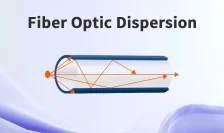
Learn what Dispersion Compensation Fiber (DCF) is, how it reduces chromatic dispersion, where it is used, and why it matters in modern optical networks.
Learn what OEO means in optical communication, how optical-electrical-optical regeneration works, and when it is used in DWDM networks and optical links. Keywords:
Discover the LQ‑SW40‑SR4C 40GBASE‑SR module: high-speed, low-power, QSFP+ optics for multimode fibre networks. Perfect for data centres and network upgrades.
Learn what hyperconverged infrastructure HCI is, how it compares with virtualization and dHCI, and when Nutanix, Sangfor, or SFP-based designs fit best.
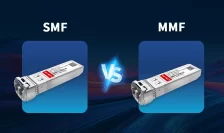
Understand SFP+ 40km (10GBASE-ER) modules, including specs, SMF compatibility, and how to choose the right extended-reach optical transceiver for your network.