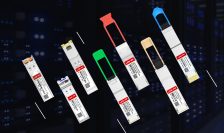
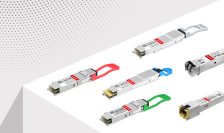
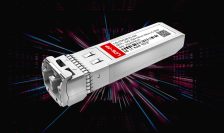
Les modules transceivers optiques en fibre LINK-PP offrent un transfert de données à haute vitesse, une grande robustesse, une compatibilité éprouvée et des solutions économiques pour des performances réseau fiables.
The Receiver Optical Sub-Assembly (ROSA) is a critical optoelectronic component in Optical Tranceivers, responsible for converting incoming optical signals into
Dans ce billet, nous explorerons la structure fondamentale d’un émetteur-récepteur optique, en expliquant la fonction de chaque partie et la manière dont elles fonctionnent ensemble.
L'émetteur-récepteur DWDM LINK-PP LS-DW2810-40I offre une vitesse de 10 Gbps, une portée de 40 km, une efficacité énergétique et une compatibilité avec les grandes marques pour un fonctionnement réseau sans heurt.
DDM/DOM in optical transceivers provides real-time monitoring of key parameters like temperature and power, ensuring network reliability and early issue detection.
Cet article fournit un guide professionnel sur les codes couleurs des onglets d’extraction des émetteurs-récepteurs selon la longueur d’onde — couvrant les modules SFP, SFP+, CWDM et BiDi — et présente comment LINK-
Les émetteurs-récepteurs optiques convertissent les signaux électriques en lumière, transmettant des données via des câbles en fibre optique à grande vitesse, avec une fiabilité élevée et des pertes minimales.
Un transceiver BiDi utilise la technologie WDM pour envoyer et recevoir des données sur une seule fibre, ce qui réduit les coûts, simplifie les réseaux et améliore l’efficacité.
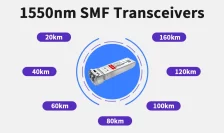
Découvrez comment un transceiver optique 1550 nm convertit les signaux électriques en lumière pour des liaisons fibre à longue distance. Apprenez-en les avantages, les caractéristiques techniques et les modèles LINK-PP.
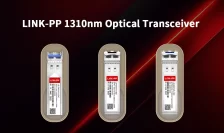
Le module optique 1310 nm offre une transmission de données fiable et économique pour les réseaux métropolitains, universitaires et d’entreprise. Comparez les performances, la portée et les cas d’utilisation.
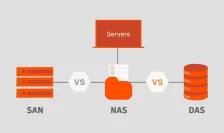
Comparez DAS, NAS et SAN pour identifier la solution de stockage de données la mieux adaptée en termes de vitesse, d’évolutivité, de fiabilité et de coût, selon vos besoins professionnels ou personnels.
Explore the most common MSA protocols used in optical transceivers. Learn about SFP, SFP+, QSFP, CFP, and more—plus how LINK-PP's compatible modules deliver reliable performance.
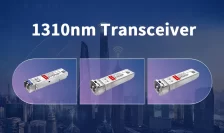
Découvrez comment les modules optiques à 1310 nm jouent un rôle essentiel dans les centres de données, les réseaux métropolitains et les liaisons d’entreprise. Explorez les cas d’usage et les modules fiables de LINK-PP.
Découvrez la différence entre DDMI (interface) et DDM (diagnostics) dans les transceivers optiques. Apprenez comment chacun permet une surveillance en temps réel et comment les produits LINK-PP les exploitent.
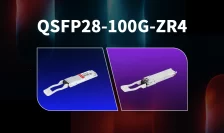
Le transceiver QSFP28-100G-ZR4 permet la transmission de données à 100G sur une distance allant jusqu’à 80 km à l’aide de fibre monomode, idéal pour les connexions réseau à grande distance et haute vitesse.
Dépannez efficacement les transceivers optiques grâce à la surveillance numérique de diagnostic. Surveillez les données en temps réel pour détecter précocement les pannes et assurer la fiabilité du réseau.
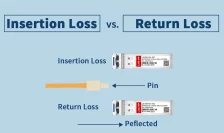
Learn the difference between insertion loss and return loss in optical transceivers, their impact on performance, measurement methods, and LINK-PP product guidance.
What Frame Check Sequence (FCS) means, how CRC-32 detects corrupted Ethernet frames, and why FCS errors are commonly associated with cable faults, fiber issues, or optical transceiver problems.
Discover how optical cross‑connect (OXC) enables all‑optical switching in DWDM/OTN networks, with LINK‑PP SFP modules ensuring seamless integration and superior performance.
Learn what Dispersion Compensation Fiber (DCF) is, how it reduces chromatic dispersion, where it is used, and why it matters in modern optical networks.
Learn what OEO means in optical communication, how optical-electrical-optical regeneration works, and when it is used in DWDM networks and optical links. Keywords:
Discover the LQ‑SW40‑SR4C 40GBASE‑SR module: high-speed, low-power, QSFP+ optics for multimode fibre networks. Perfect for data centres and network upgrades.
Learn what hyperconverged infrastructure HCI is, how it compares with virtualization and dHCI, and when Nutanix, Sangfor, or SFP-based designs fit best.
Understand SFP+ 40km (10GBASE-ER) modules, including specs, SMF compatibility, and how to choose the right extended-reach optical transceiver for your network.