OSI contre TCP/IP : OSI est idéal pour apprendre les concepts réseau, tandis que TCP/IP est utilisé pour les réseaux du monde réel. Comparez leurs couches, leurs usages et leurs principales différences.
Les circuits intégrés photoniques utilisent la lumière pour transmettre des données, offrant des vitesses plus élevées, une consommation d’énergie réduite et des connexions fiables pour les réseaux modernes.
Les obstacles techniques liés aux transceivers optiques 1,6 T comprennent l’intégrité du signal, la consommation électrique et le refroidissement, ce qui entraîne une révolution des connecteurs afin d’assurer la fiabilité des réseaux haute vitesse.
Learn what the SFF-8402 specification is, how it defines the SFP28 interface standard, and why it is essential for 25G / 28G optical module interoperability and system reliability.
Explore how Smart Industry 4.0 Networks enable intelligent manufacturing through high-speed Ethernet, fibre optics, IIoT, and edge computing integration.
Semiconductor material properties determine optical module speed, efficiency, and reliability by affecting bandgap, carrier mobility, and thermal conductivity.
La détection des défaillances de liaison montante identifie rapidement les pannes de liaison réseau, permettant une réponse rapide afin d’éviter les temps d’arrêt et de maintenir la continuité des activités.
Un identificateur de réseau VXLAN (VNI) est un identifiant de segment unique sur 24 bits qui permet une segmentation et une isolation réseau évolutives dans de grands environnements basés sur VXLAN.
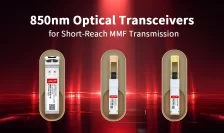
10GBASE-SR, 40GBASE-SR4, 100GBASE-SR4, and 400GBASE-SR8 850nm optical modules are the most reliable and cost-effective choice for short-reach multimode fiber connections.
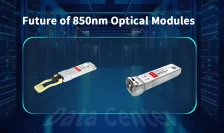
Explore the future of 850nm optical modules in data centers, covering SR8/SR16 advancements, parallel optics, and the impact of single-mode fiber adoption.
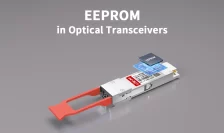
Découvrez pourquoi la mémoire EEPROM est essentielle pour l’identification des modules, la surveillance et la compatibilité, et comment les modules SFP/QSFP de LINK-PP respectent les normes SFF-8472 et SFF-8024.
La transceiver SFP28-25G-SR offre des débits de 25 Gbps, une connectivité fibre à courte portée et des performances fiables pour les centres de données et les réseaux d’entreprise.
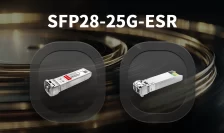
La transceiver sfp28-25g-esr est une transceiver optique 25 G offrant une transmission de données rapide et fiable, ainsi qu’une portée étendue pour les infrastructures réseau modernes.
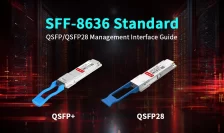
Découvrez ce qu’est la norme SFF-8636, pourquoi elle est essentielle pour les optiques QSFP/QSFP28, et comment son interface de gestion à deux fils, sa carte mémoire, ses classes de puissance et ses alarmes garantissent l’interopérabilité.
Convertissez la fibre entre mode multiple et mode simple à l’aide de méthodes intelligentes afin d’obtenir une vitesse accrue, une portée plus longue et des performances réseau fiables.
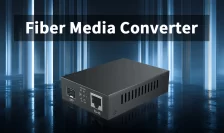
Les convertisseurs de support relient les câbles en cuivre et en fibre, en convertissant les signaux pour étendre la portée du réseau et prendre en charge les équipements anciens.
Les modules optiques renforcent l’informatique en nuage en permettant une transmission de données rapide, fiable et évolutif dans les centres de données modernes.
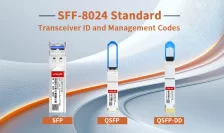
Understand how SFF-8024 ensures accurate module identification, interoperability, and scalability for SFP, SFP+, QSFP, OSFP, and next-generation optical modules.
What Frame Check Sequence (FCS) means, how CRC-32 detects corrupted Ethernet frames, and why FCS errors are commonly associated with cable faults, fiber issues, or optical transceiver problems.
Discover how optical cross‑connect (OXC) enables all‑optical switching in DWDM/OTN networks, with LINK‑PP SFP modules ensuring seamless integration and superior performance.
Learn what Dispersion Compensation Fiber (DCF) is, how it reduces chromatic dispersion, where it is used, and why it matters in modern optical networks.
Learn what OEO means in optical communication, how optical-electrical-optical regeneration works, and when it is used in DWDM networks and optical links. Keywords:
Discover the LQ‑SW40‑SR4C 40GBASE‑SR module: high-speed, low-power, QSFP+ optics for multimode fibre networks. Perfect for data centres and network upgrades.
Learn what hyperconverged infrastructure HCI is, how it compares with virtualization and dHCI, and when Nutanix, Sangfor, or SFP-based designs fit best.
Understand SFP+ 40km (10GBASE-ER) modules, including specs, SMF compatibility, and how to choose the right extended-reach optical transceiver for your network.