Ce guide clarifie les différences entre les facteurs de forme de transceivers SFF soudés et 1×9. Découvrez leurs caractéristiques techniques, leurs applications et comment choisir celui qui convient à votre réseau.
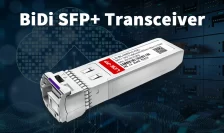
L’émetteur-récepteur BiDi SFP+ LS-BL495510-A0C offre une portée de 100 km, permet des économies sur la fibre et s’installe facilement pour des connexions réseau fiables à longue distance.
La dispersion par mode de polarisation (PMD) dans les fibres optiques provoque une distorsion du signal et limite la vitesse des données. Comprenez l’impact de la PMD et comment la gérer dans les réseaux modernes.
La modulation QAM améliore la transmission de données en faisant varier l’amplitude et la phase, permettant ainsi des communications plus rapides et plus efficaces dans le Wi-Fi, la télévision par câble et la large bande.
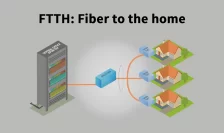
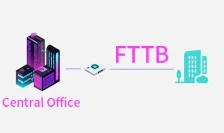
Découvrez le FTTB (Fibre jusqu’à l’immeuble) : définition, avantages et déploiement. Comparez le FTTB et le FTTH et explorez les solutions de connectivité LINK-PP.
Comparez l’émetteur-récepteur SFP et l’émetteur-récepteur SFF pour déterminer lequel offre de meilleures performances en termes de vitesse, de flexibilité et d’options de mise à niveau pour vos équipements réseau.
Découvrez ce qu’est un PCB HDI (interconnexion haute densité), ses avantages, ses techniques de fabrication et ses applications clés dans l’électronique moderne et les dispositifs 5G.
Découvrez la spécification SFF-8432, la norme mécanique pour les modules et cages SFP+. Découvrez son rôle dans les performances EMI, la durabilité et l'interopérabilité.
Ce qu’est le SFP-10G-LRM, son fonctionnement et ses avantages. Découvrez pourquoi les modules 10GBASE-LRM de LINK-PP sont idéaux pour la mise à niveau des anciens réseaux en fibre optique avec une portée de 220 m
Un transceiver 100G SWDM4 fournit 100 Gbps sur fibre multimode duplex à l’aide de quatre longueurs d’onde, permettant des mises à niveau réseau haute vitesse à moindre coût.
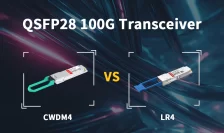
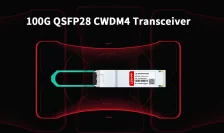
Le transceiver QSFP28 100G CWDM4 est la solution standard du secteur pour des connexions Ethernet Gigabit à haut débit et à faible coût sur des distances allant jusqu’à 2 km
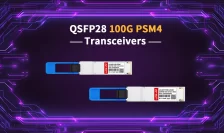
Les transceivers QSFP28 100G PSM4 offrent un Ethernet 100G haute vitesse et rentable sur fibre monomode, idéal pour les centres de données et les réseaux d'entreprise.
What Frame Check Sequence (FCS) means, how CRC-32 detects corrupted Ethernet frames, and why FCS errors are commonly associated with cable faults, fiber issues, or optical transceiver problems.
Discover how optical cross‑connect (OXC) enables all‑optical switching in DWDM/OTN networks, with LINK‑PP SFP modules ensuring seamless integration and superior performance.
Learn what Dispersion Compensation Fiber (DCF) is, how it reduces chromatic dispersion, where it is used, and why it matters in modern optical networks.
Learn what OEO means in optical communication, how optical-electrical-optical regeneration works, and when it is used in DWDM networks and optical links. Keywords:
Discover the LQ‑SW40‑SR4C 40GBASE‑SR module: high-speed, low-power, QSFP+ optics for multimode fibre networks. Perfect for data centres and network upgrades.
Learn what hyperconverged infrastructure HCI is, how it compares with virtualization and dHCI, and when Nutanix, Sangfor, or SFP-based designs fit best.
Understand SFP+ 40km (10GBASE-ER) modules, including specs, SMF compatibility, and how to choose the right extended-reach optical transceiver for your network.